2026 Impact Report
A decade of impact
Since 2016, the Innovation Center has turned ideas into impact for students, for Regis, and for Denver. Every piece of our mark stands for one part of how we do it.
Self-awareness
In the ‘eye’ of the graphic. Knowing your own strengths and weaknesses.
Critical thinking
What information matters and why.
Ingenuity
Mental agility! New information calls for new approaches.
Creative thinking
Multiple ways of solving a single problem.
Love
Engaging others with respect and emotional intelligence. Seeking the greater good.
Systems thinking
What works for me and for you; now, 10 minutes from now and 10 years from now. (Size matters here! This is the largest of the thinking components.)
Heroism
Think big! What are the true problems that need solutions? Take the risks that transform the status quo. Be passionate.
Alumni companionship
The Alumni Matrix: the connective tissue that helps students understand, see, and feel how a Jesuit business education affects the world! This connects all of the thinking and leadership components.
Explore the Center.
Scroll through, or pick the part of the Center you want to see first.
The Alumni Matrix
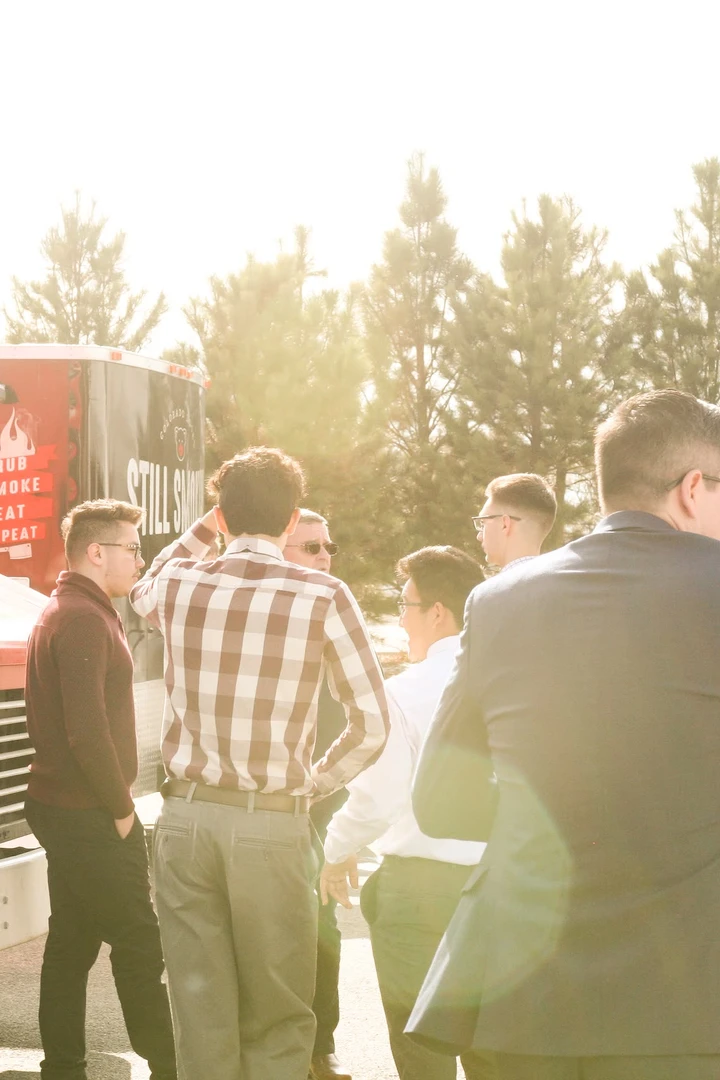
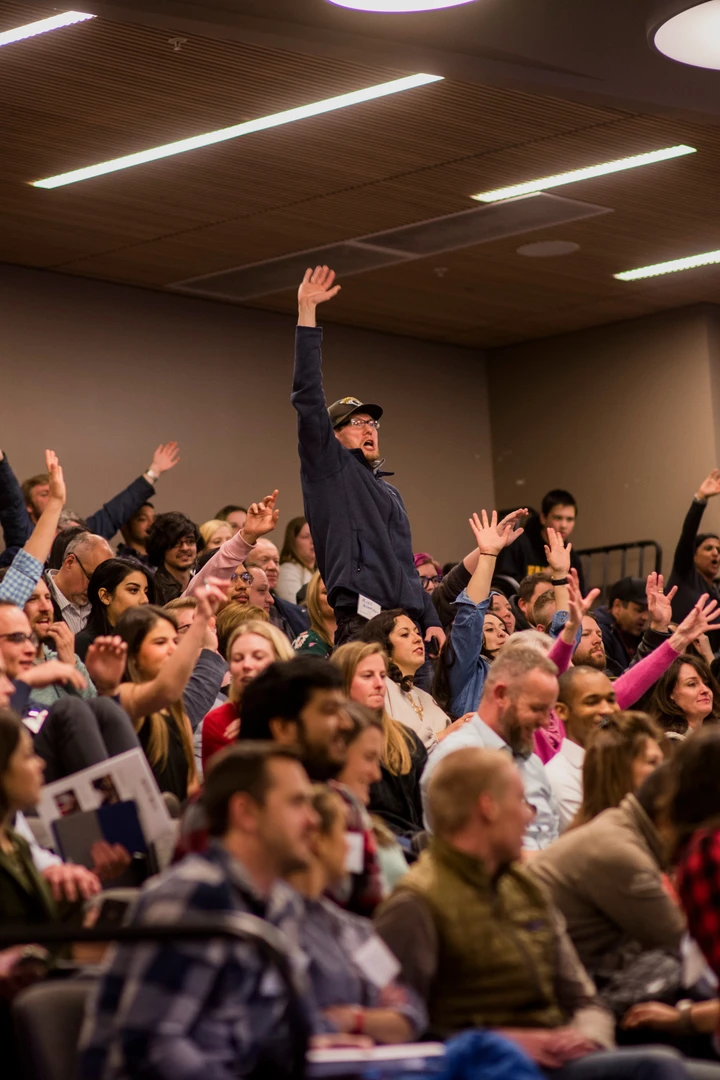
75,000 alumni, and a meetup of nearly 400 every April.
The Incubator
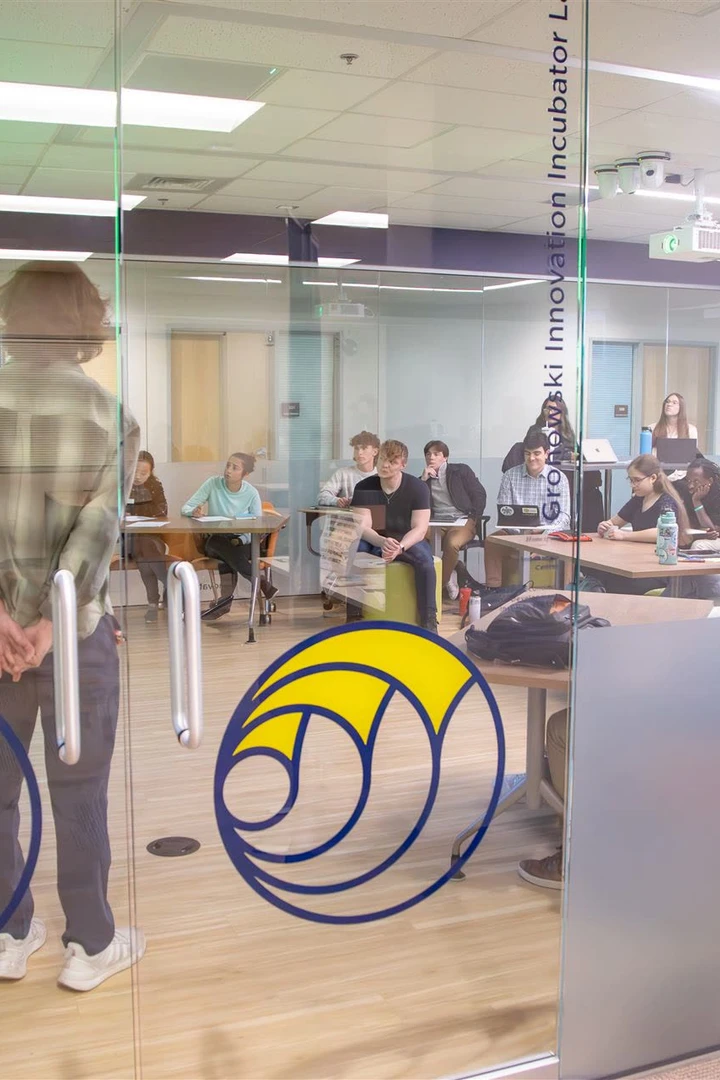
A $1M gift built the Lab in five months.
Rethinking the classroom
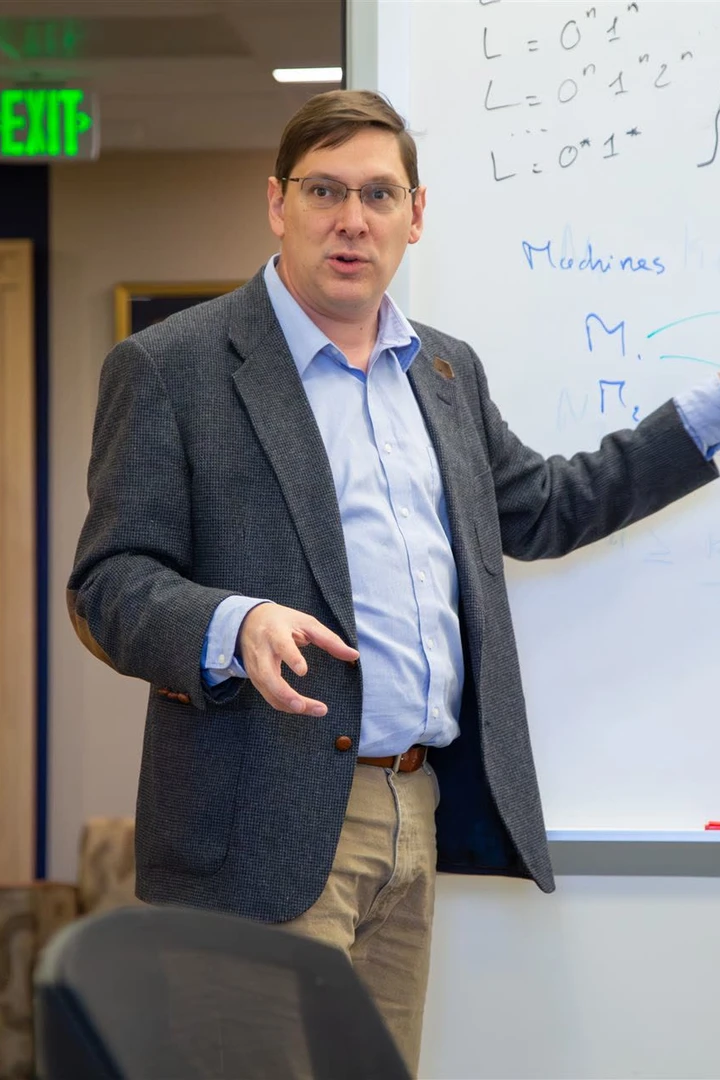
Six new ways to teach, including a live class with Peru.
Anderson Reports
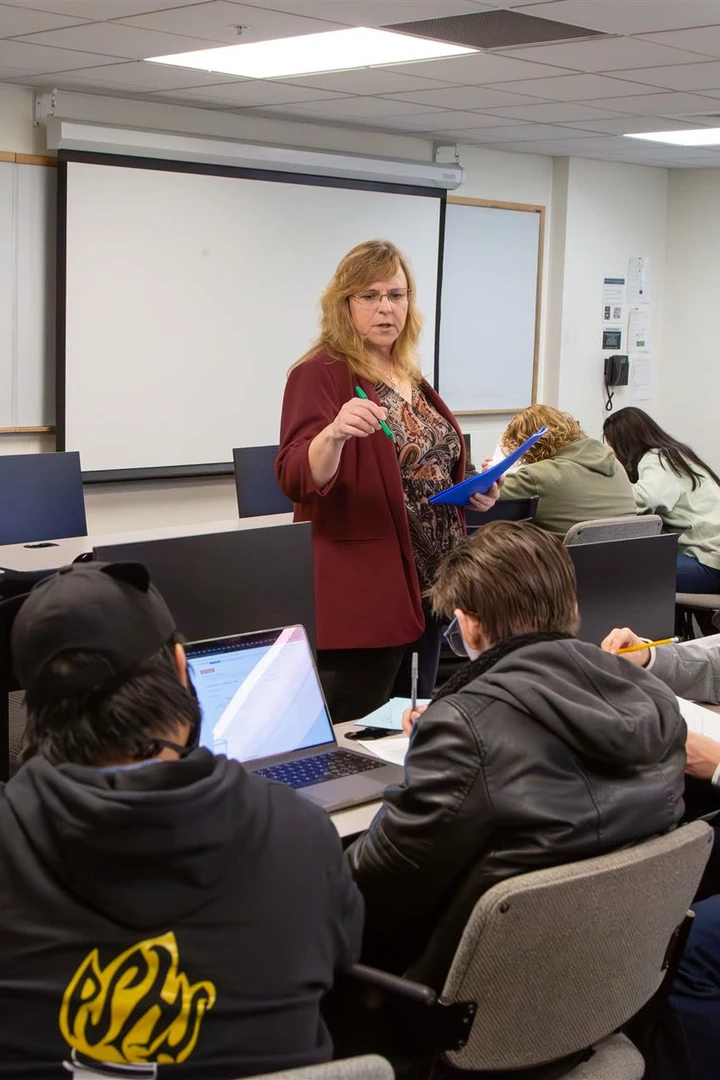
MBA students write the research on Colorado companies.
The Innovation Challenge
Open to everyone. Winners get up to $10,000 and mentors.
The Magis Factory
Up to 30 months of support, at no cost and for no equity.
Partners
From IDEO and J.P. Morgan to Arrupe Jesuit High School.
Financials
$2,635,000 raised in ten years, and where it went.
What comes next
Next, the whole university. And six ways to help.
Ten years in.
A few numbers from the Center's first decade.
10+
Years of continuous operation
Since 2016
$375K+
Invested in emerging ventures and people
Since 2017, across the Innovation Challenge, Magis Factory, and all other Center programs
231+
Businesses launched or supported
In the first nine years
2,000+
Volunteer mentor hours
Every year, from Regis and the local community
The Alumni Matrix.
You cannot see a network. You can feel a matrix.
The outer ring of the mark
In the Center’s mark, the ring around everything is the Alumni Matrix: the connective tissue that helps students understand, see, and feel how a Jesuit business education affects the world.
- Regis alumni in the network
- 75,000
- at the April meetup, more in each of the past three years
- ~400
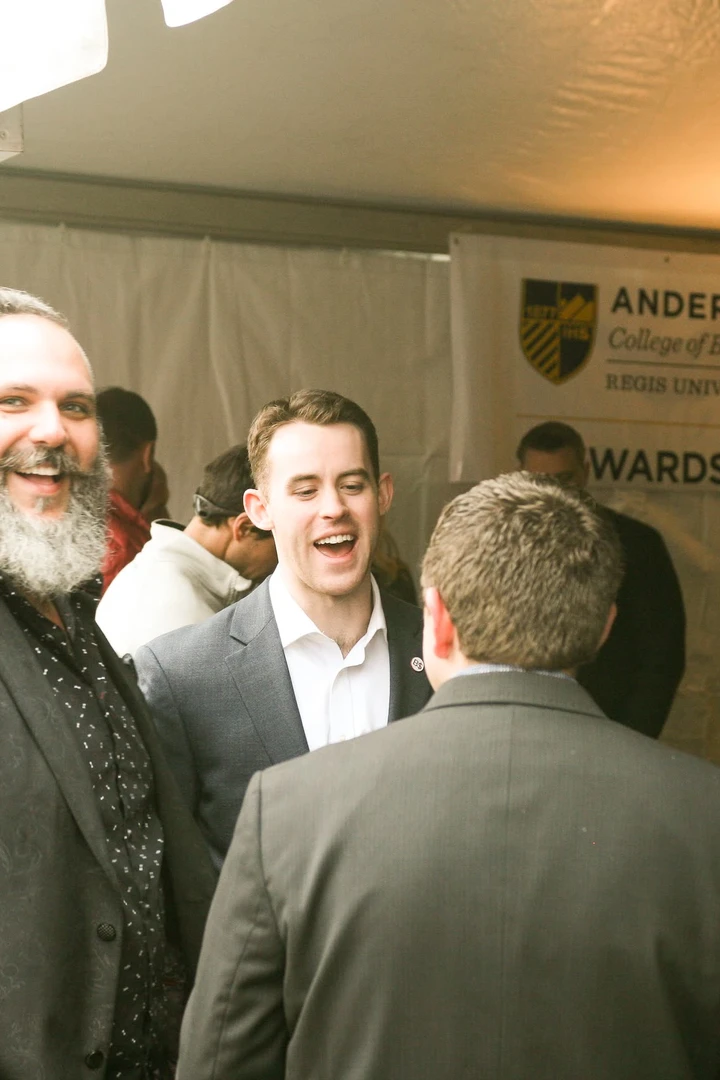
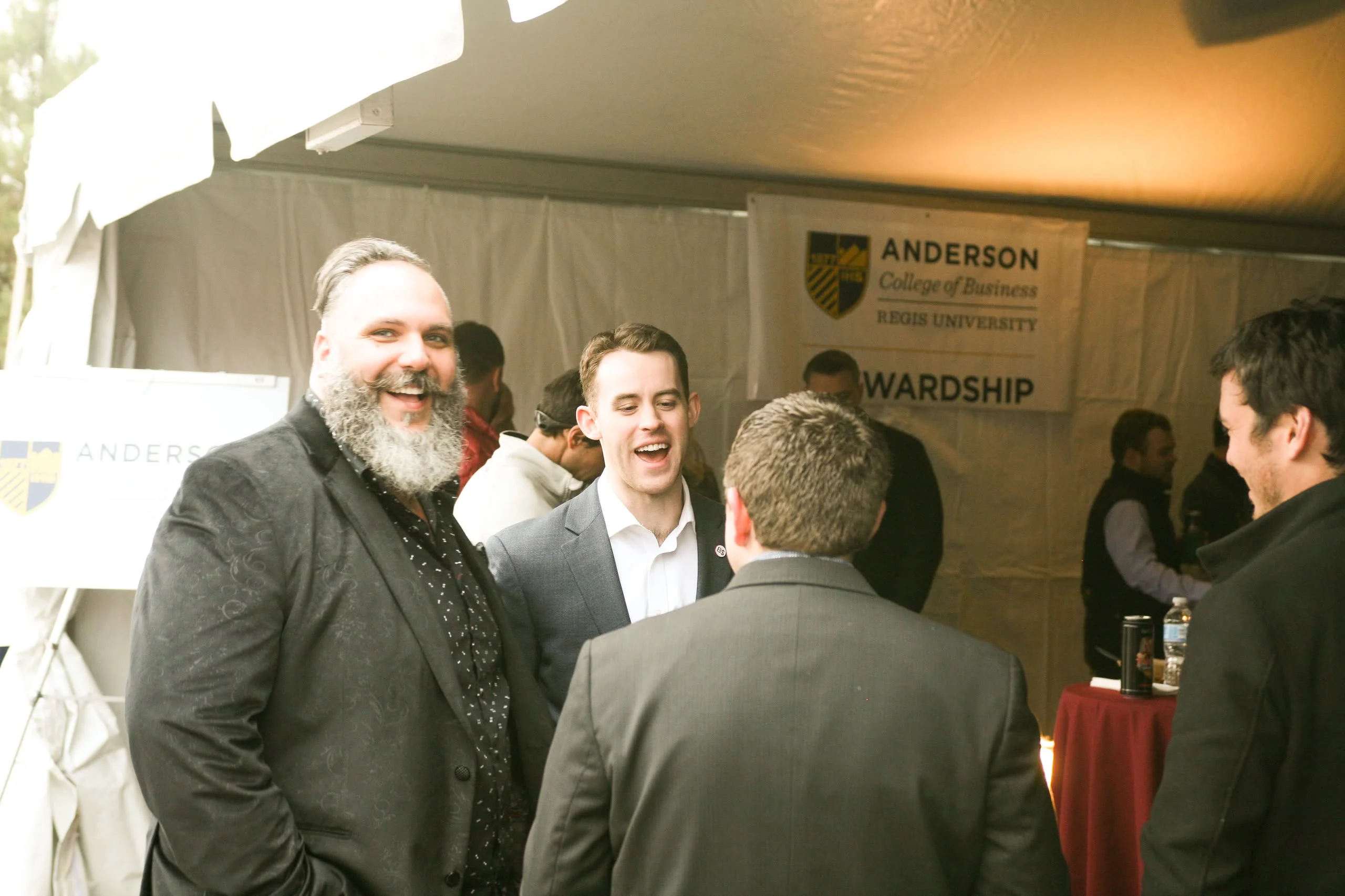
Every April, alumni, students, faculty, staff, and business connections gather under tents in a Regis parking lot, with food trucks.
Through the year: tours of alumni businesses, like Avery Brewing with Adam Avery; invitations to the Denver Chamber’s State of Denver and to Denver Business Journal events; class presentations; and panel talks.
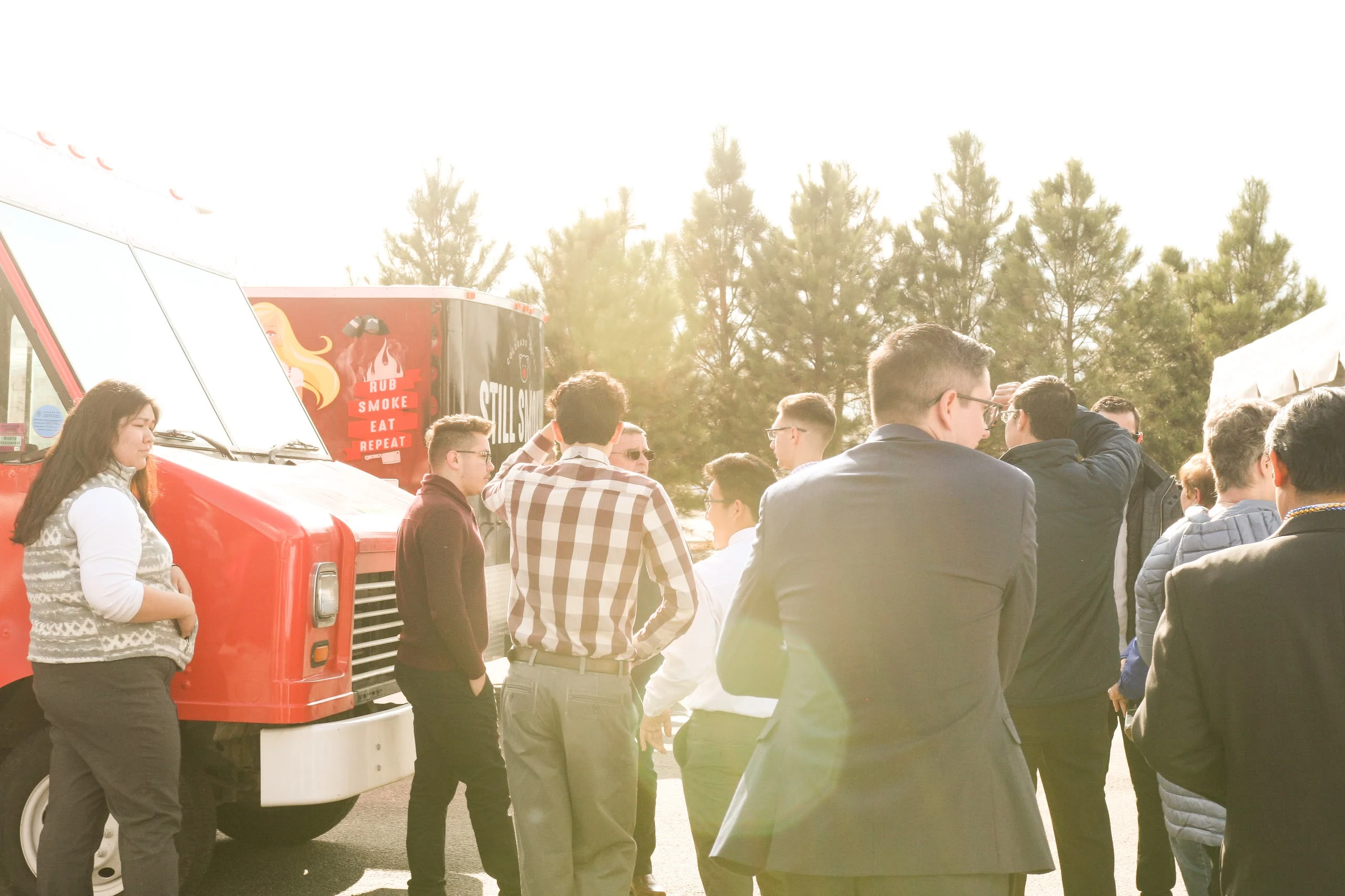 The April meetup.
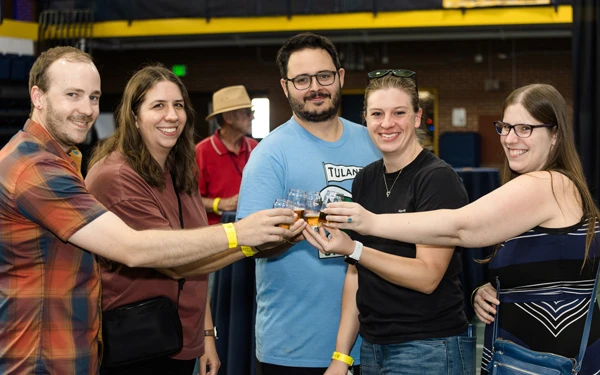 Alumni raise a toast.
 The youngest guest, in a Regis shirt.
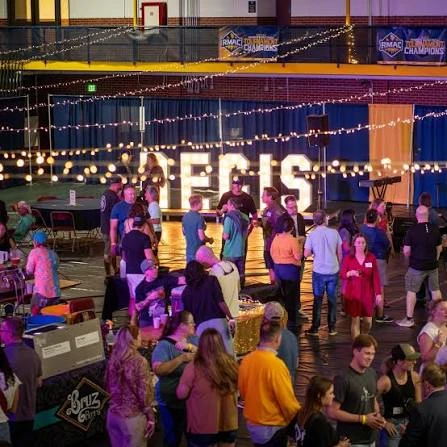 A Regis night under the lights.
- 2018: the first Challenge Finals, an Alumni Matrix night.
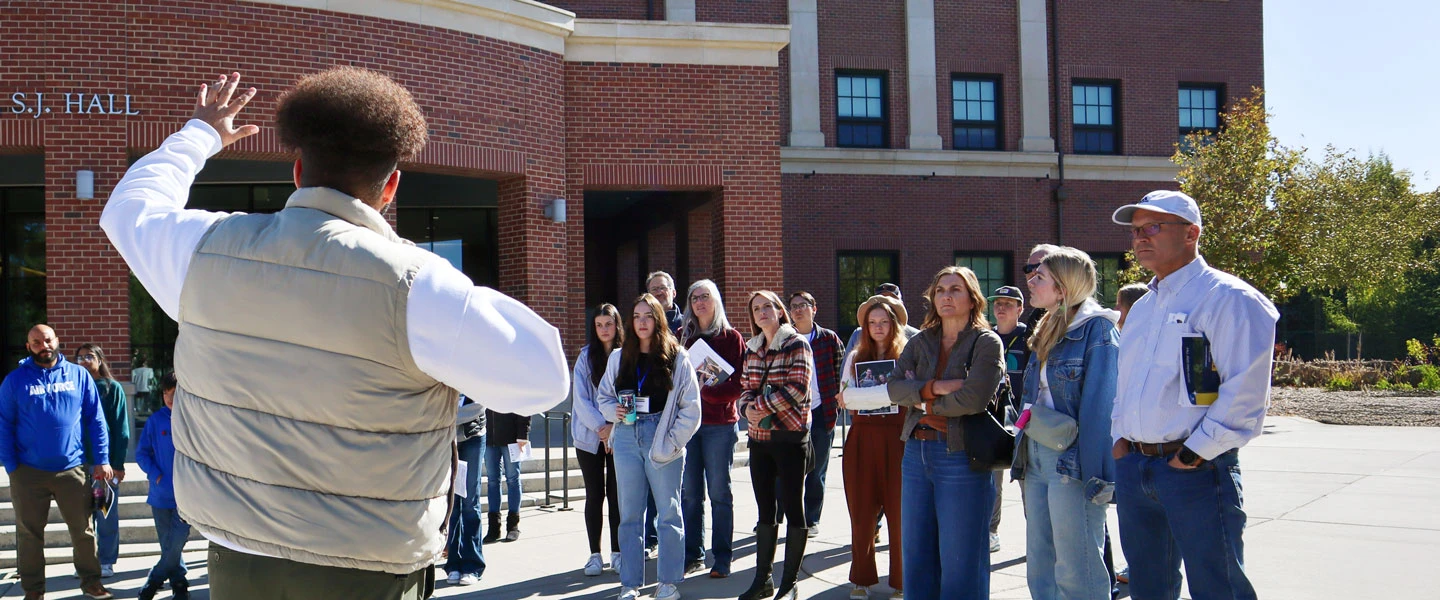 Back on campus for a tour.
Next: $100K a year to build the Matrix into job placements, internships, travel programs, and courses.See the ask
The Incubator.
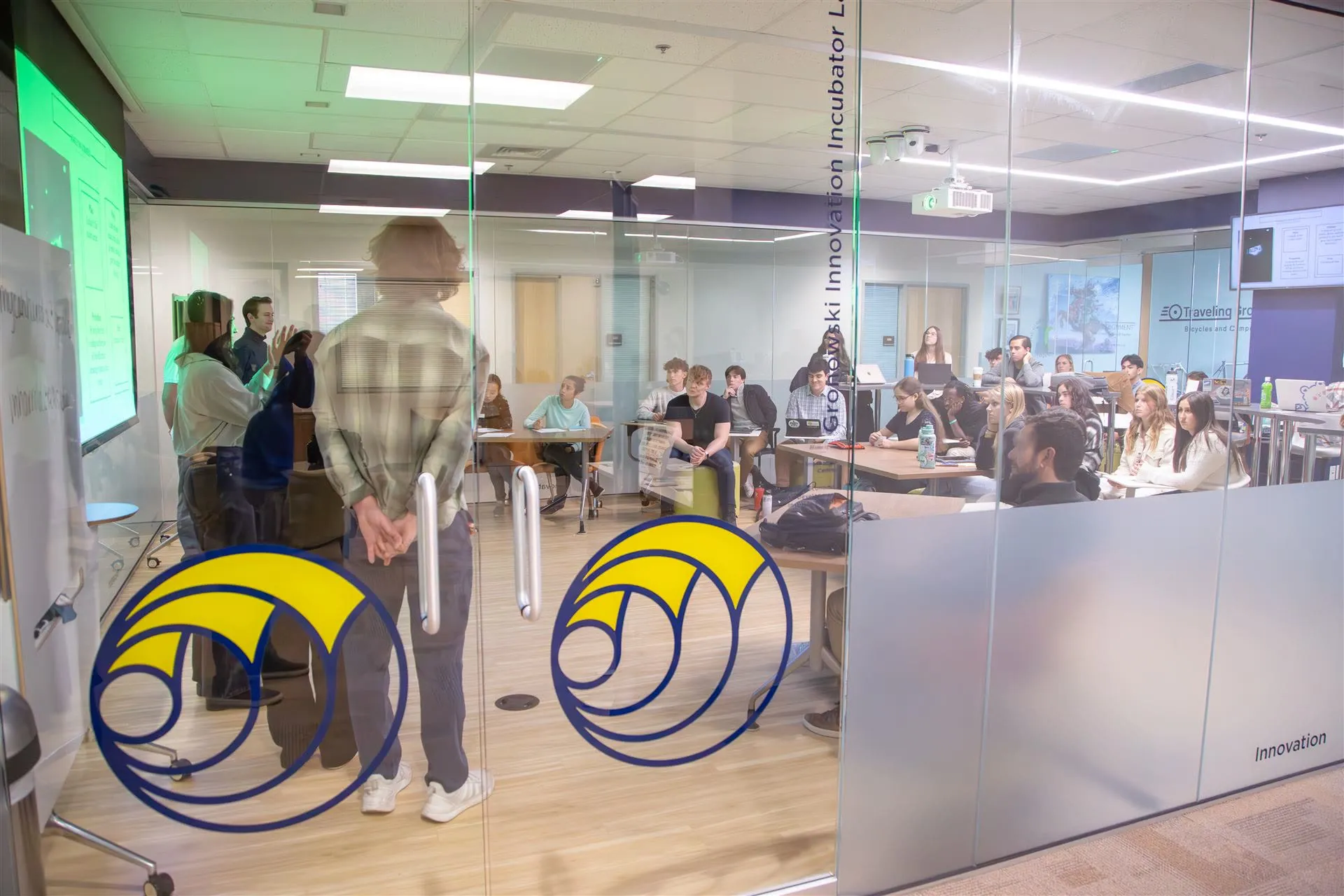
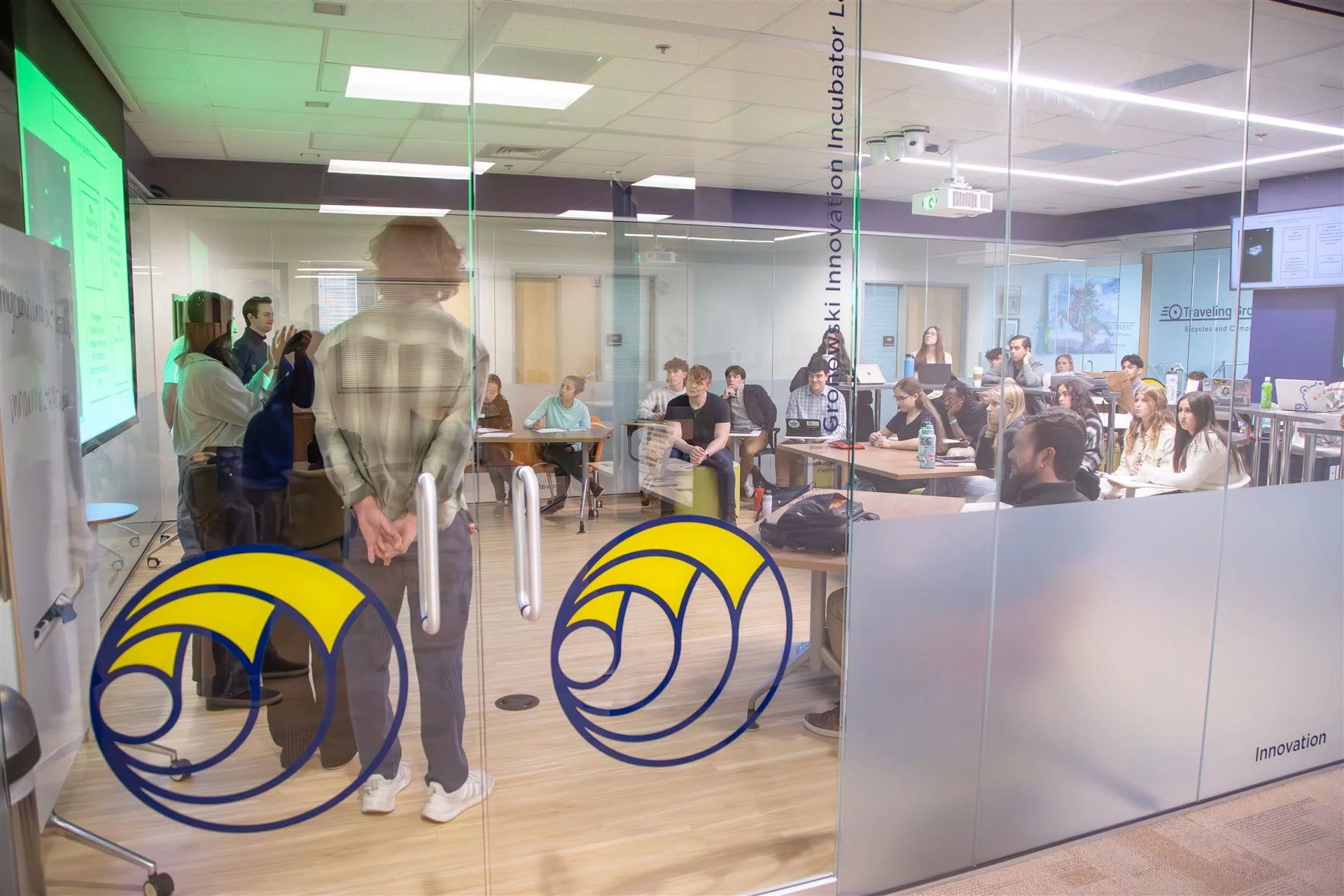
A $1M gift built the Gronowski Innovation Incubator Lab in five months. It has been where ideas at Regis take shape ever since.
In March 2017, Jamie and Ann Gronowski and family gave $1M for a room where ideas could take shape. Five months later, its doors opened in Clarke Hall.
- $1M
- From the Gronowski family
- 5 months
- From gift to open doors
The gift was part of Regis's $131M Manifest Magis campaign.
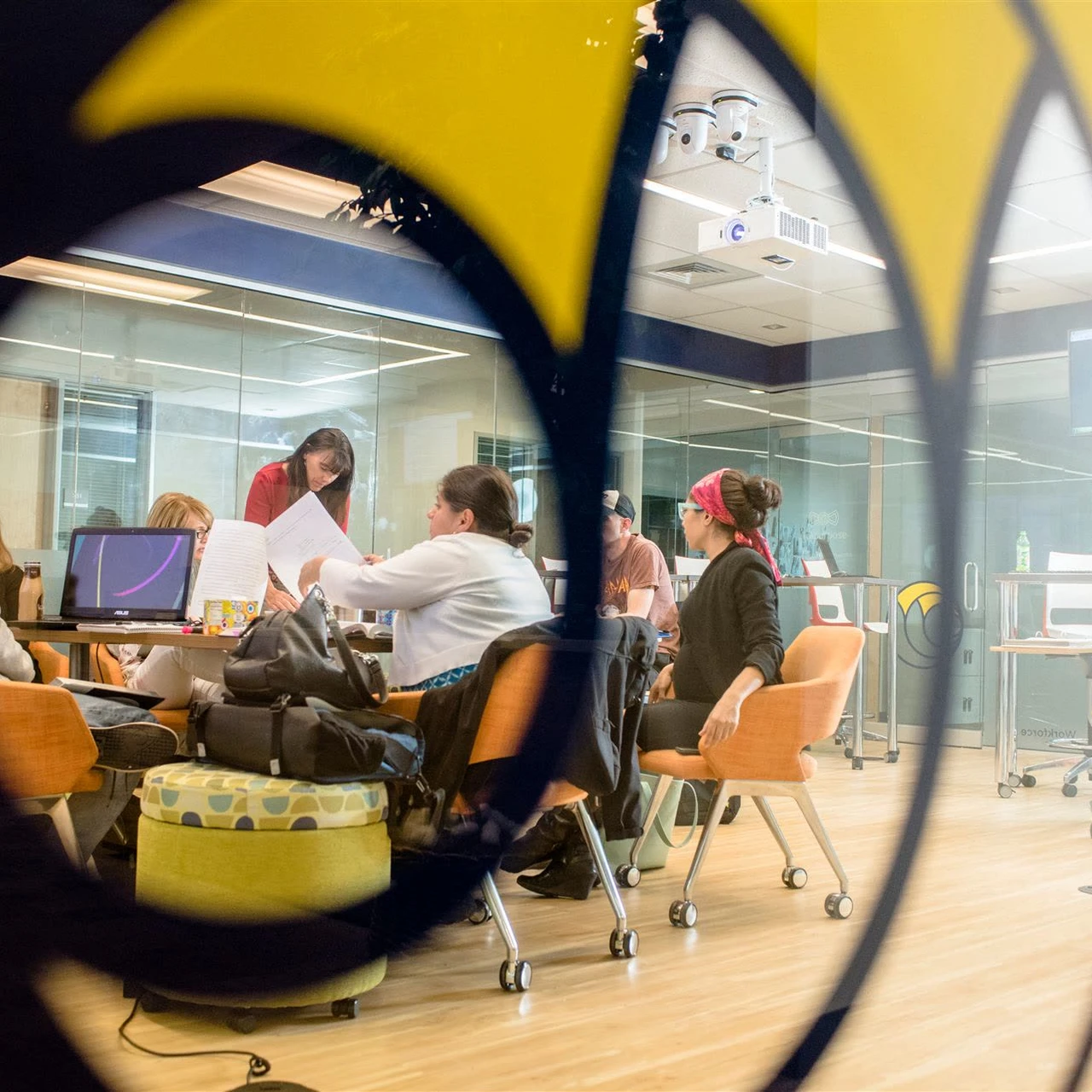
Then the walls filled up.
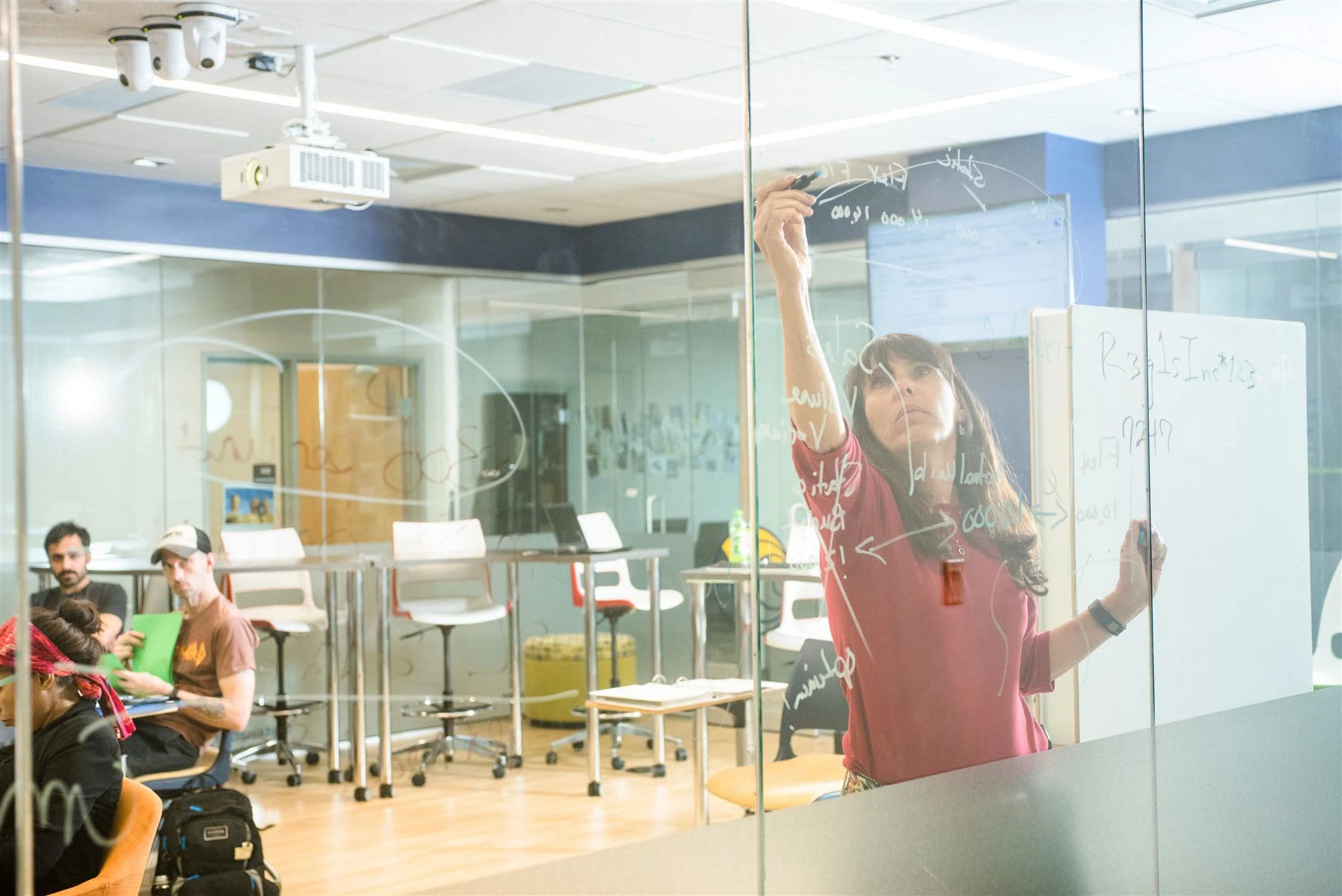
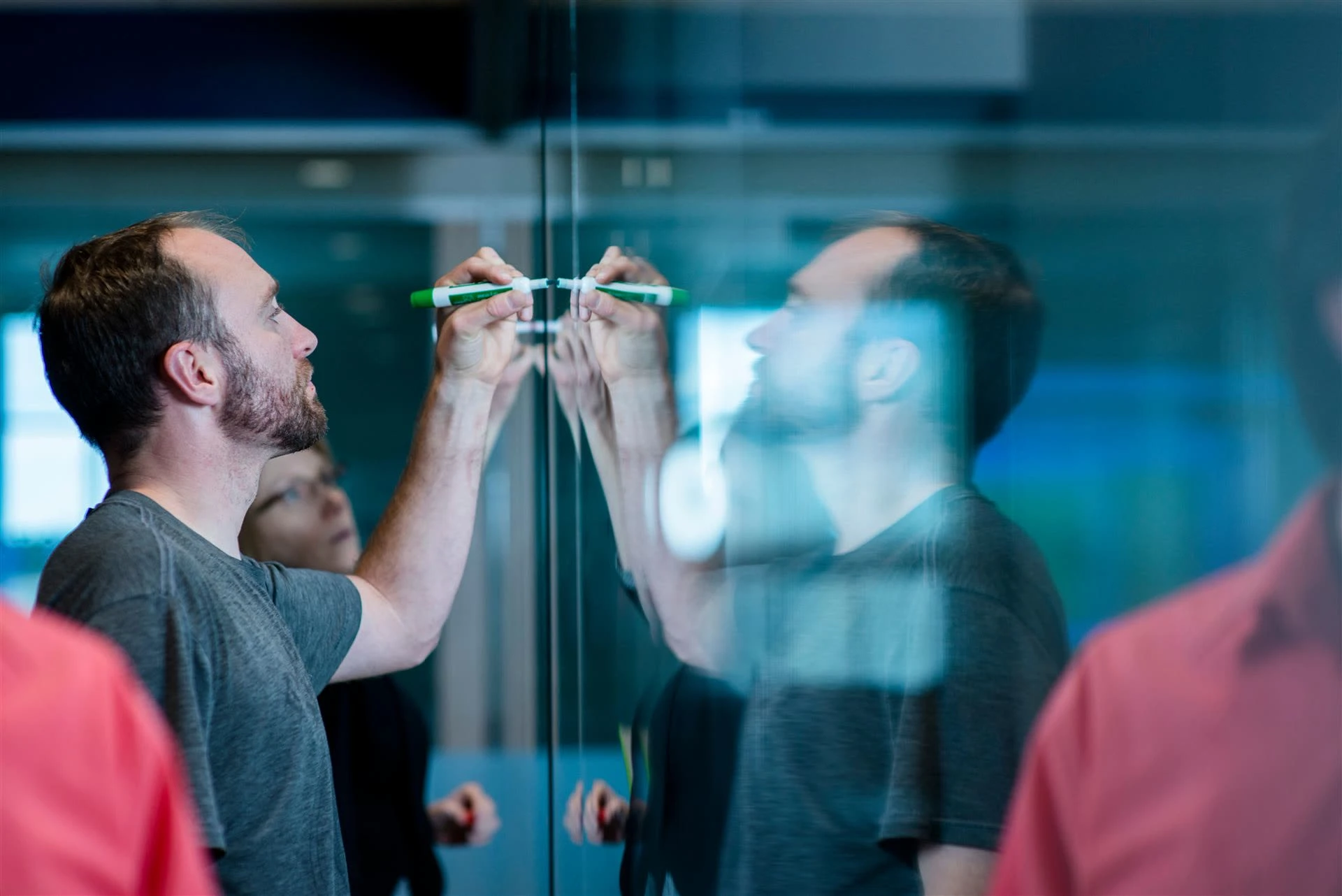
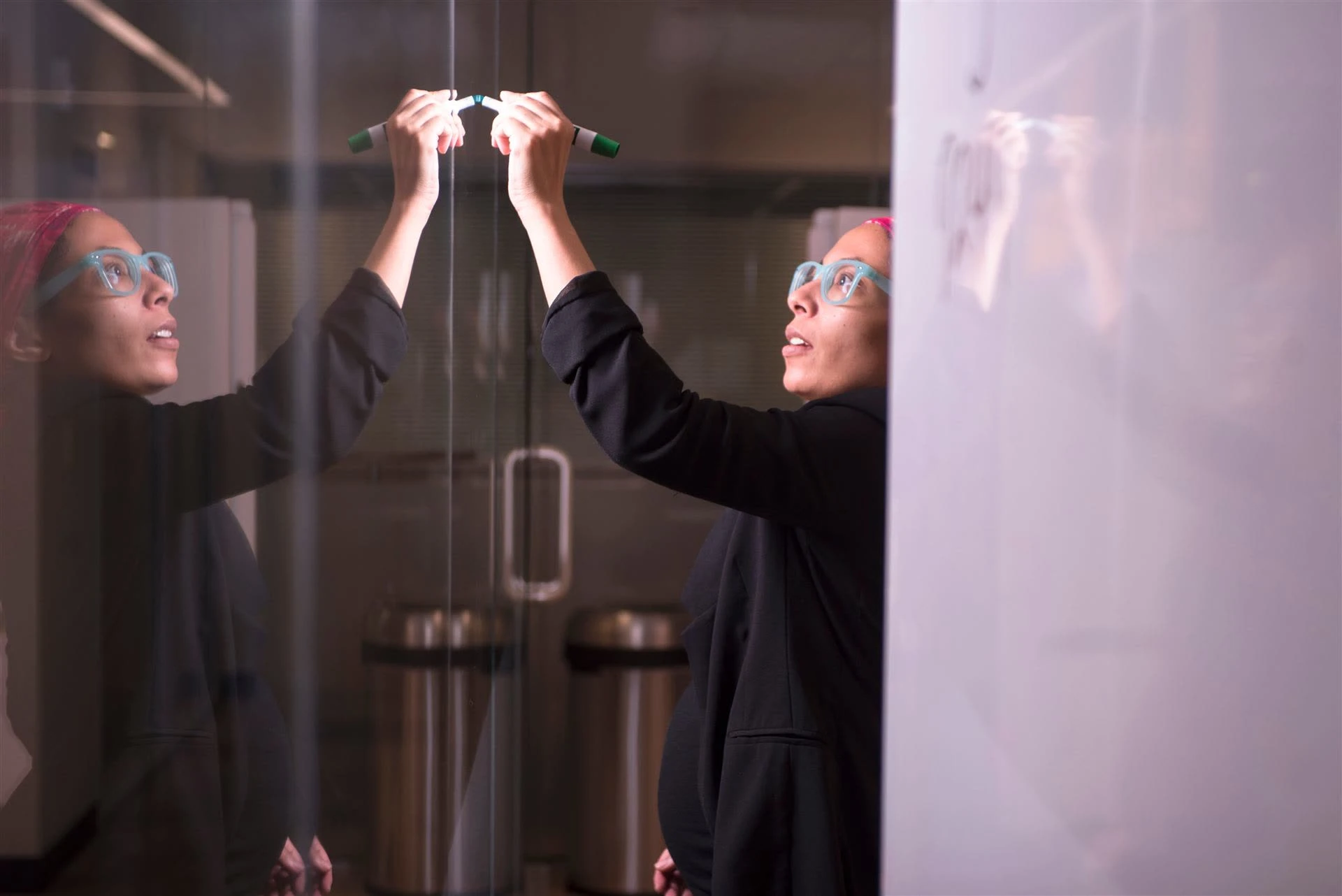
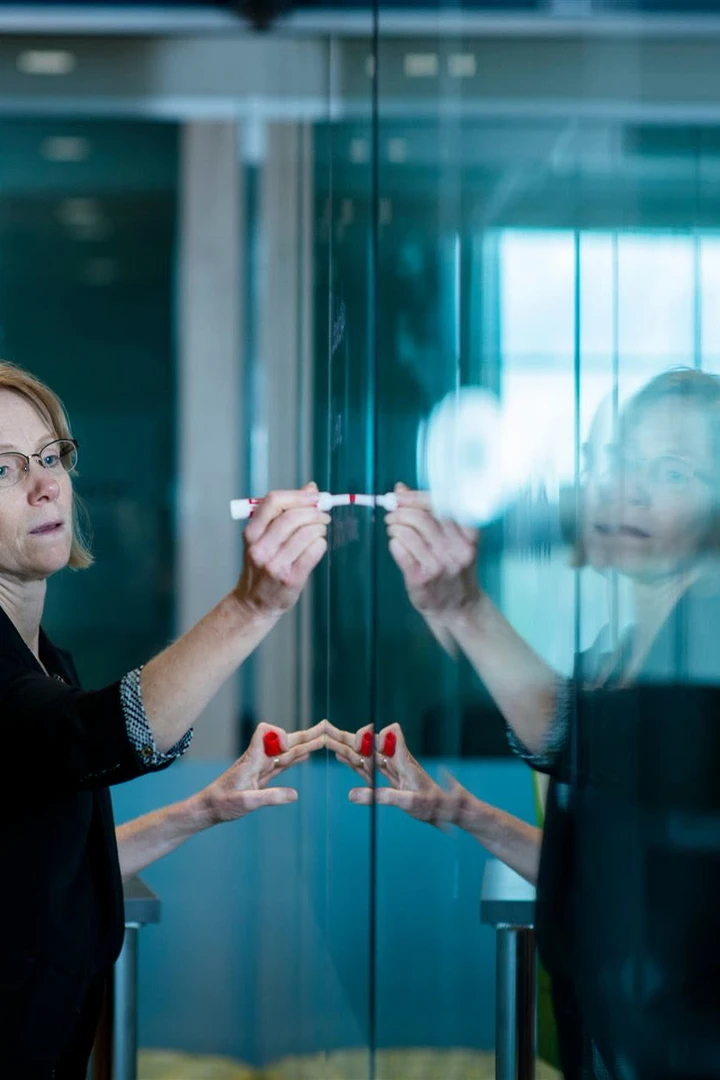
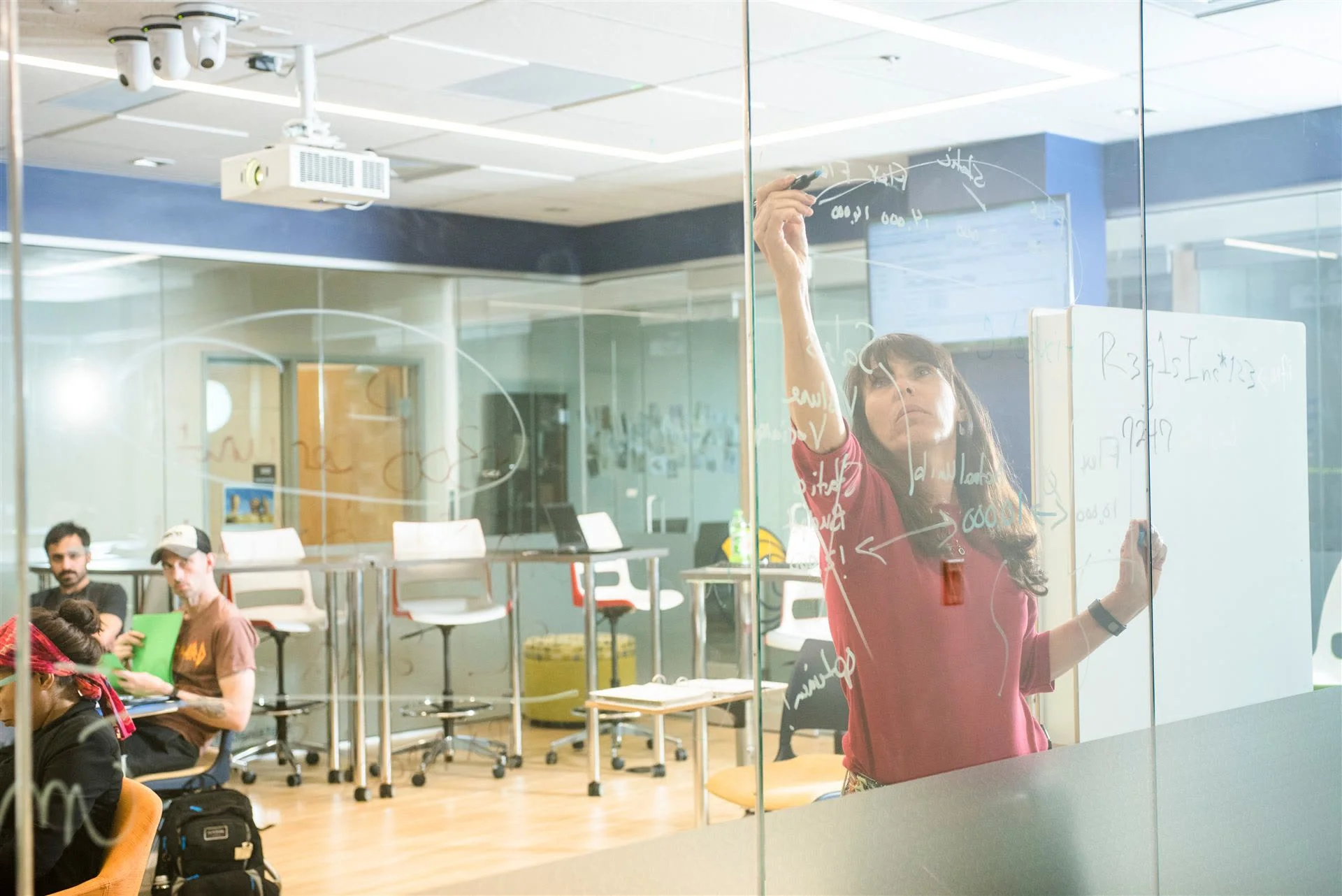
- Glass from floor to ceiling.
- Every wall can be written on.
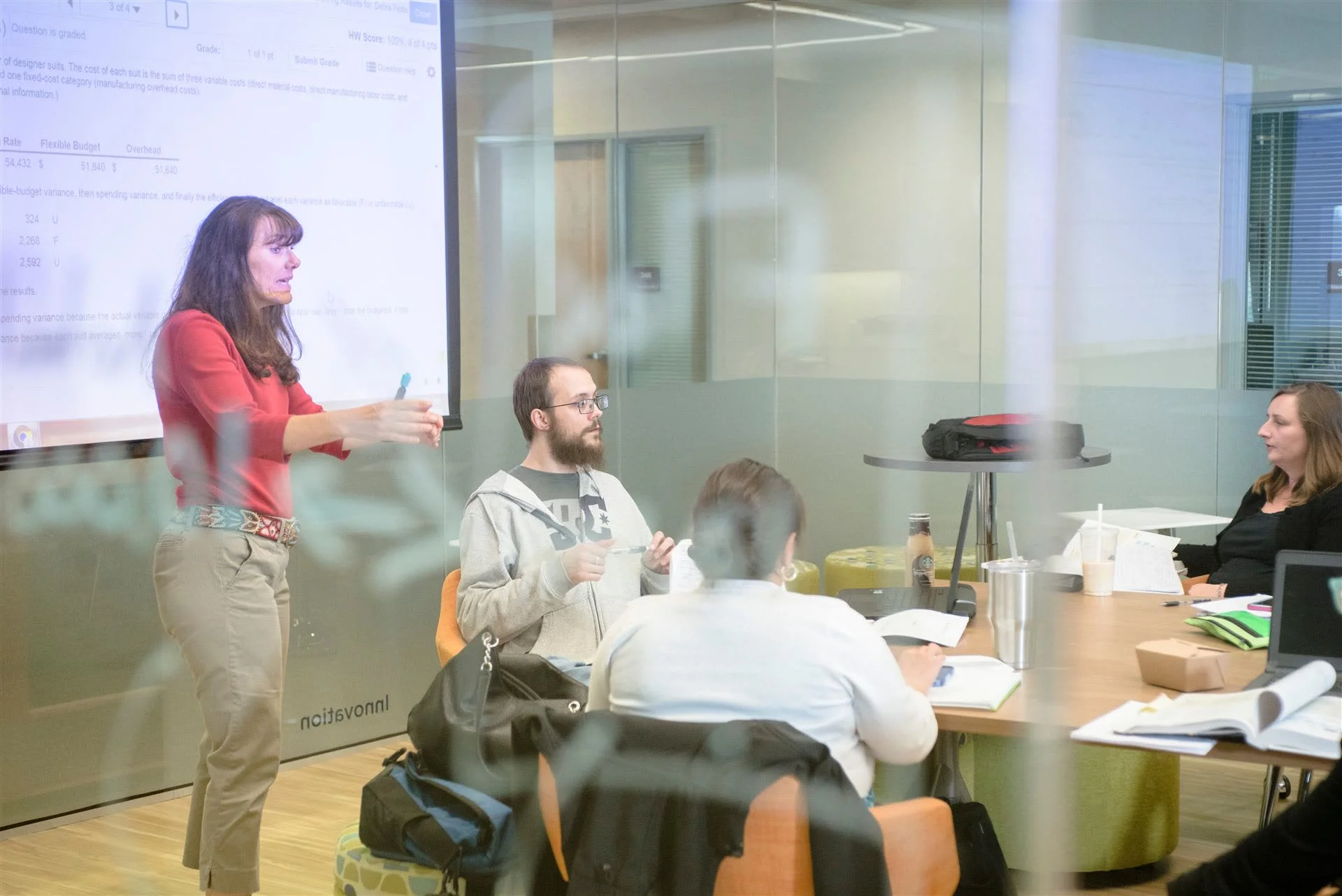
- Classes, clubs, and new businesses think out loud, side by side.
One room, used every way.
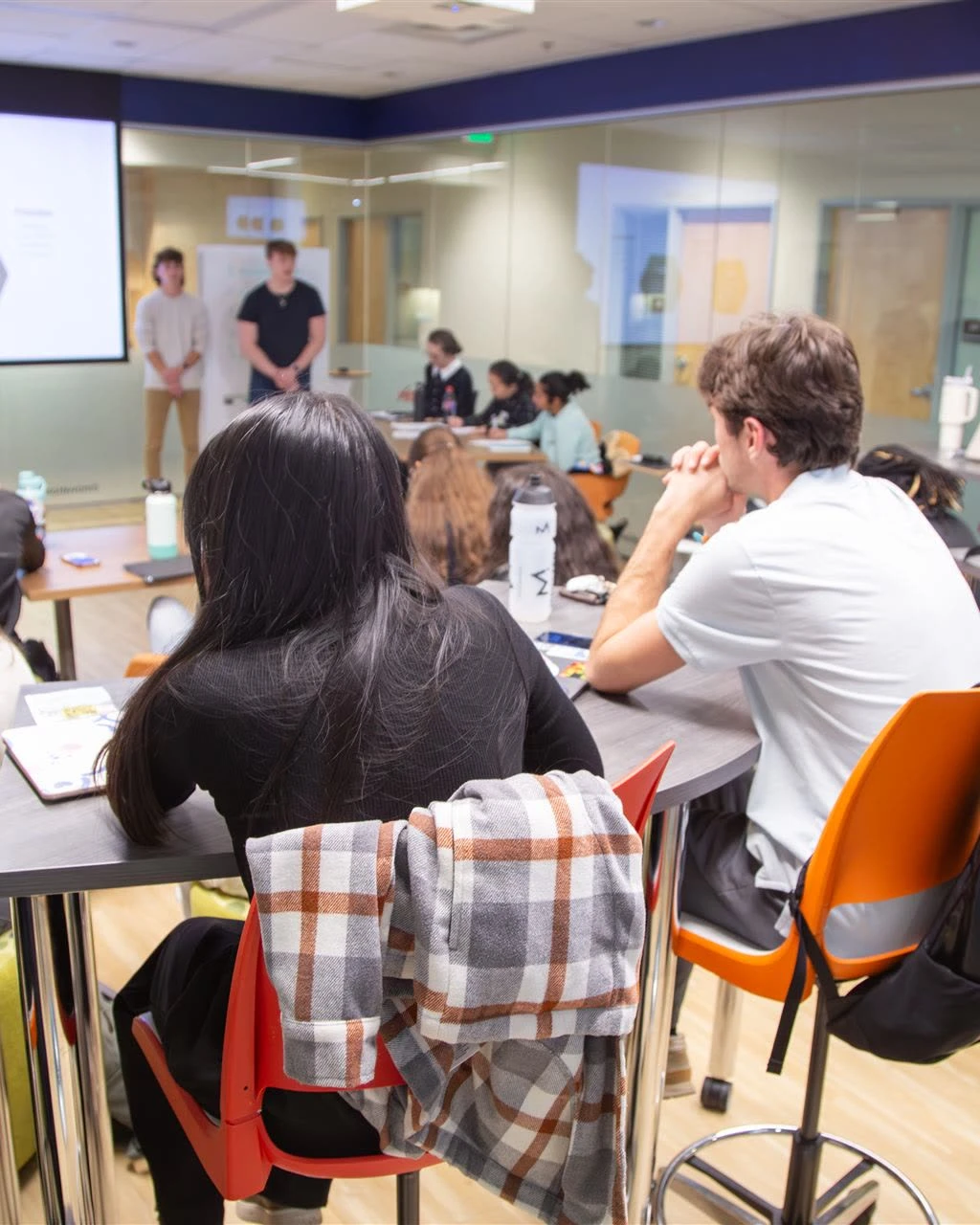
Courses taught across continents at the same time
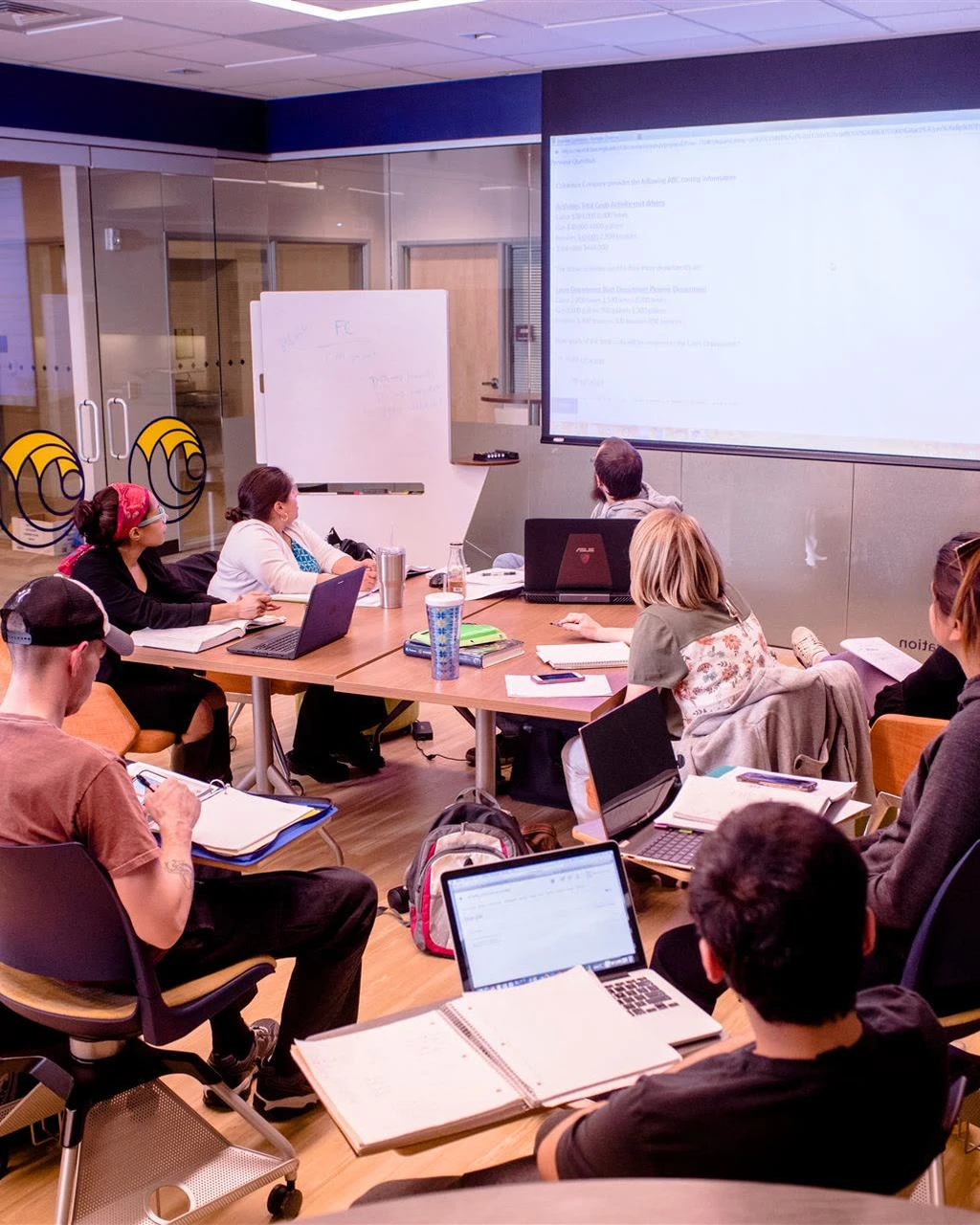
Home of the Entrepreneurial Innovation course
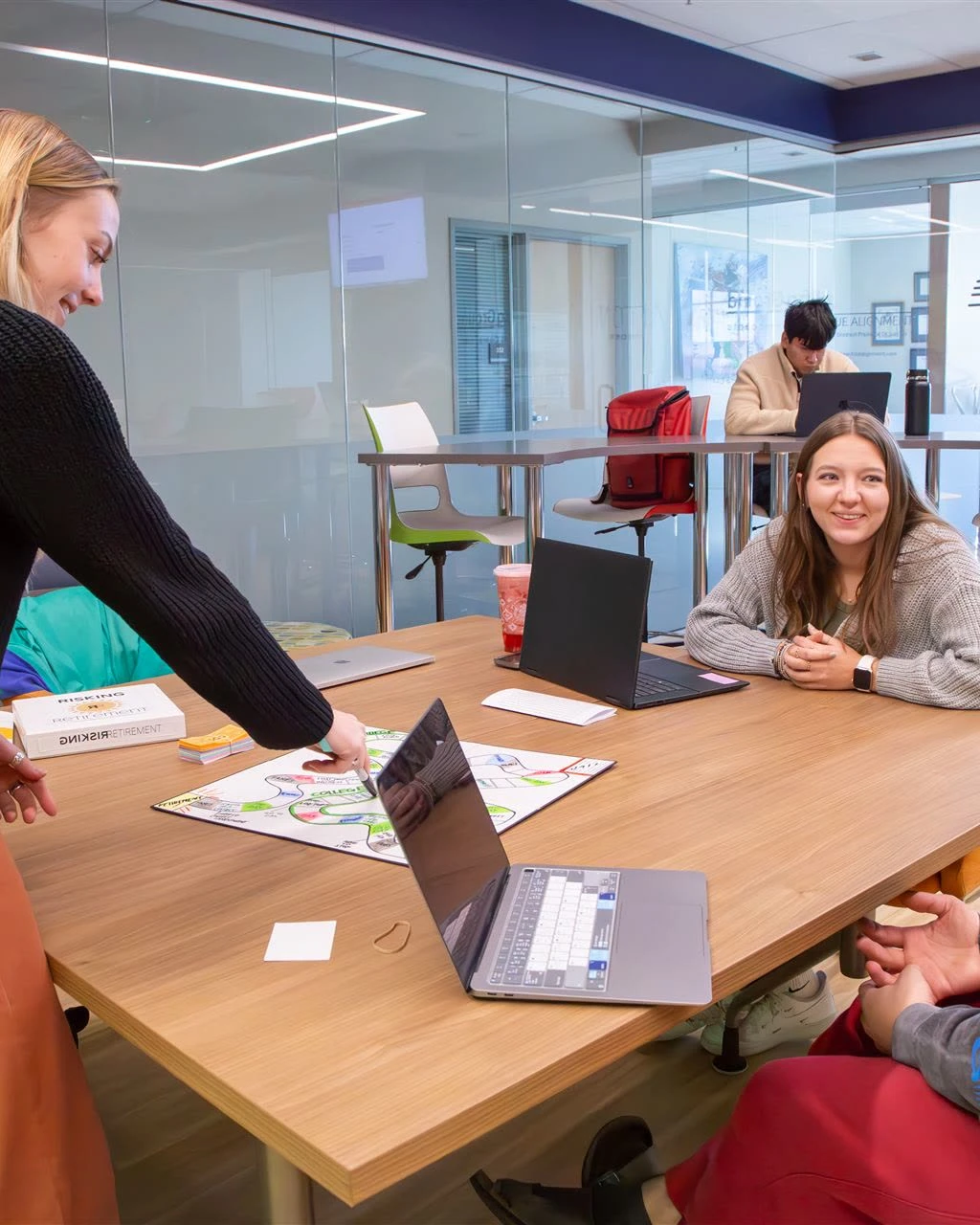
A hub for student clubs from across Regis
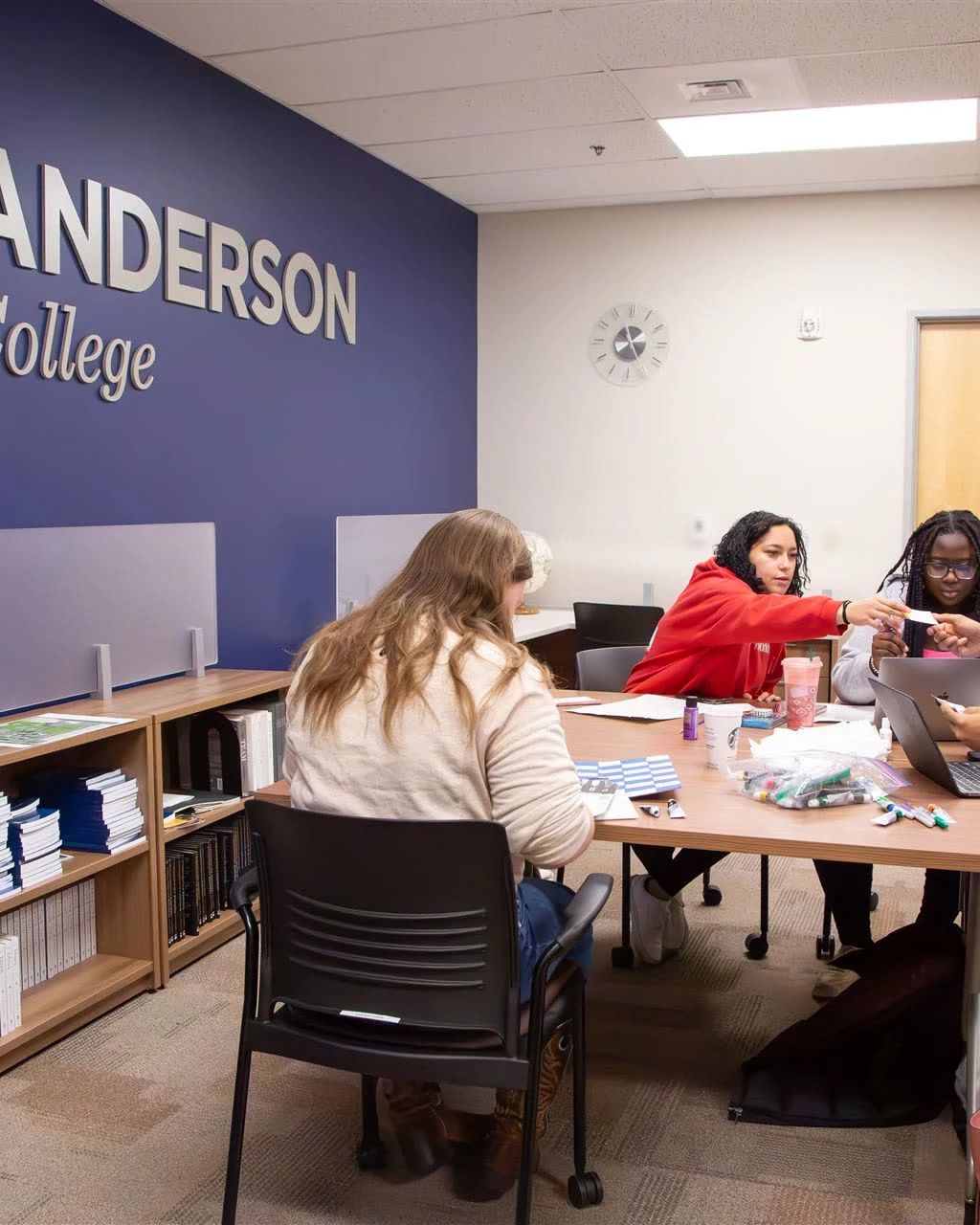
The model for new Regis classrooms, and a stop on Admissions tours
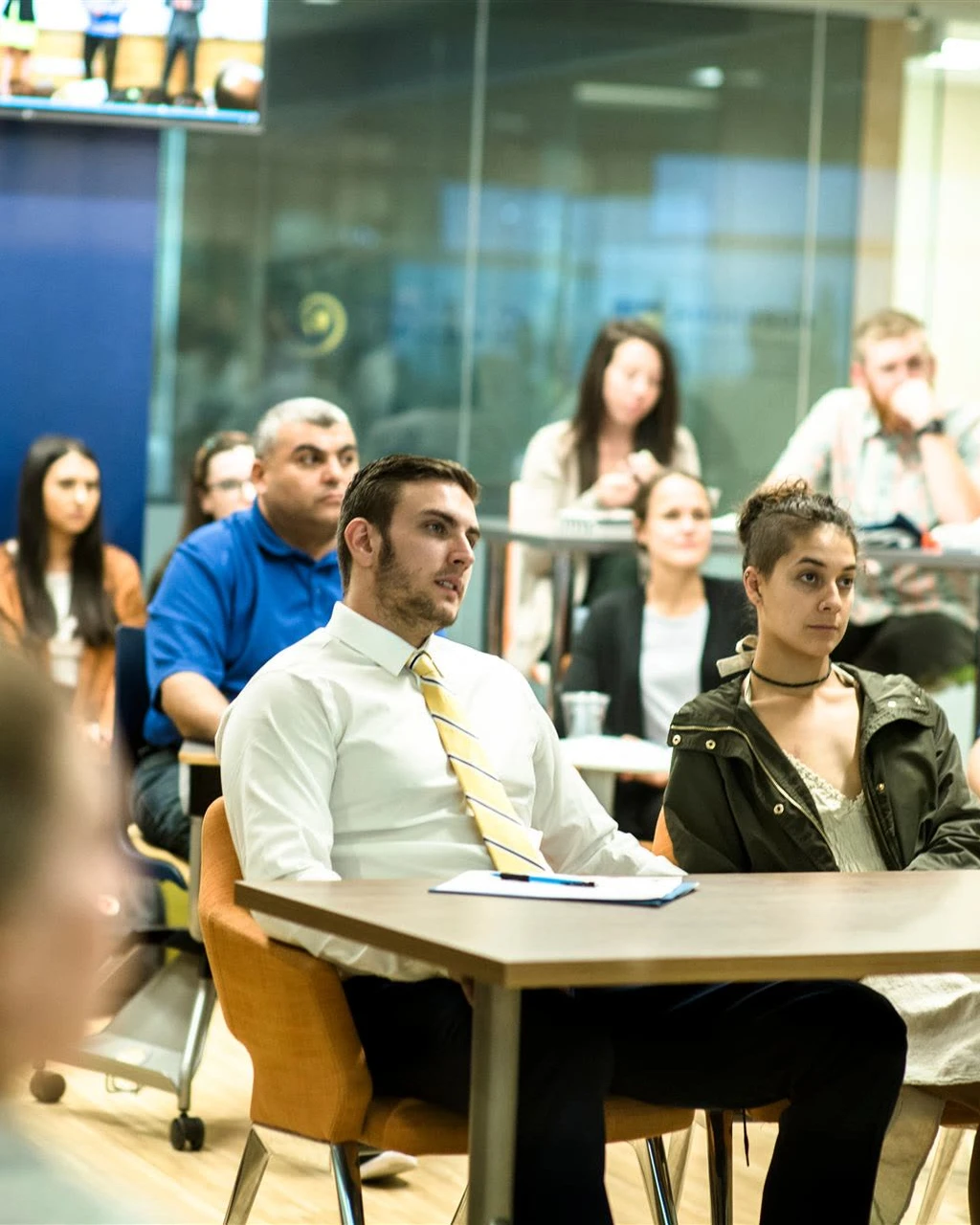
Host to community partners and design sprints, including IDEO in 2018
Some ideas need a door that closes.
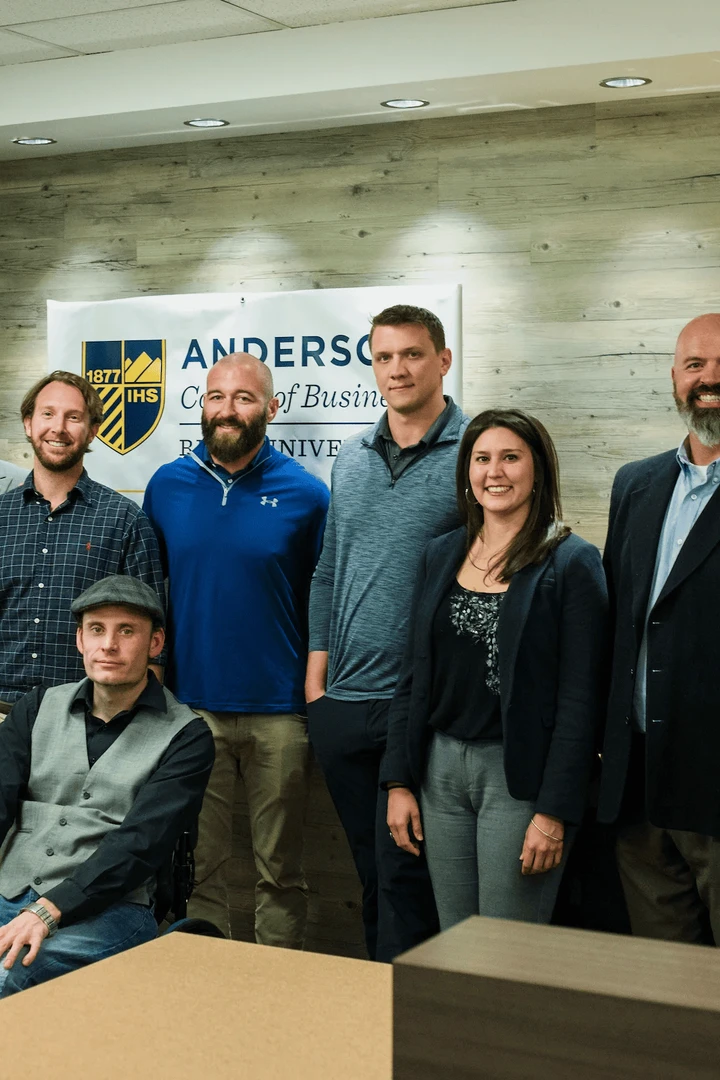
Three offices go to finalist teams from the Innovation Challenge and the Magis Factory. Each team gets a full year to keep building, with the whole University down the hall.
- 3
- Offices for finalist teams
- 1 year
- For each team to keep building
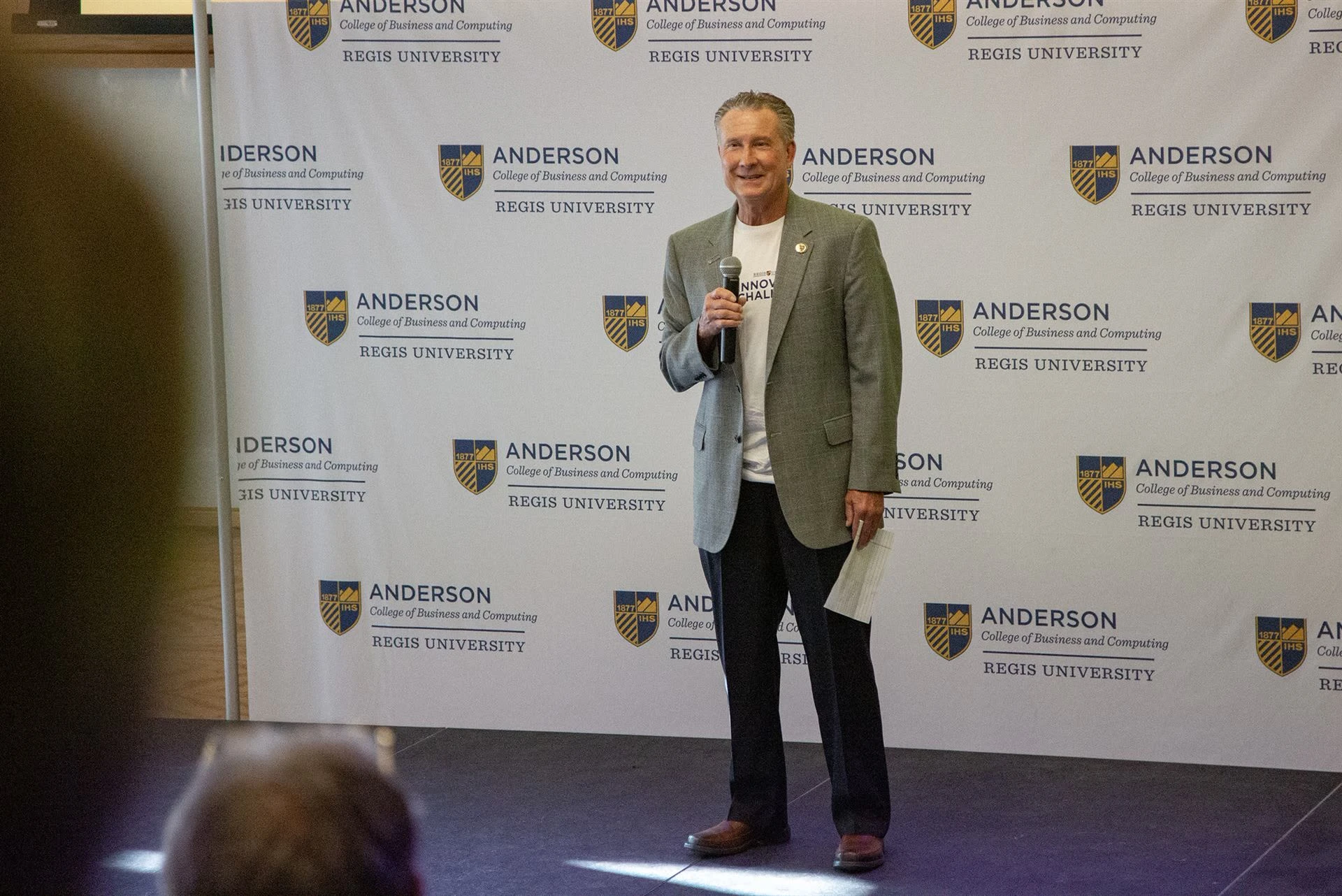
Where the Challenge began.
Regis's president credits the Lab with the birth of the Innovation Challenge. The Invictus Project, which became MindSpa, built its business model here.
Thank you to Jamie and Ann Gronowski and family.
Rethinking the classroom.
Rows of desks. One teacher. One board. It's the classroom most of us remember.
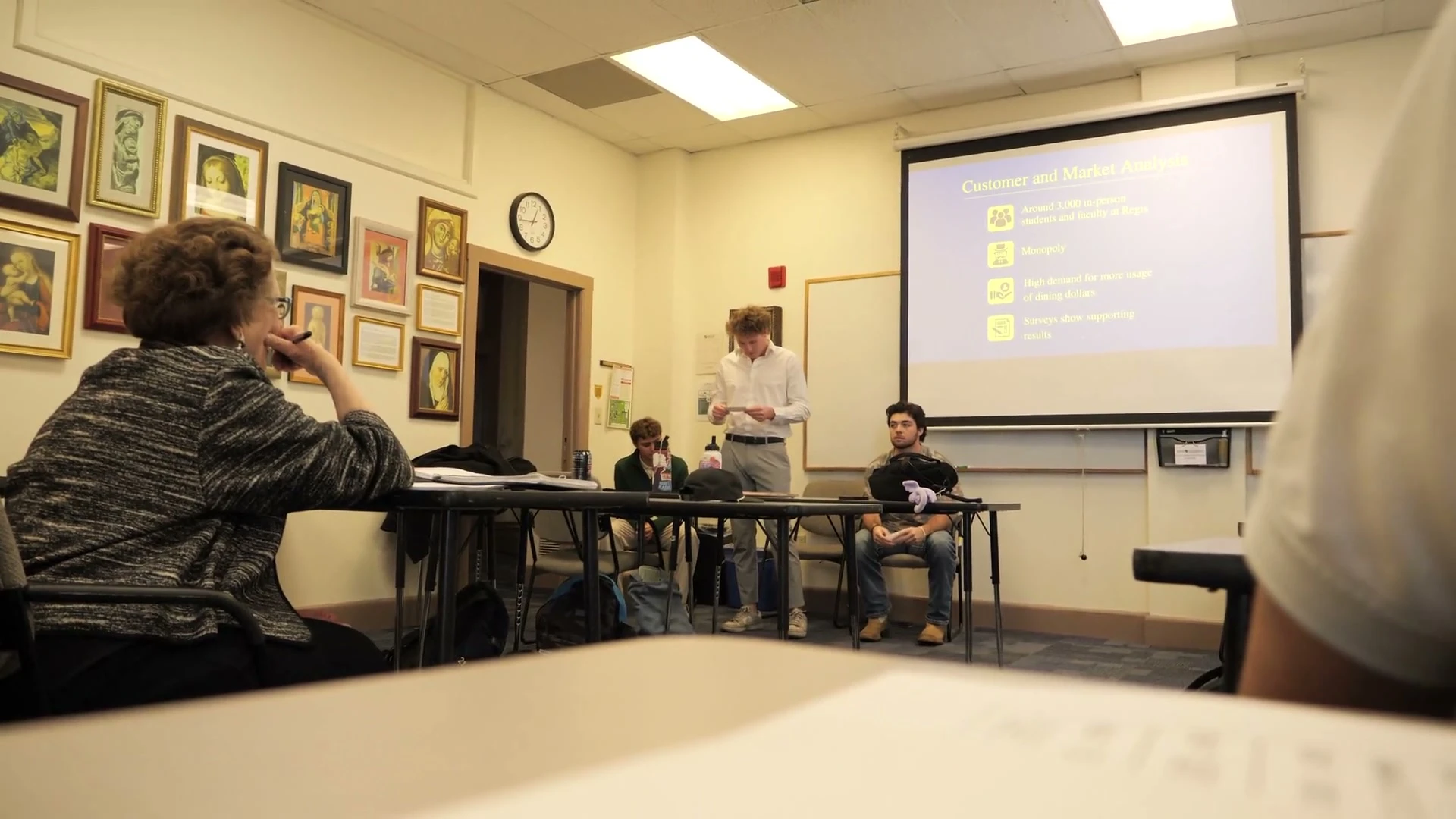
Then the Center opened the door.
Now students learn alongside the people who run Denver's businesses, and take what they learn out into the city.
Across Denver.
Denver comes to class.
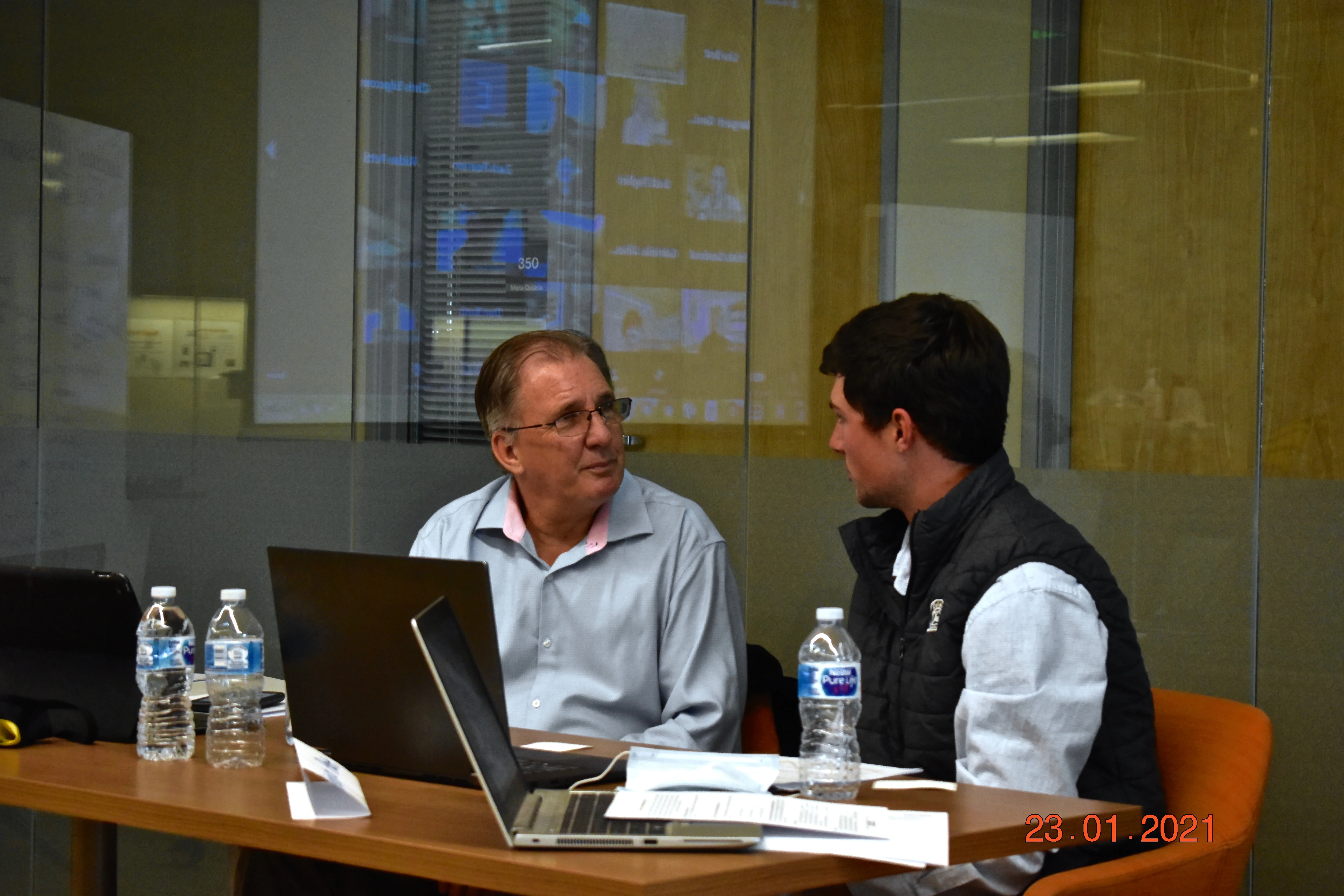
Volunteer mentors from Regis and the local community give more than 2,000 hours every year, one conversation at a time.
Then class goes to Denver.
In 2020 the Center's director was asked to lead the MBA. Its capstone now puts students to work with local businesses, it's required in every graduate business program, and a third of the curriculum is applied.
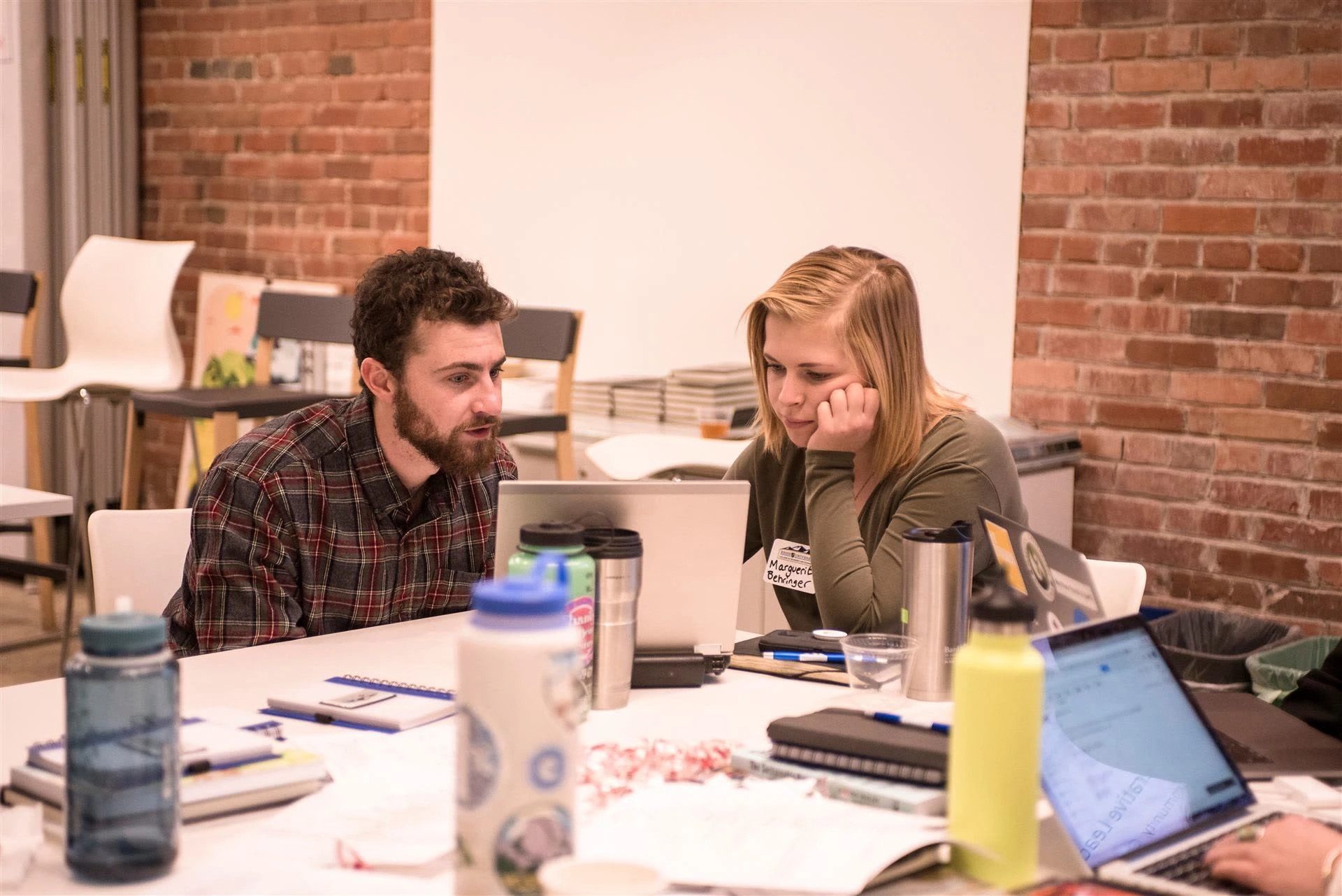
A real business, a real problem.
In 2019, students and community members ran a design sprint with Craft:ATI for ICU2, a local business.
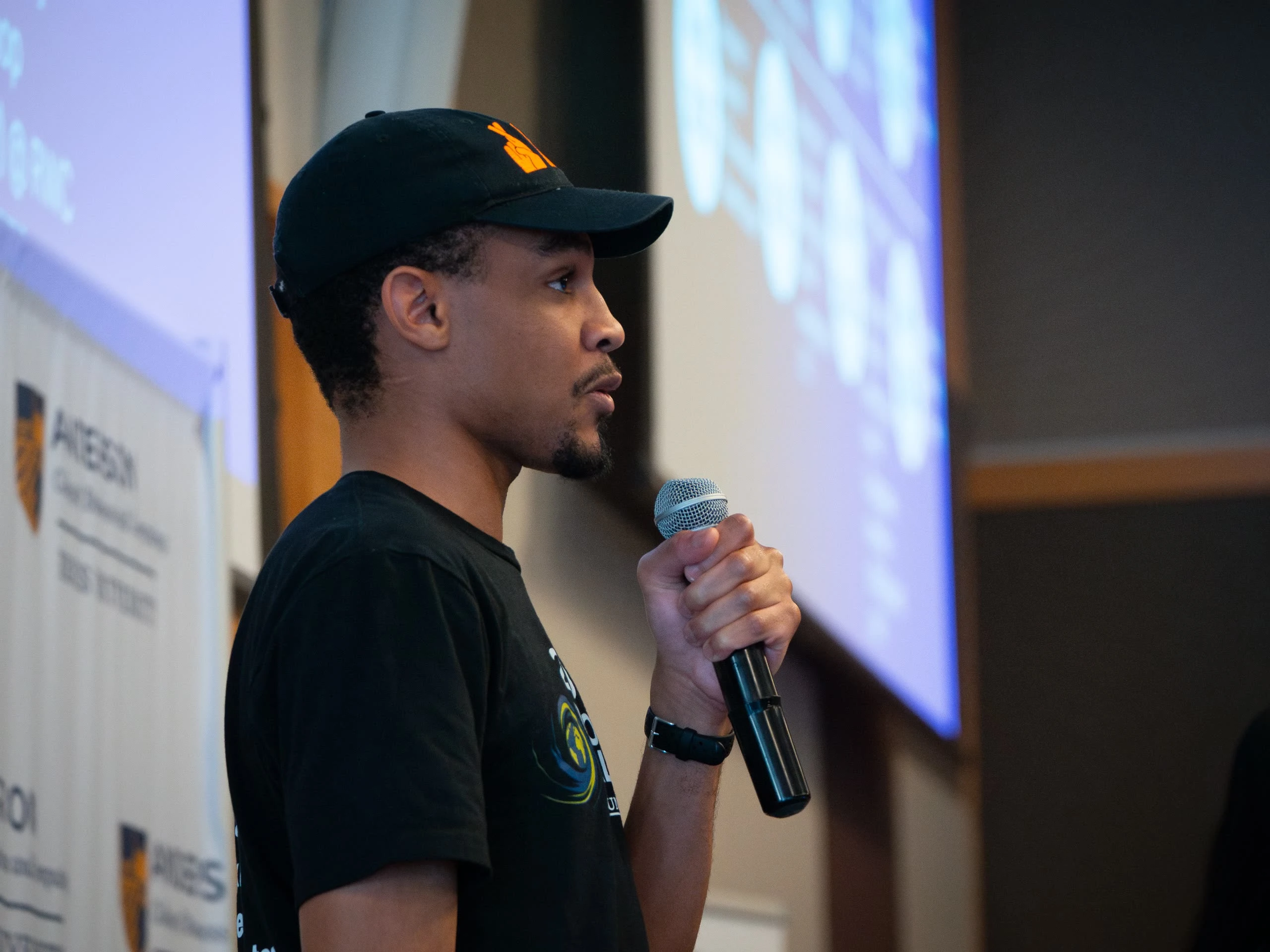
On the city's stages.
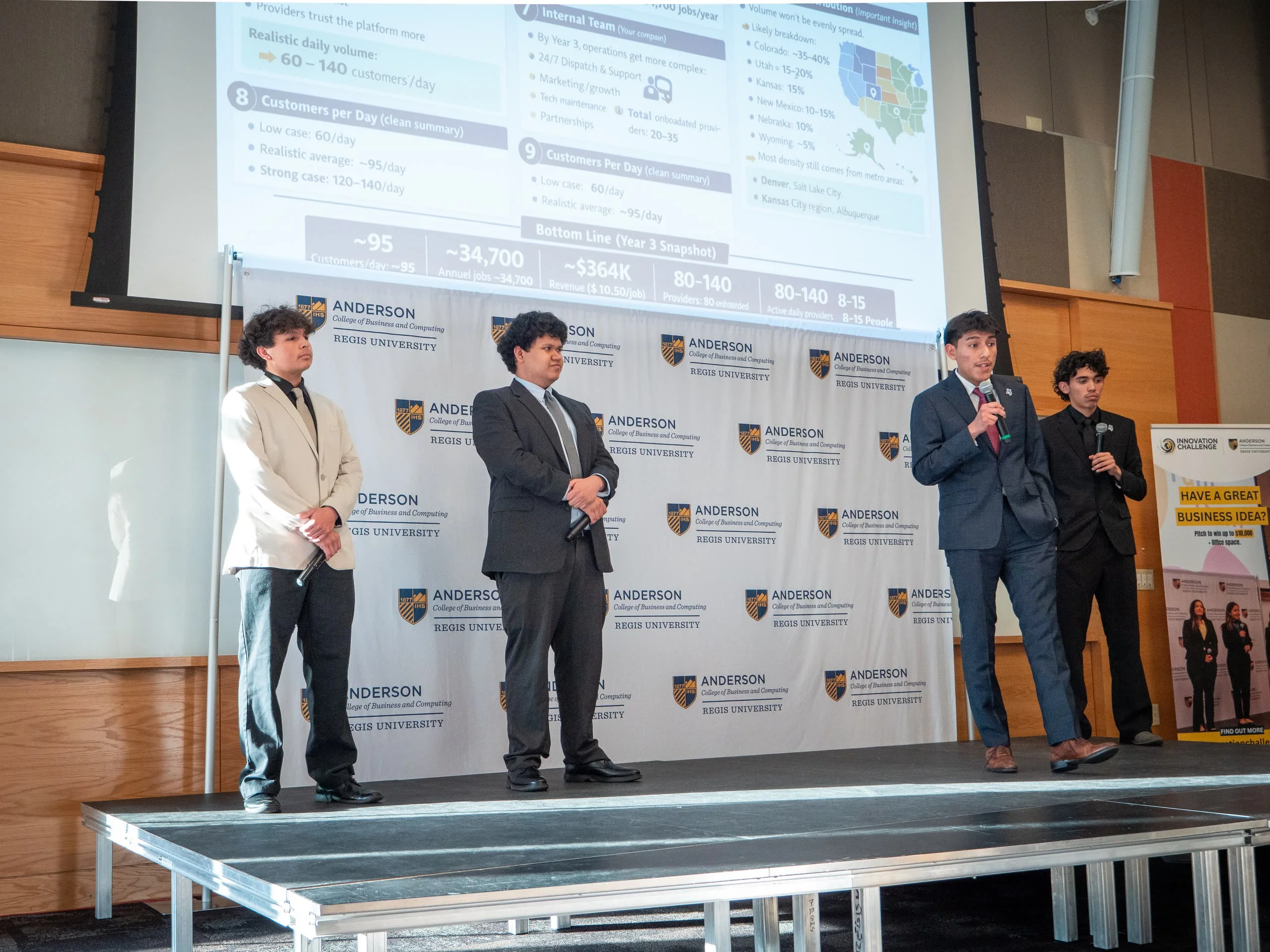
Challenge winners and participants have presented at Golden Startup Coffee, which the Center sponsors, more than eight times.
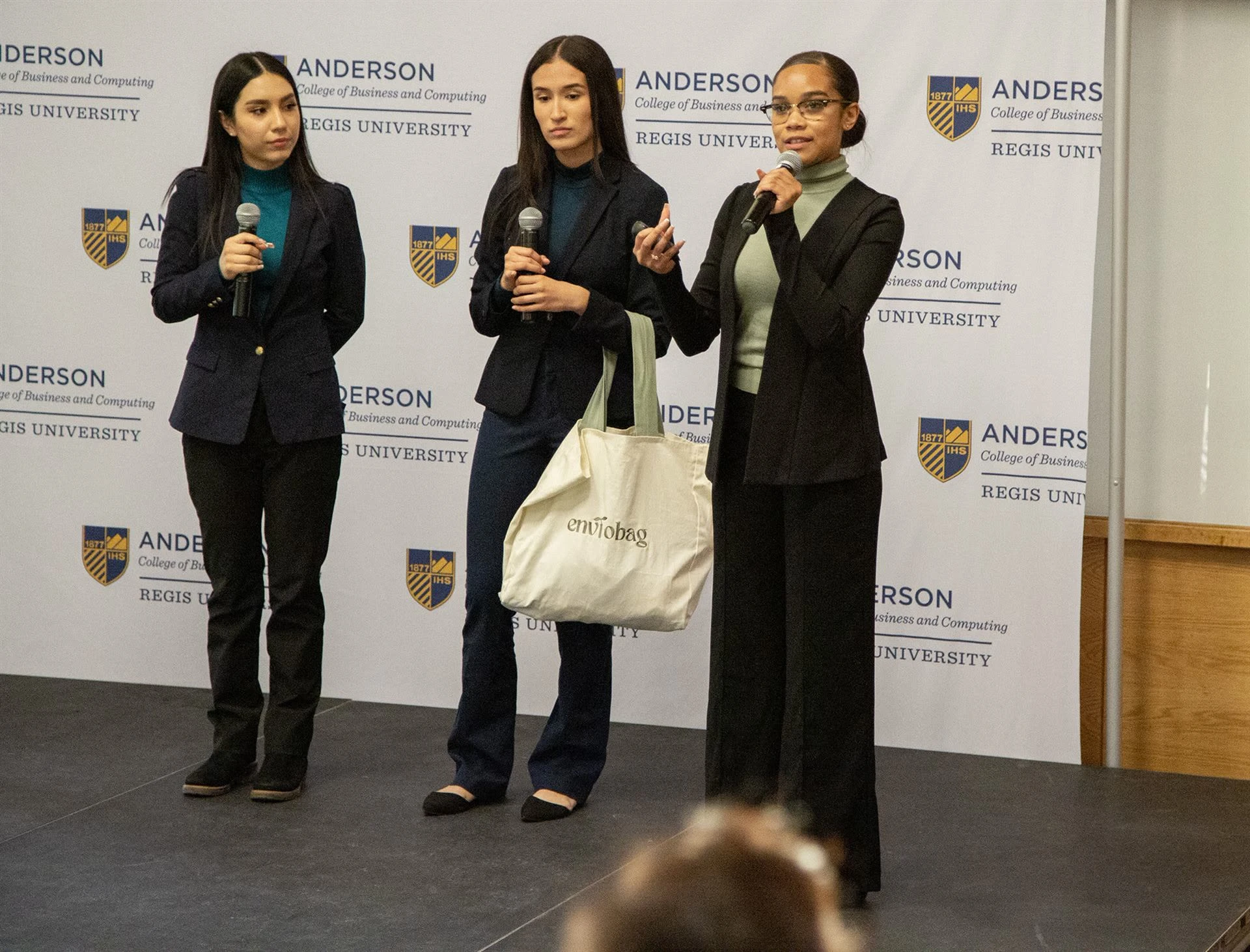
Starting in high school.
In 2023, 18 Arrupe Jesuit High School seniors earned college credit in Entrepreneurial Innovation. Their winning team, EnvioBag, pitched at the Challenge Finals.
And around the world.
- Regis, Denver
Every route starts in the classroom.
- Peru
A live class with students in Peru, taught at the same time from the Gronowski Lab.
- Africa
In 2018, a blockchain course built with the SALT Bridge Foundation sent students to Africa on scholarships.
- India and Seattle
At the International Business Plan Competition, with St. Joseph's Institute of Management and Seattle University, Anderson students won in Regis's first year, 2024–25.
A win in their first year.
In 2024–25, two Anderson students entered an international business plan competition for the first time, on a team that spanned two continents, and won it.
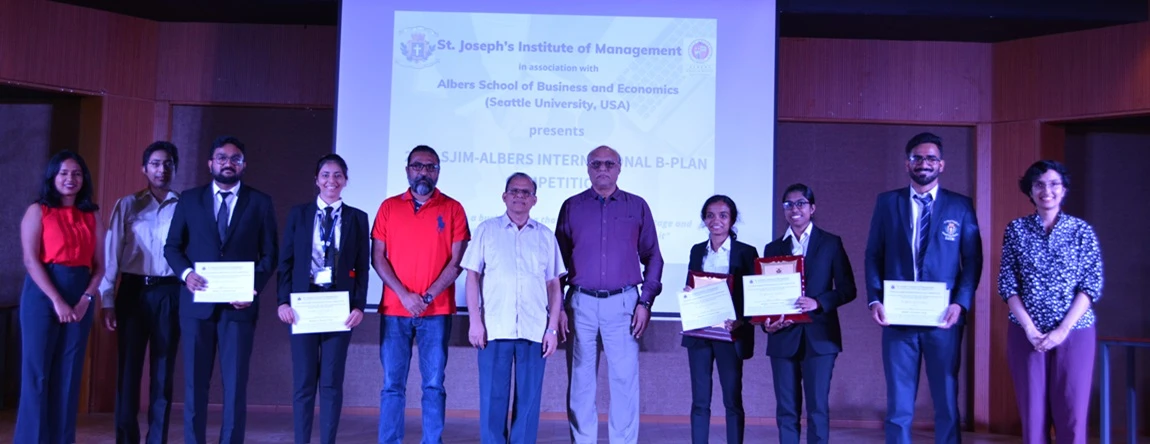
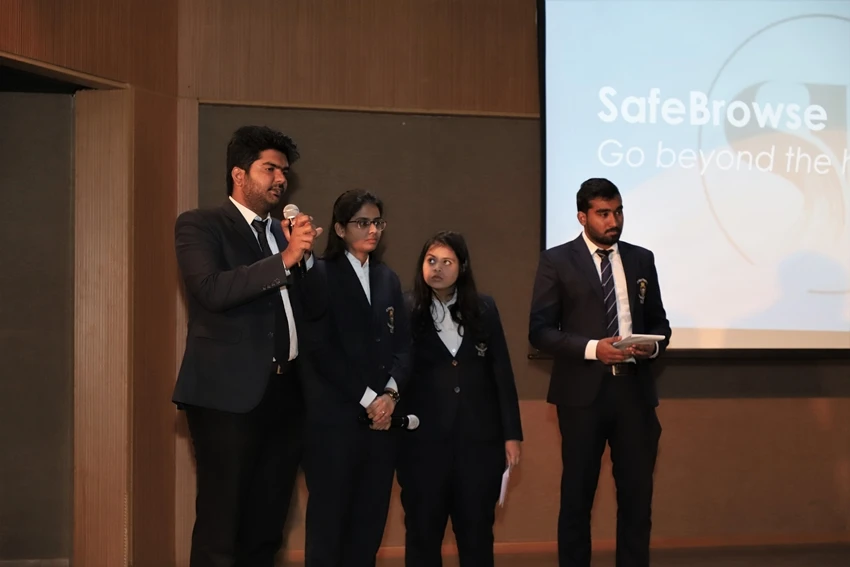
- A team that never shares a room.
Since 2017, St. Joseph's Institute of Management in Bengaluru and Seattle University's Albers School of Business and Economics have set students one global problem a year. Students are placed on virtual teams across schools and countries, write a business plan together, and the three best present it live to judges.
- AI for elderly care.
The 8th competition asked for AI that helps older adults. Desiree Parker and Katia Del Toro Garza teamed with Aniket Jaiswal and Nameeth M A from St. Joseph's, and their plan won the final, hosted by Albers in February 2025.
- The 10th, this year.
The 2026–27 competition asks teams to combine social media and AI to improve family life, with students from the US, Mexico, Spain, the Philippines, Taiwan, and India. Regis is one of the schools again, and the final is in February 2027.
- 1st
- place, in Regis's first year
- 6
- countries took part in 2024–25
- 4
- students on the winning team, from Regis and St. Joseph's
Anderson Reports.
MBA students publish equity research on Colorado companies that Wall Street barely covers. They interview the executives, visit the company, build the model, and set a price target. Then the market answers.
3 of 4reports reached their students' price targets.
Here is each call, what happened next, and where it stands today.
 Reached the target
 Reached the target
 Not reached yet
 Reached the target
Past its target in two months.
Students called Farmland Partners a Buy at $8.59, with an $11.58 target. By February 2021 it closed above the target, and it reached a monthly close of $15.02 in May 2022.
Read the report- At the report
- $8.59
- Students' target
- $11.58
- Highest since
- $15.02
- Today
- $10.74
Past its target that summer.
Students called WOW! a Buy at $14.16, with a $19.10 target. It closed at $23.71 on August 6, 2021. At the end of 2025, DigitalBridge and Crestview took it private at $5.20 a share.
Read the report
- At the report
- $14.16
- Students' target
- $19.10
- Highest since
- $23.71
- Taken private
- $5.20
The boldest call. Not there yet.
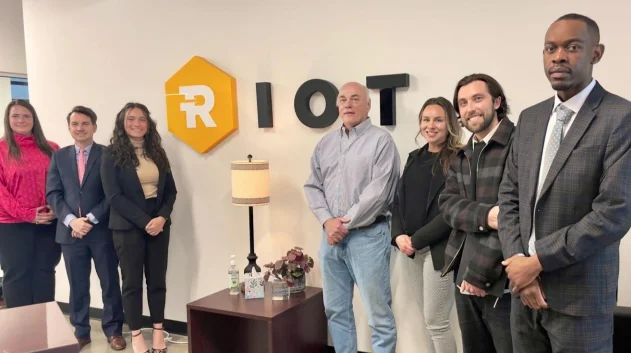
Students rated Riot a Strong Buy at $12.80, with a $51.25 target. Renamed Riot Platforms in 2023, it hasn't reached it. Its best monthly close since was $27.38, in June 2026, and it trades above where the students started.
Read the report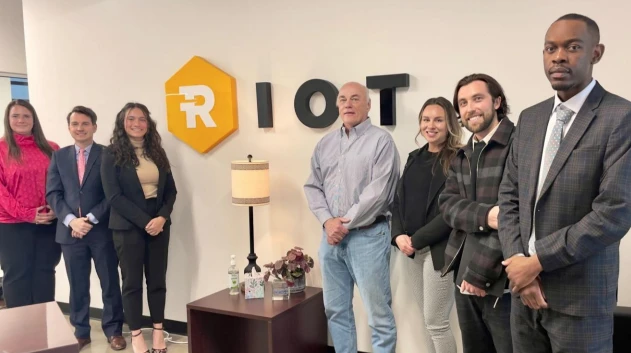
- At the report
- $12.80
- Students' target
- $51.25
- Highest since
- $27.38
- Today
- $18.93
Its first analysts were right.
Pure Cycle's CFO said Anderson students gave the company its first professional analyst coverage. They called it a Buy at $9.68, with a $10.76 target. It closed above the target in June 2023 and reached $14.54 in November 2024.
Read the report
- At the report
- $9.68
- Students' target
- $10.76
- Highest since
- $14.54
- Today
- $10.99
- 4
- Reports since 2020
- 3 of 4
- Reached their targets
- 14
- Student analysts
Prices are closes from Yahoo Finance as of October 6, 2026. Past results don't predict future ones. The Anderson Reports are produced solely as a part of the MBA program of Regis University's Anderson College of Business and Computing. The reports are not investment advice and you should not and may not rely on them in making any investment decision. You should consult an investment professional and/or conduct your own primary research regarding any potential investment.
Supported by

The Innovation Challenge
What is the Innovation Challenge?
The Regis Innovation Challenge is Colorado's only university business competition that openly welcomes and supports both student and community businesses. Open to anyone with a student team member, businesses under $100,000 annual revenue compete across a semester-long journey of mentorship, pitch rounds, and community support, culminating in a Finals event where the audience votes for the winner.
This is not just a pitch competition. It is a full development experience built around the belief that the best businesses are built through listening, collaboration, and a willingness to embrace failure as a step toward success.
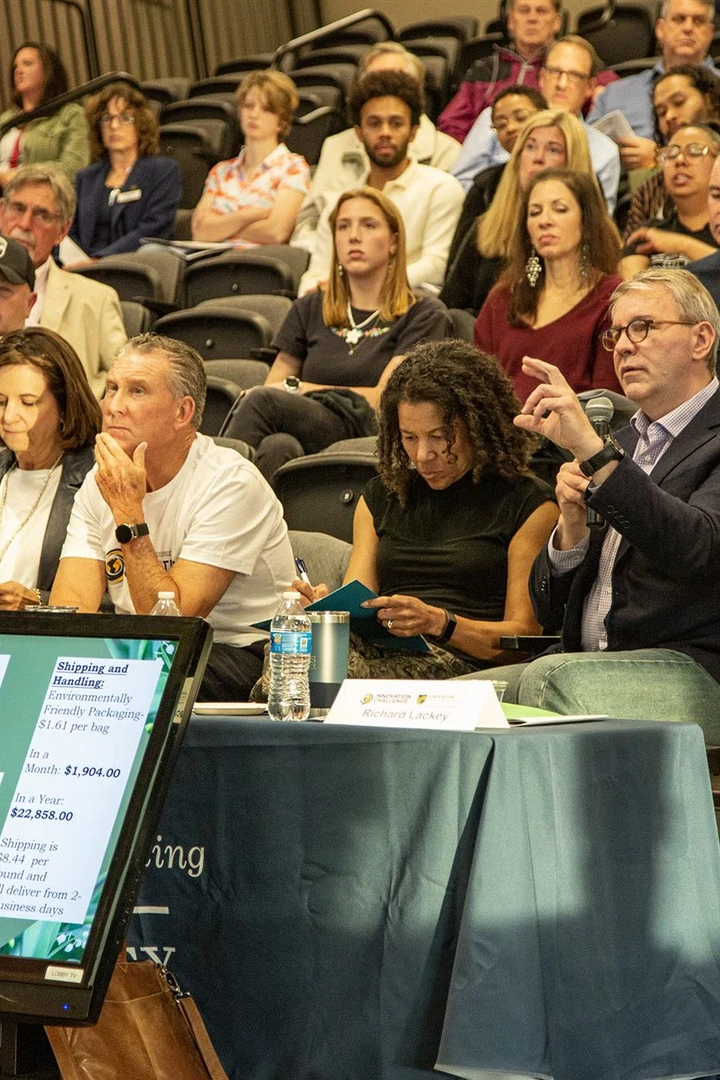
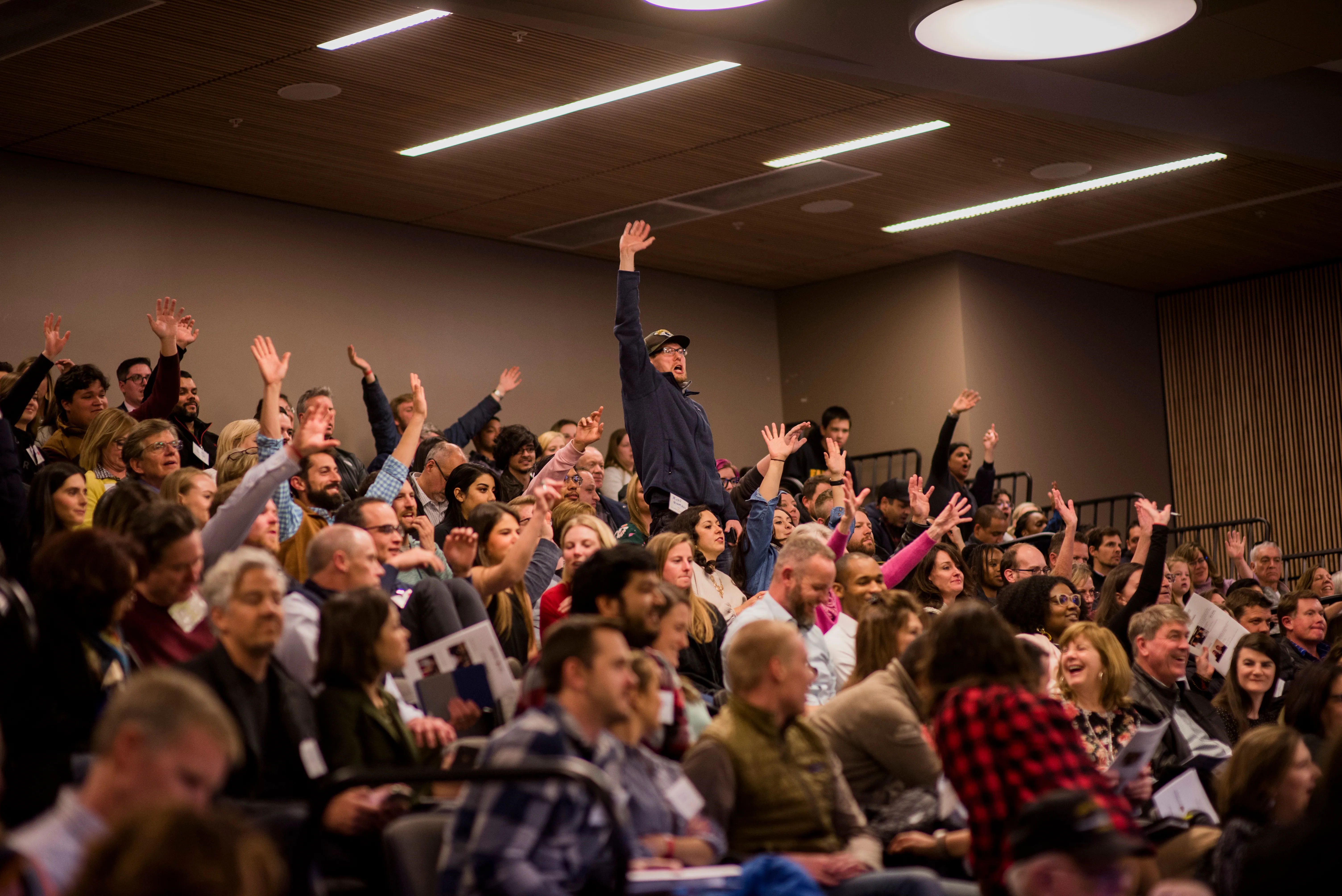
The 2025 Finals took place on April 16, 2025 in the Mountain View Room at Claver Hall, Regis University, with more than 200 community members, mentors, judges, alumni, and supporters joining to celebrate our finalists and invest in the future of entrepreneurship.
The season
Innovation Challenge Calendar.
Open any event to read more.
October
November
December
January
February
March
April
 The 2026–27 season(opens in a new tab)
October
Open Houses
Gronowski Innovation Incubator
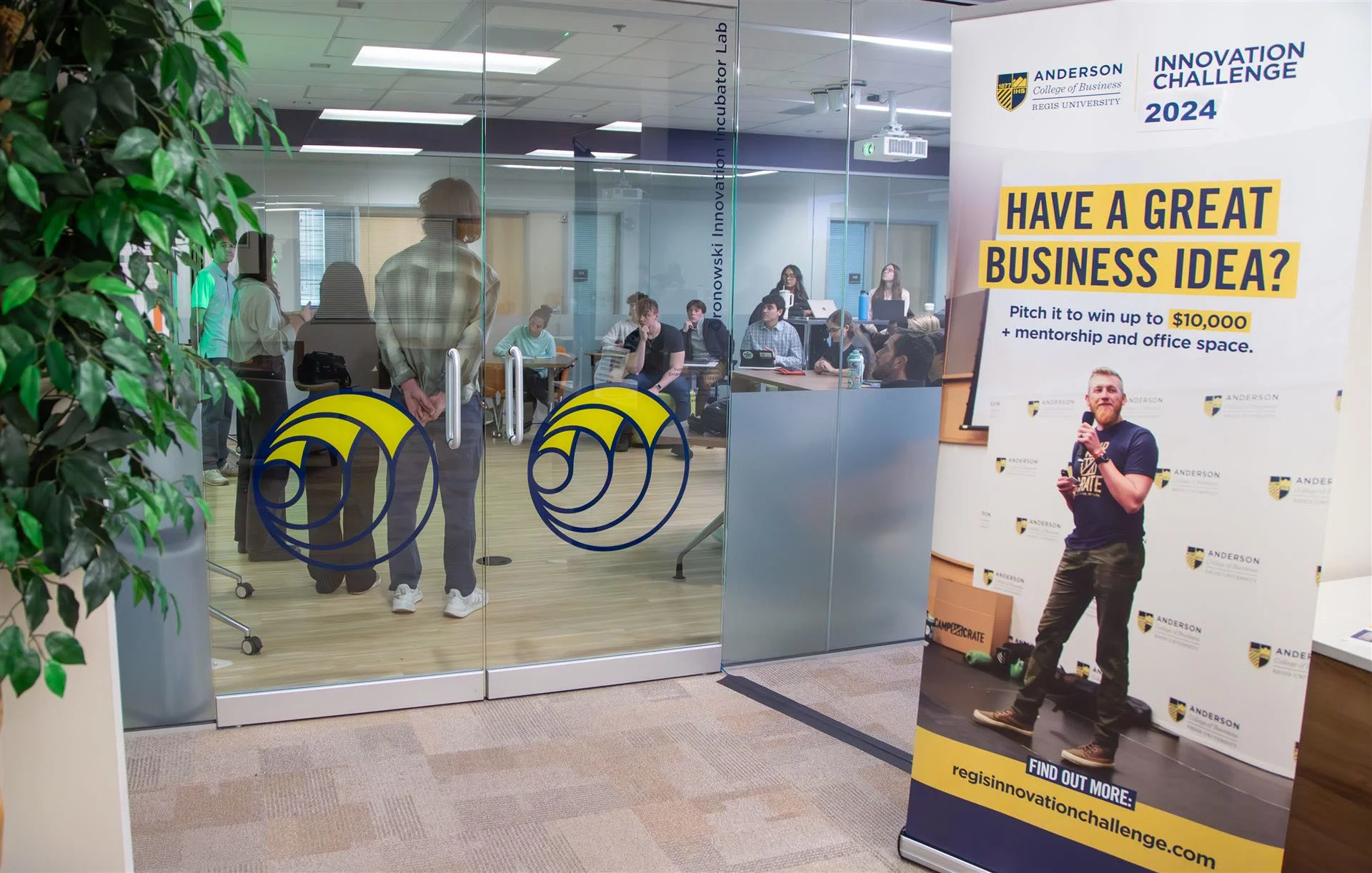
The season starts with Open Houses in October. Anyone thinking about entering can come in, learn how the Challenge works, and ask questions.
It is also the first chance at feedback. Participants can review their pitches with the Innovation Challenge Team before they ever face a judge.
The Open Houses are held in the Gronowski Innovation Incubator, the birthplace of the Innovation Center.
Late October
Kick-Off
Gronowski Innovation Incubator
In late October, every participant comes together for the Kick-Off. It is the first and last time all the teams meet before the Qualifying Pitches.
Teams get everything they need to know about the Challenge, and time to network with other founders, mentors, investors, and the Innovation Challenge Team.
The Kick-Off is the official start of the Innovation Challenge. Like the Open Houses, it happens in the Gronowski Innovation Incubator.
After the Kick-Off
Qualifying Pitches
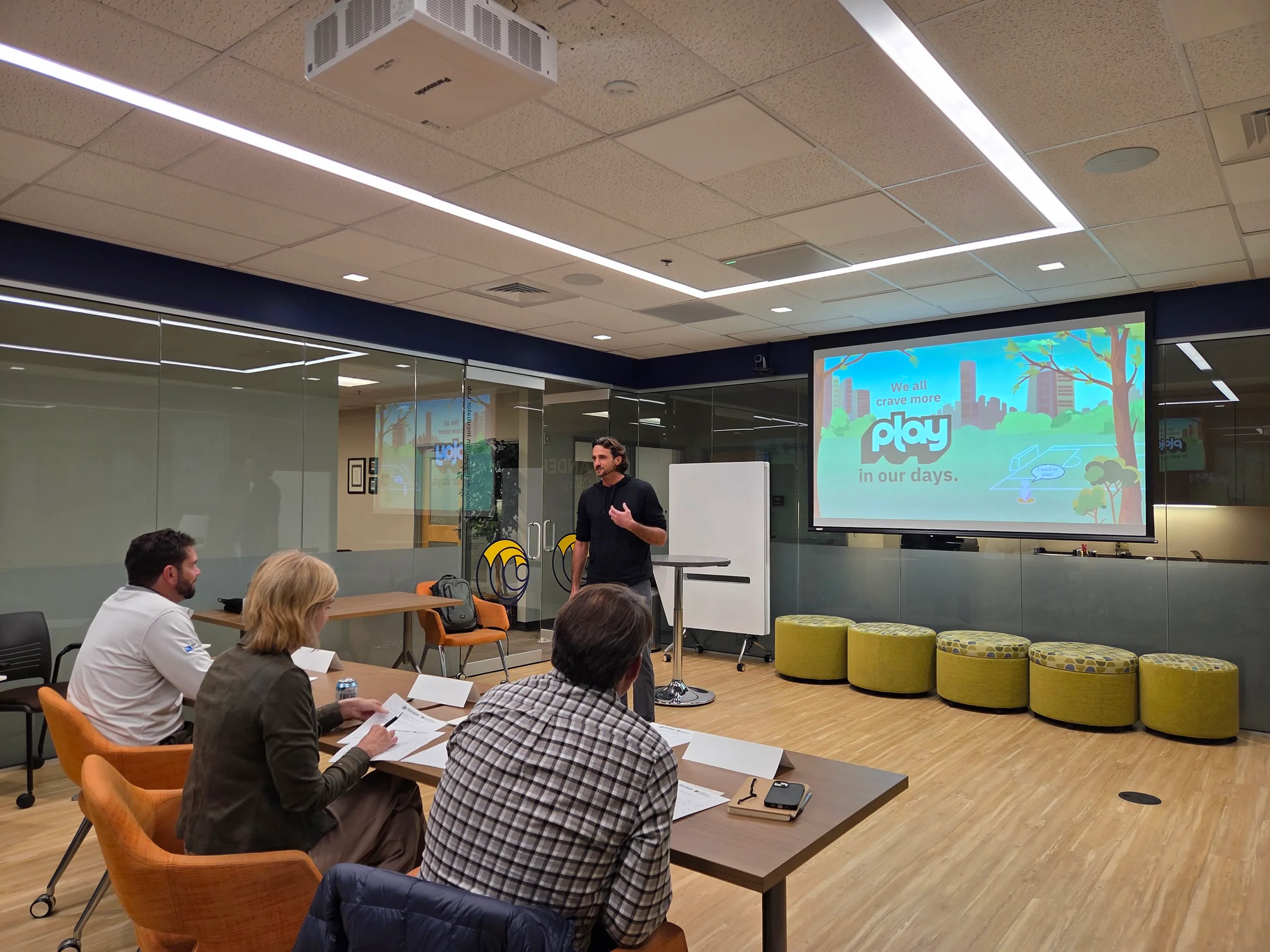
The Qualifying Pitches usually run over two nights. More than 40 teams pitch each year to a panel of three or four judges.
The judges score each business on desirability, feasibility, and viability, so every part of it is judged. Only 10% of the final score goes to the presentation.
After the Qualifying Pitches, up to 10 businesses from the original pool are selected to continue. The next cut comes at the Semi-Finals in early March.
All winter
Building each team
Once the qualifying teams are selected, the Innovation Challenge Team spends the winter matching each one with one to three mentors from the community and Regis faculty and staff.
Every team must include at least one Regis student, its Student Team Member, unless the founders are Regis students themselves. The Innovation Challenge Team gives each team a pool of students fitted to its needs, from any major and any year.
Each team interviews the candidates and chooses its own Student Team Member. Teams are set in early January.
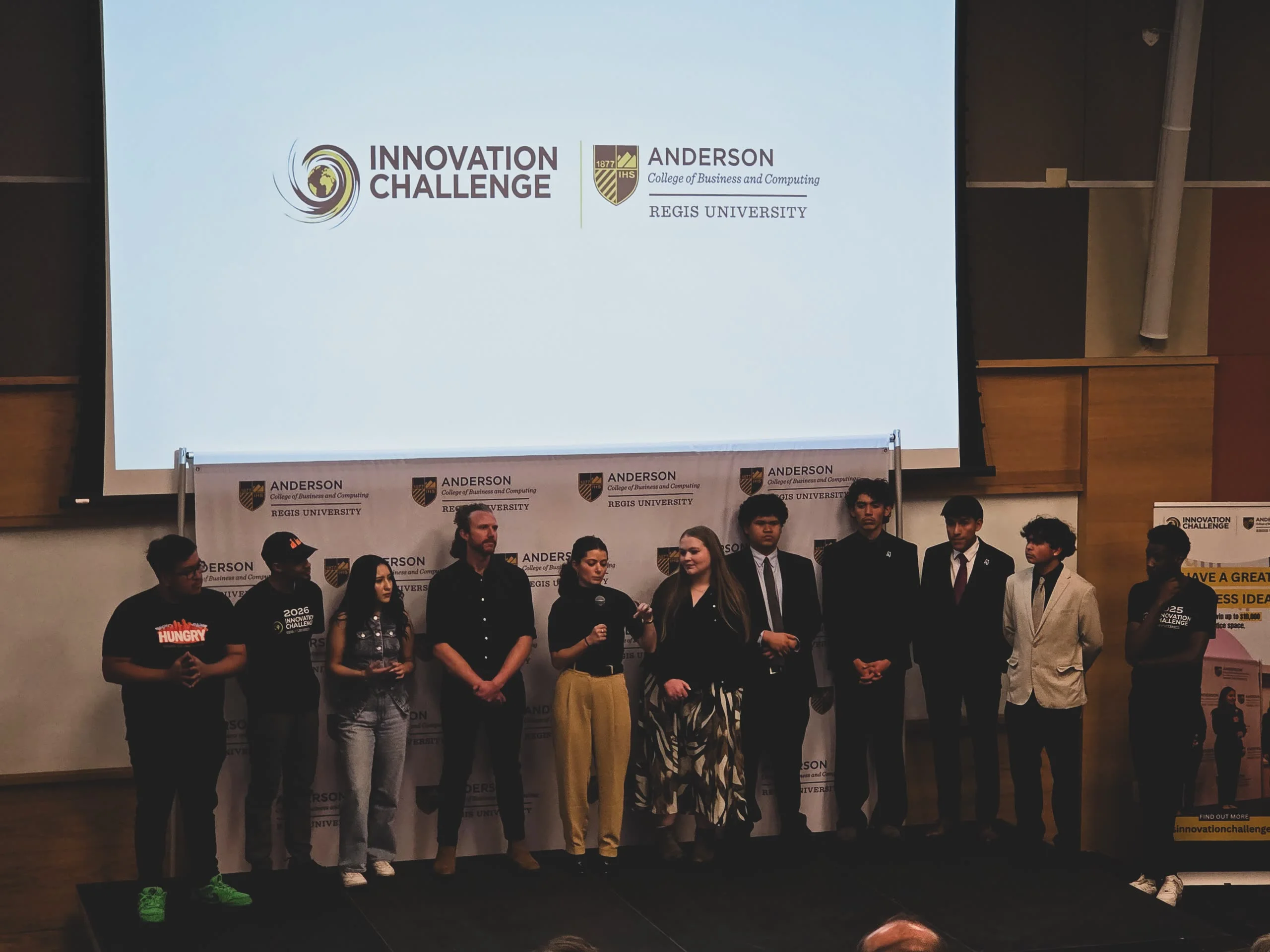
Late January
Team Meet & Greet
With the teams set, the Team Meet & Greet in late January is often the first time every team in the Challenge meets the others.
It is a short networking event to get to know each other's team members, and the other businesses that made it past the Qualifying Pitches.
Early February · 9:00 AM to 3:00 PM
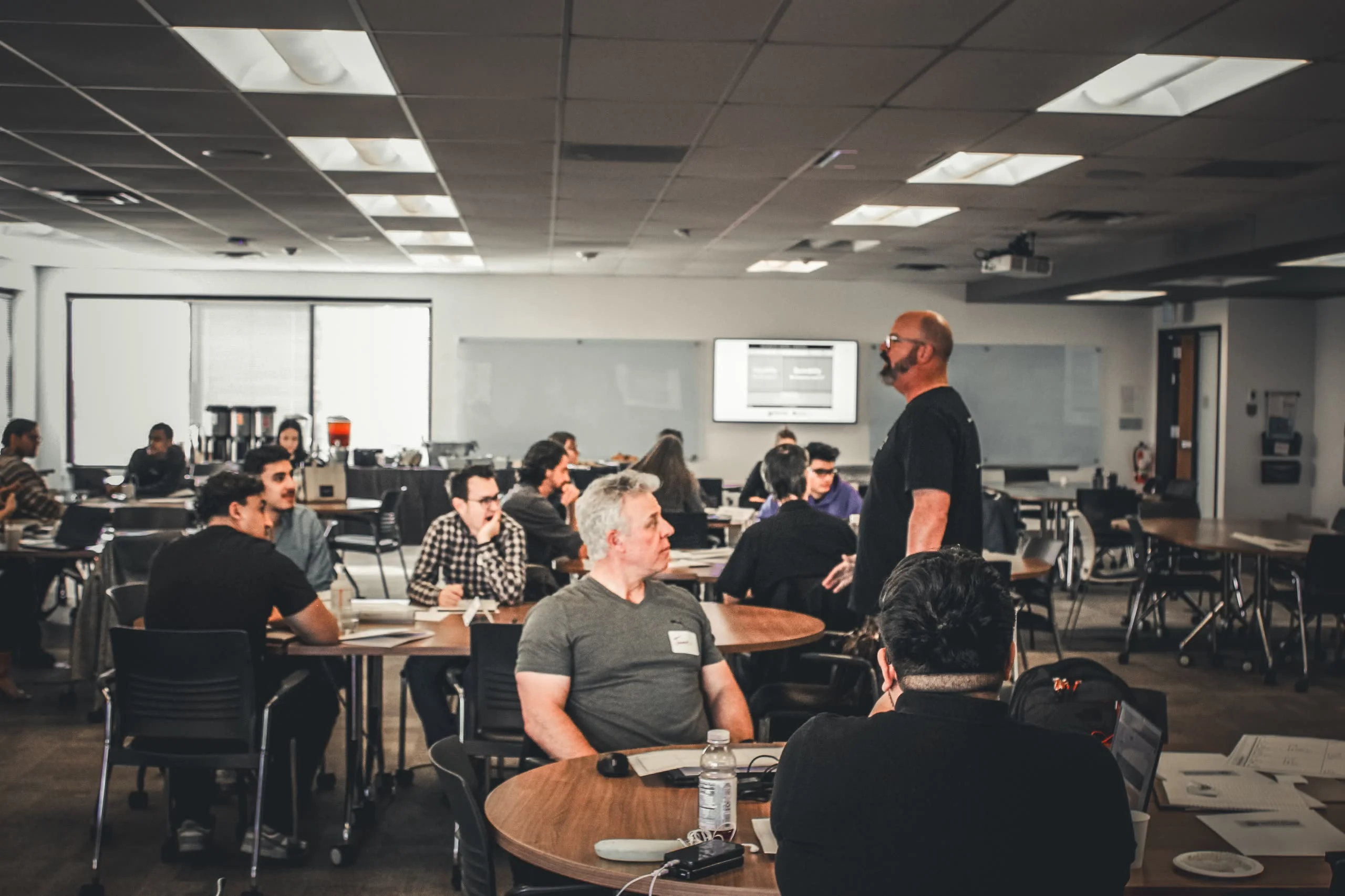
Mentor Saturday 1
The first Mentor Saturday runs from 9:00 AM to 3:00 PM. The Innovation Challenge Team brings in speakers from across the country, and the list changes every year. In recent years, Scott Ford, former CTO of Techstars, has shared his story.
Teams also start learning to explain their business in fewer and fewer words.
20 7
Then each team works directly with its mentors and Student Team Member to plan its business model canvas. The lessons change every year, based on what the teams need.
Early March
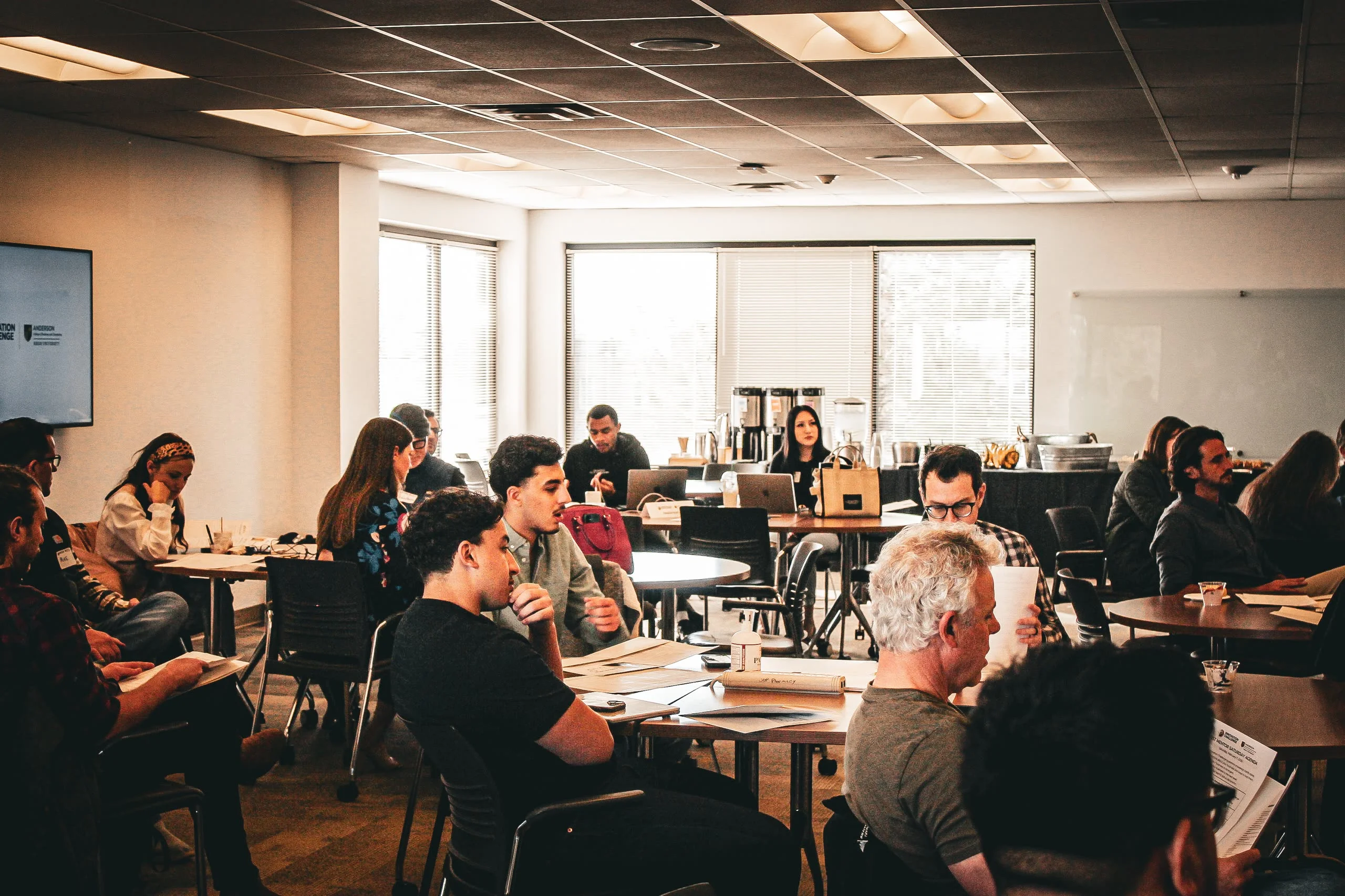
Mentor Saturday 2
A month later, the second Mentor Saturday runs on a similar schedule. It is usually the last time teams meet their mentors before the Semi-Final Pitches, just a few days later.
Speakers cover topics like startup legal and marketing. Last year, Victoria Stone, former CMO of Boeing, spoke to the group.
The day ends with empathy interviews with real customers. The Innovation Challenge Team finds people in each team's industry, from around Denver and beyond, to sit down with the team and talk about what they really need and want.
Early March
Semi-Final Pitches
A few days after the second Mentor Saturday come the Semi-Final Pitches. They work like the Qualifying Pitches, with the same criteria and fewer teams.
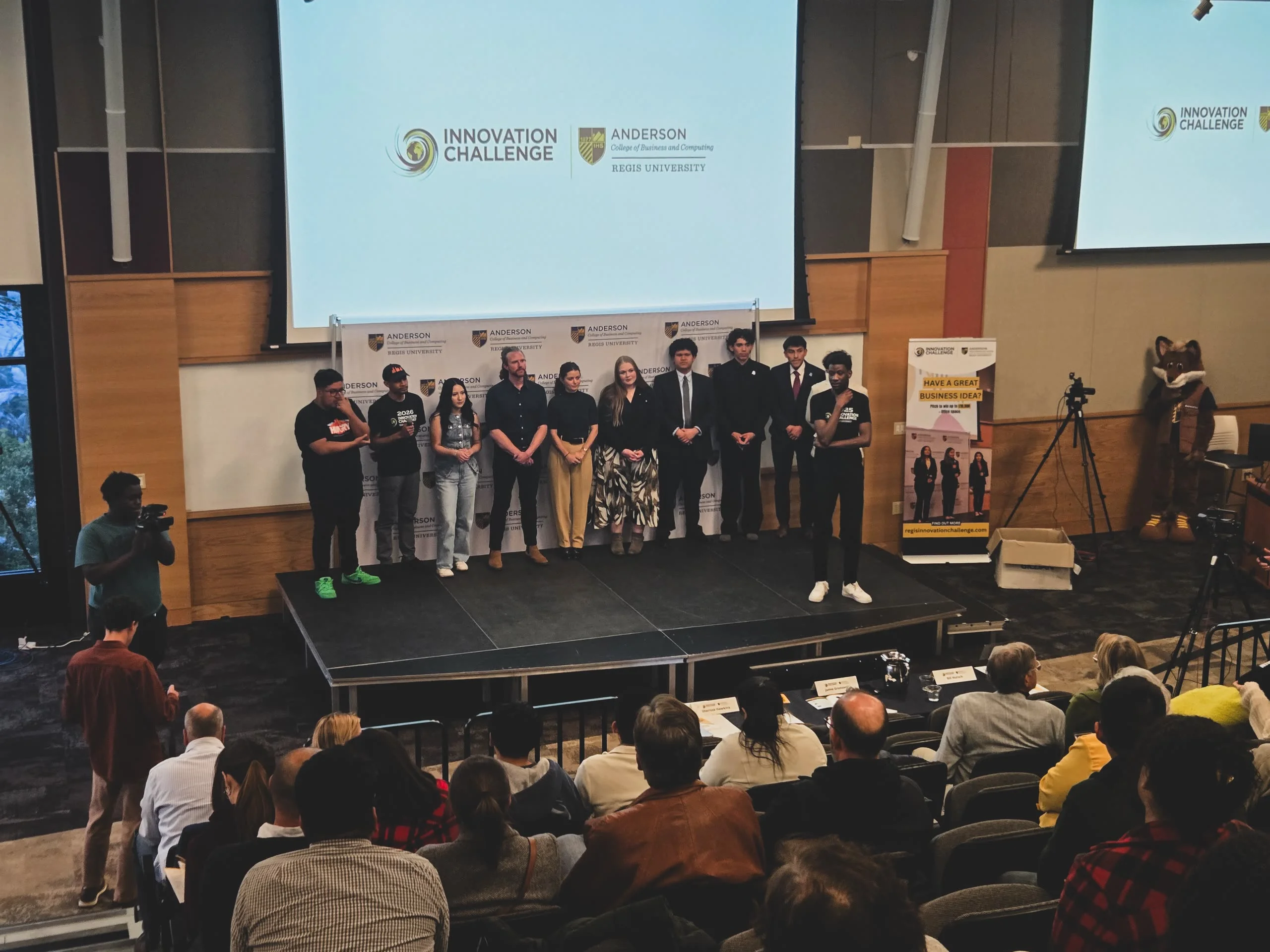
Only three teams are chosen to move on to the Finals and the third Mentor Saturday.
Mid March
Mentor Saturday 3
In mid March, the three finalists meet their mentors one last time before the Finals.
Speakers cover startup finance, and the Innovation Challenge Team meets with each team to finalize its incorporation documents and financials, and to help with the pitch it will give at the Finals.
Mid April
Finals
Mountain View Room, Claver Hall
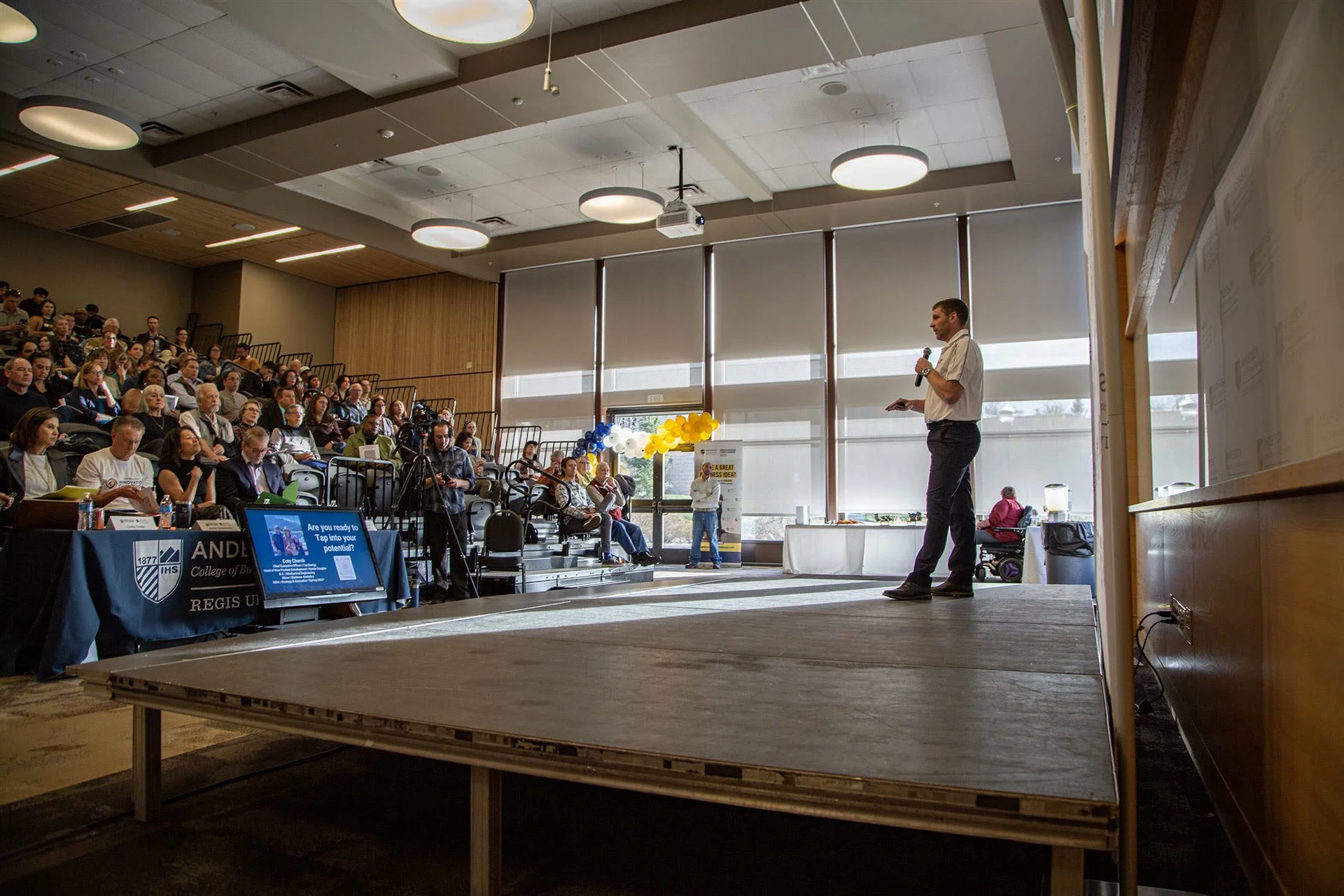
The Innovation Challenge Finals, held every mid April, are the pitches on the big stage in the Mountain View Room at Claver Hall.
Three finalists from the Semi-Finals and one team from Arrupe Jesuit High School's business competition pitch in front of 250+ people in the room and hundreds more online.
It is the signature event of the Challenge, and it celebrates every team that took part, from the Open Houses to the Finals. Every year, people in the crowd come up to teams to talk about investing, from venture capitalists to friends and family.
2026–27 is the Challenge's 10th year, and the Innovation Challenge Team has some new surprises in the works.
How we judge
We are not a pitch competition. We are a business competition.
A panel of three or four judges scores every team, at the Qualifying Pitches and again at the Semi-Finals, on the same criteria. Ninety percent of the score is the business itself. The pitch is ten.
30%
Desirability
Judges ask
Does the business solve a real problem for its customers, in a way that's new?
They score
- Problem/solution fit
- Unique, or uniquely positioned
30%
Feasibility
Judges ask
Has the team found market fit, and does it have the skills and support to build?
They score
- Market fit
- Team skills
30%
Viability
Judges ask
Has the team tested the business with sales, clients, or revenue, and does it have a clear plan for the funding?
They score
- Business model
- Progress & growth
- Next steps
- Confidence in continuation
10%
Presentation
Judges ask
Does the 4–5 minute pitch make the case compellingly?
They score
- The pitch
Finals night · Mid April
Every team's night, not just the finalists'.
The Finals celebrate every team that took part, from the Open Houses on, and they all come to show what they have built. Every year, people in the crowd come up to teams about investing, from venture capitalists to friends and family.
2026–27 is the Challenge's 10th year, and the Innovation Challenge Team has a few surprises in the works.
- First
- $10,000+ office space
- Second
- $5,000+ office space
- Third
- $1,000+ office space
- Fourth
- $1,000
- Audience vote
- $1,000
Every prize is cash, for 0% equity. No catch.
One team's story
From his car to the Emmys.
Paul Hunter spent the end of high school without a home. At 20 he started a company. At 22, as a Regis junior, he handed out 400 bowties to celebrities at the 69th Emmy Awards, and the Innovation Center got him there.
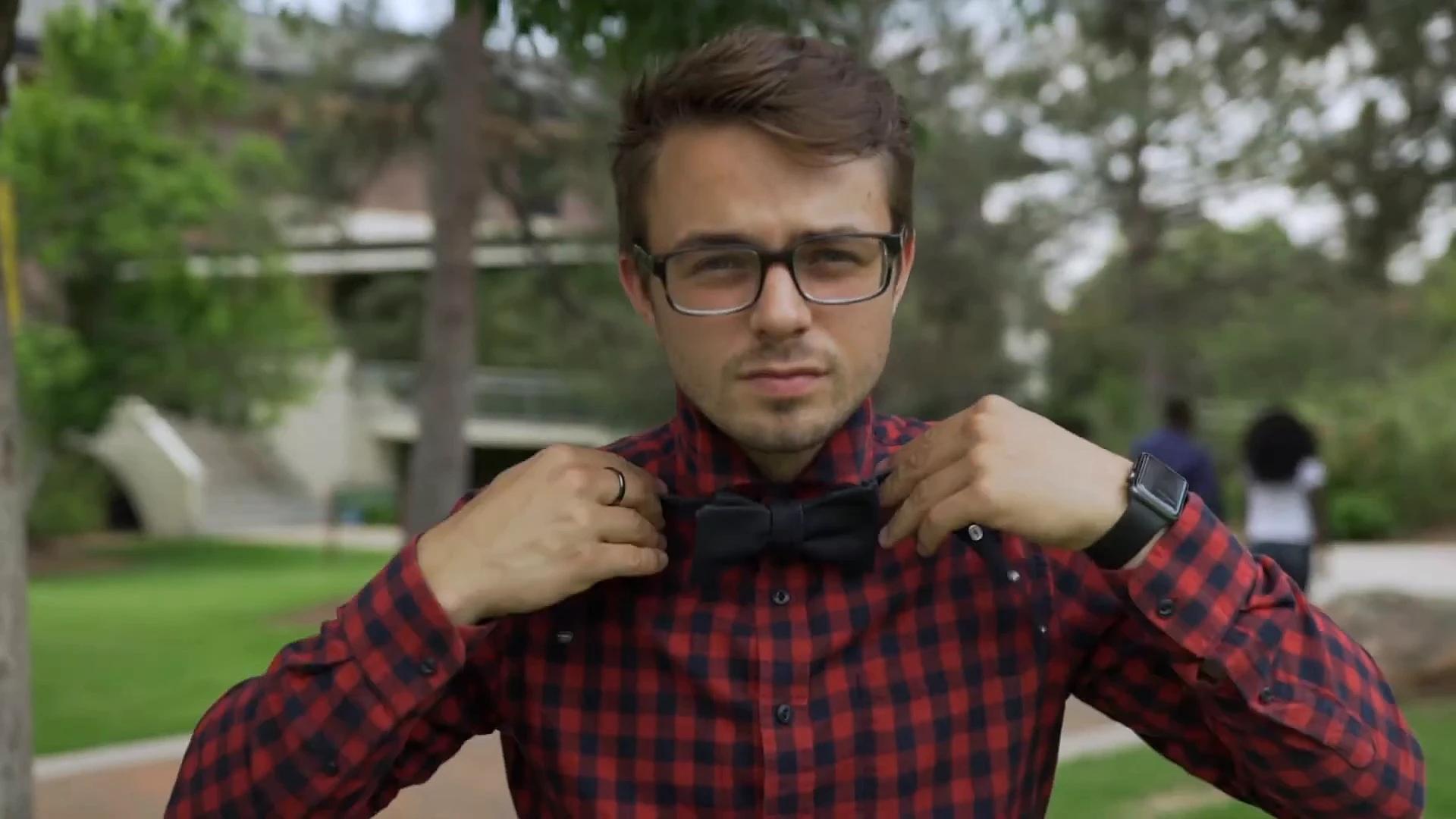
The Beginning
“This is exactly who we ought to support.”
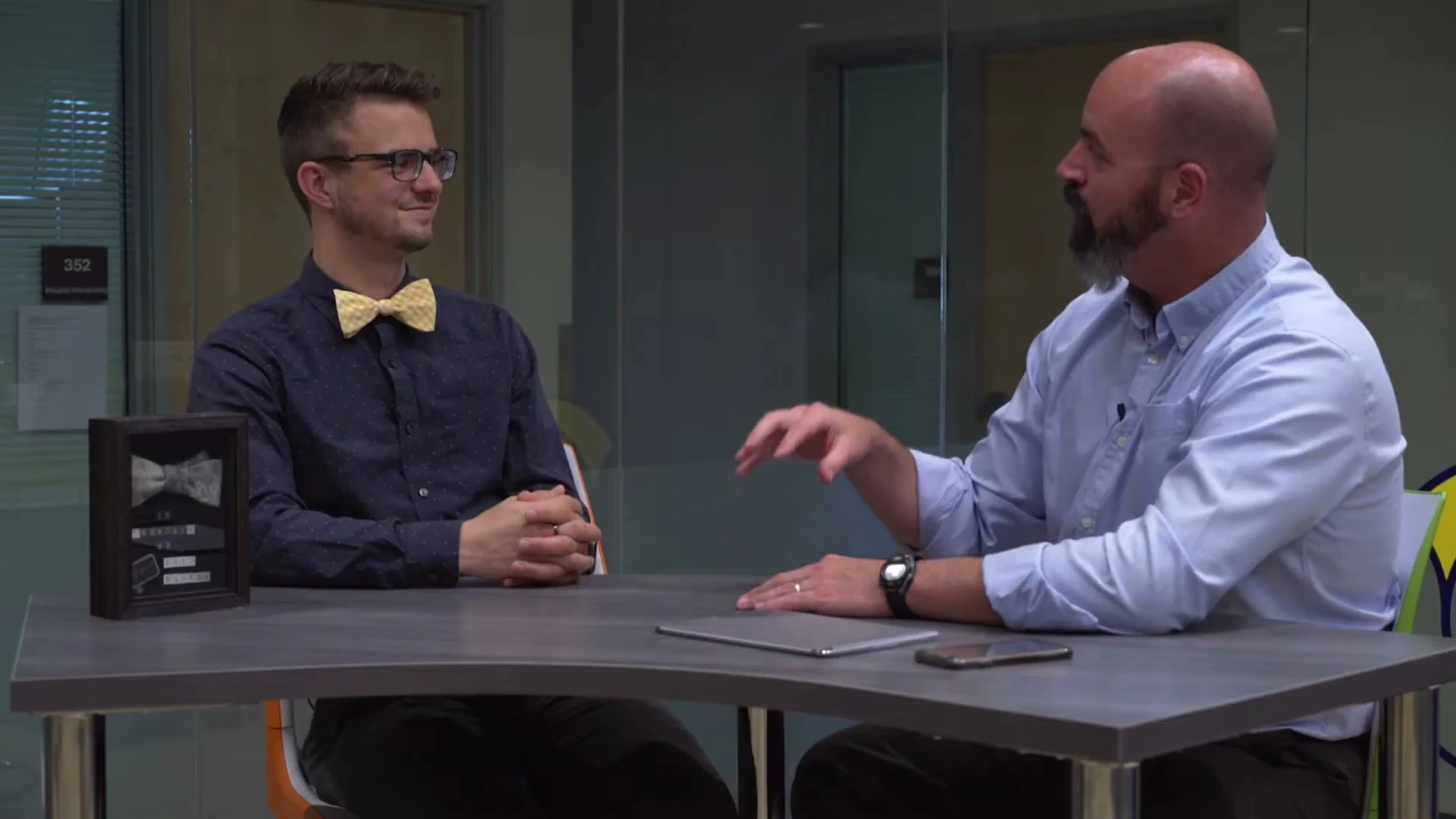
Ken Sagendorf said it in 2017, when a Regis student brought him an invitation to the Emmys and no way to pay for it. Ken didn't ask whether the Center could afford it. He asked how many bowties Paul would need “in case you truly blow up the day after.”
“The best that we can do,” Ken told him, “is slingshot you out with more velocity into the world.”
Part 1: The Story Behind the Fabric
No place to call home.
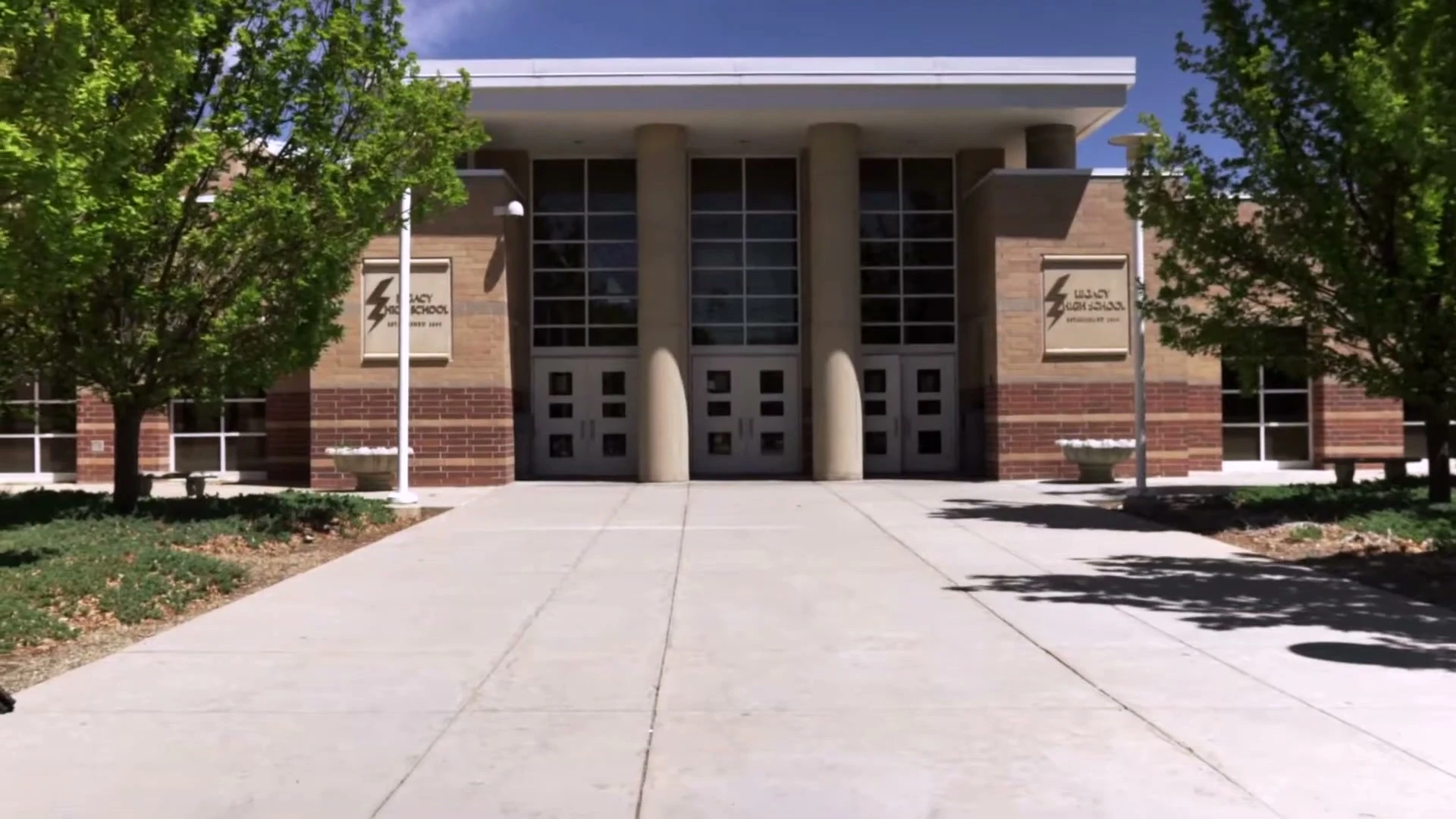
Paul grew up in Denver and went to Legacy High School in Broomfield. When he came out to his family, he had to move out. For the rest of high school he lived in his car, on friends' couches, or with a friend.
His physics teacher, Sarah Marks, made sure he didn't fall behind. In his senior year, his classmates elected him student body president.
Part 2: The Story Behind the Fabric
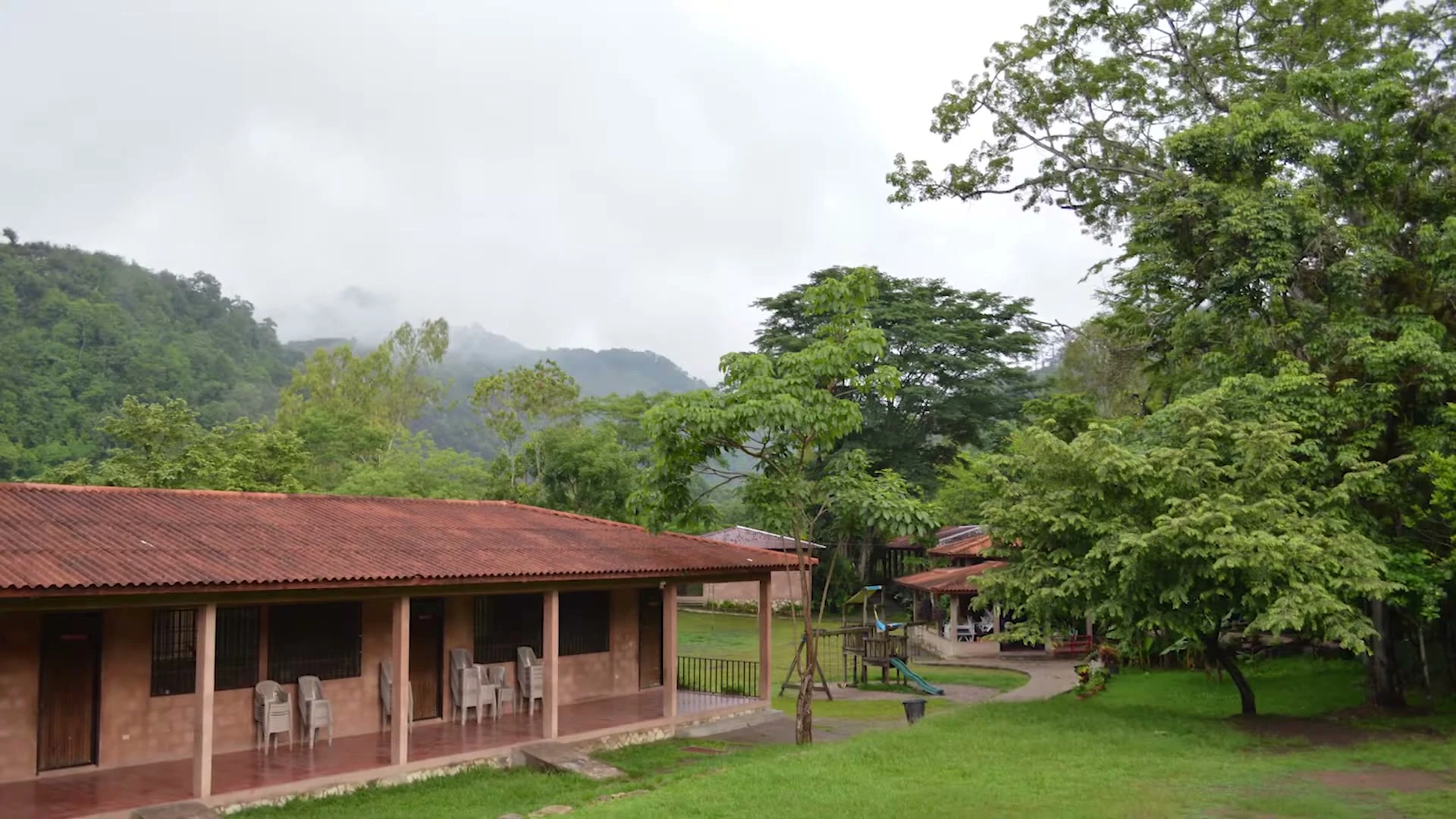
Sent home from Honduras.
After graduation he went to Honduras to teach math and science to elementary school kids. When he posted on Facebook that he was dating a guy, the program told him to take it down. He said no. “I'm proud of who I am.” They gave him a few days to find his way home.
Back in Colorado, with nowhere steady to live, he started at Regis. He left after one semester and moved in with friends. That's where the first bowtie happened.
Part 3: The Story Behind the Fabric
One in the morning.
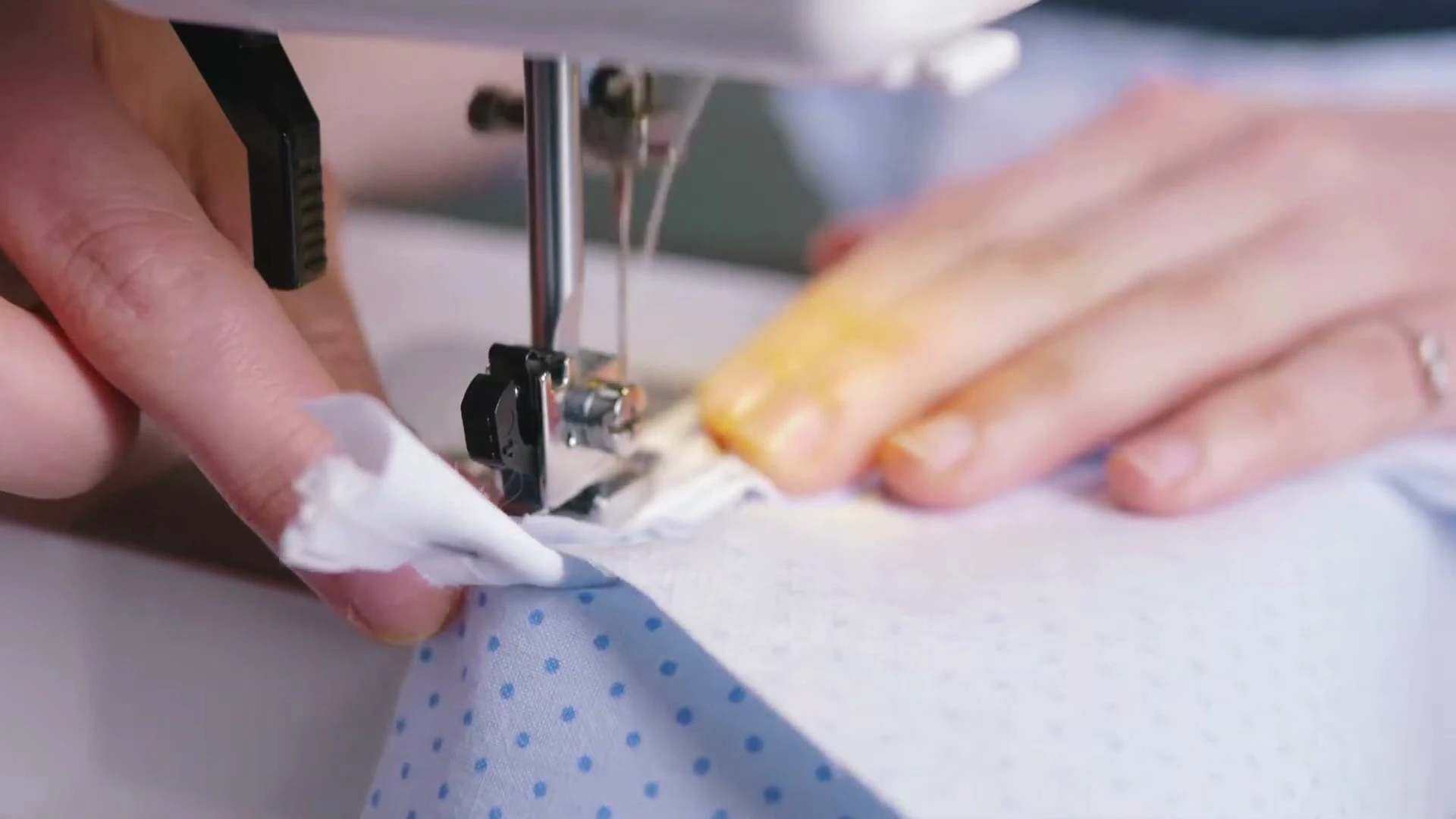
At 1 a.m. he watched a program about a family remembering their fallen soldier, and wondered how you keep a person's personality, not just the flag. He bought a sewing machine at a 24-hour Walmart, learned to sew from YouTube, and cut his first bowtie from a military uniform.
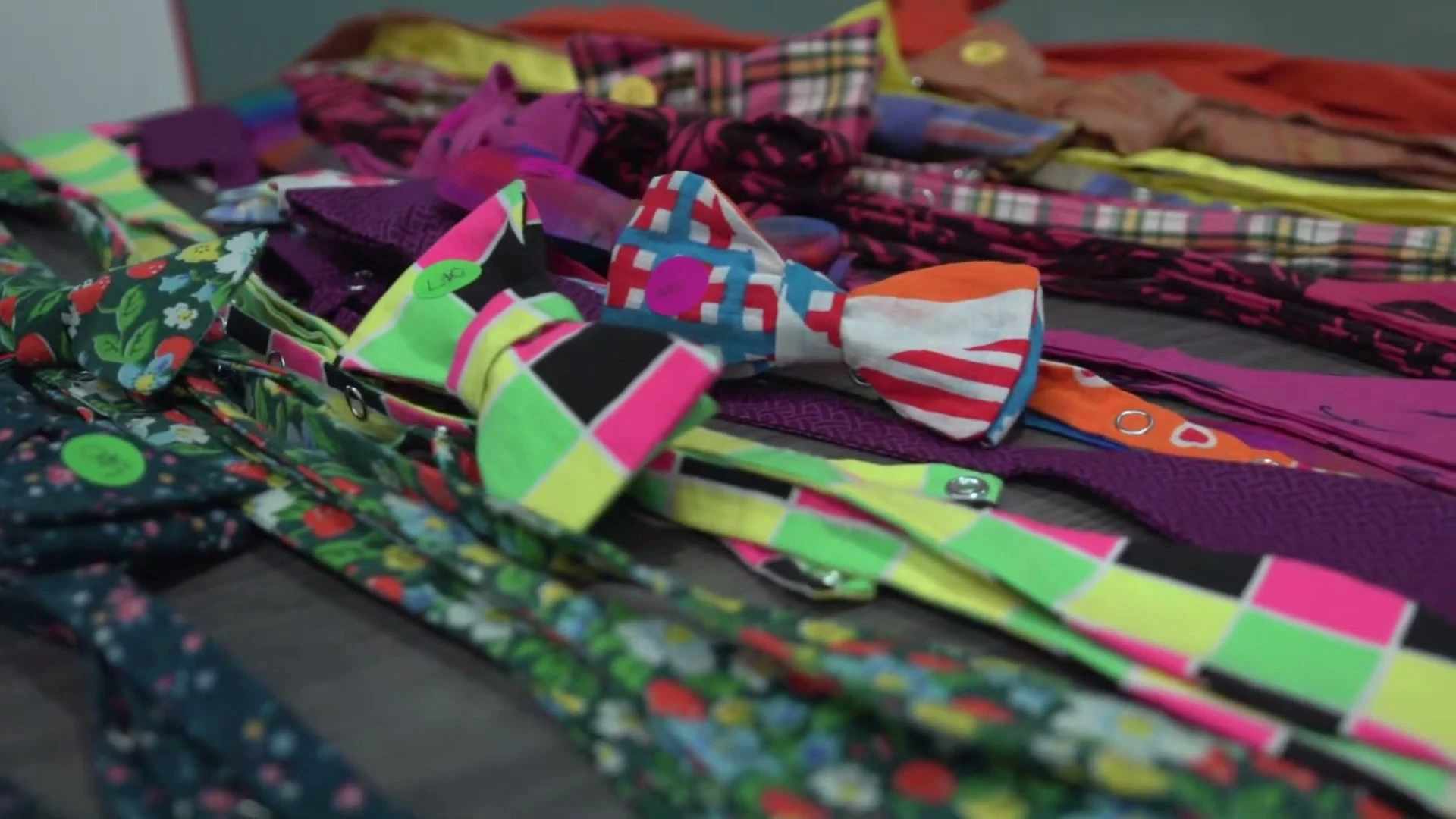
Then he turned a shirt he'd burned on the stove into a bowtie, and people kept asking where it came from. Unpacking a box, he found a bucket list from high school. The first item: own a company by 21. He was 20, so he filed the paperwork.
Then a PR firm in Los Angeles called. Would Repurpose come to the Emmys gifting suite in September?
Part 4: The Story Behind the Fabric
Two weeks to yes.
One of his professors pulled together a board of advisors, and every answer came back to money. Ken had it. The Center backed Paul because every tie is cut from reclaimed fabric, and because Paul wanted to pay fair wages to people who are often exploited. His sewers, including refugees and LGBTQ+ youth, earn close to double minimum wage.
Within two weeks of the invitation, Paul had everything he needed.
Emmy Recap
400 bowties at the Emmys.
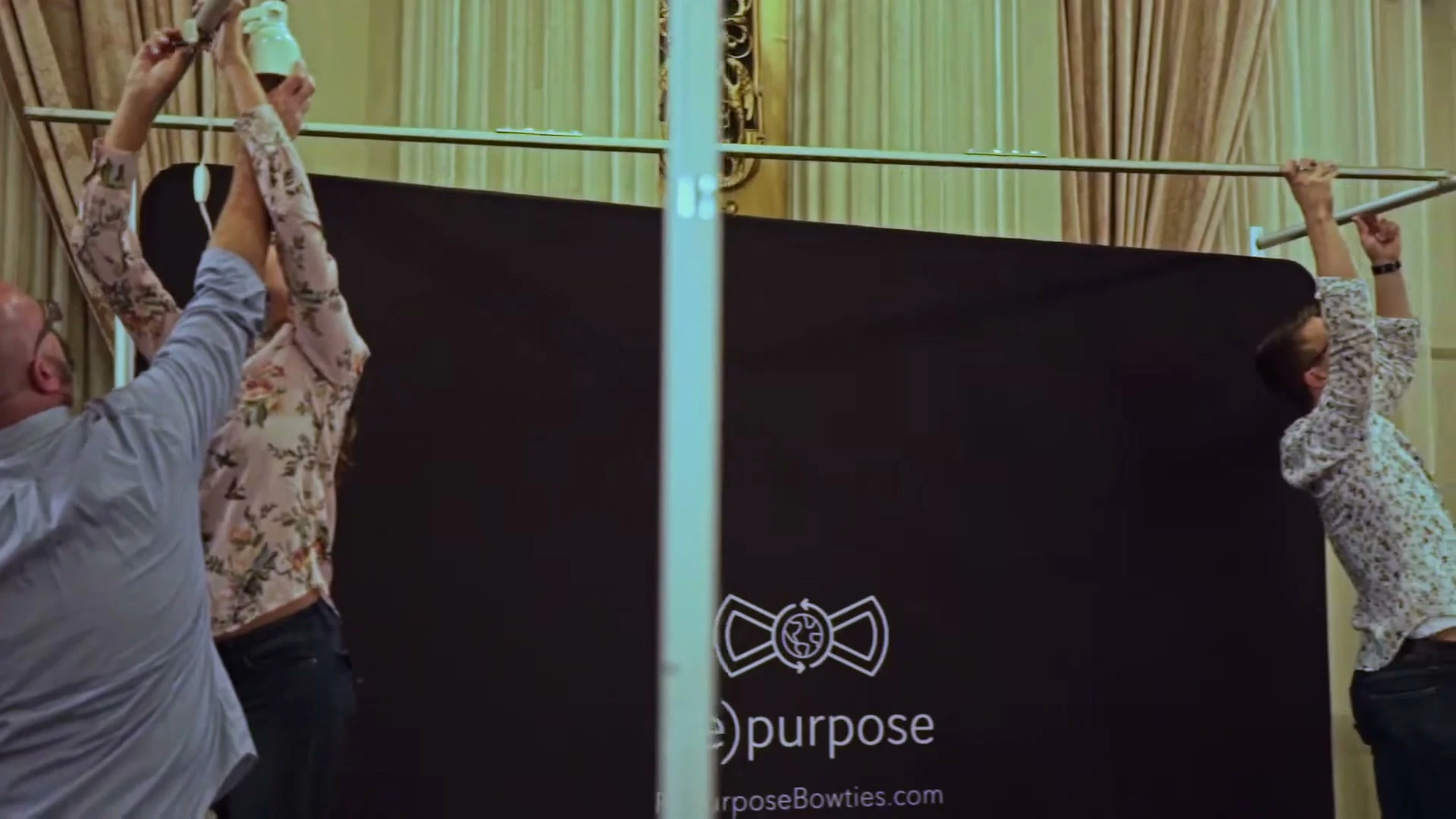
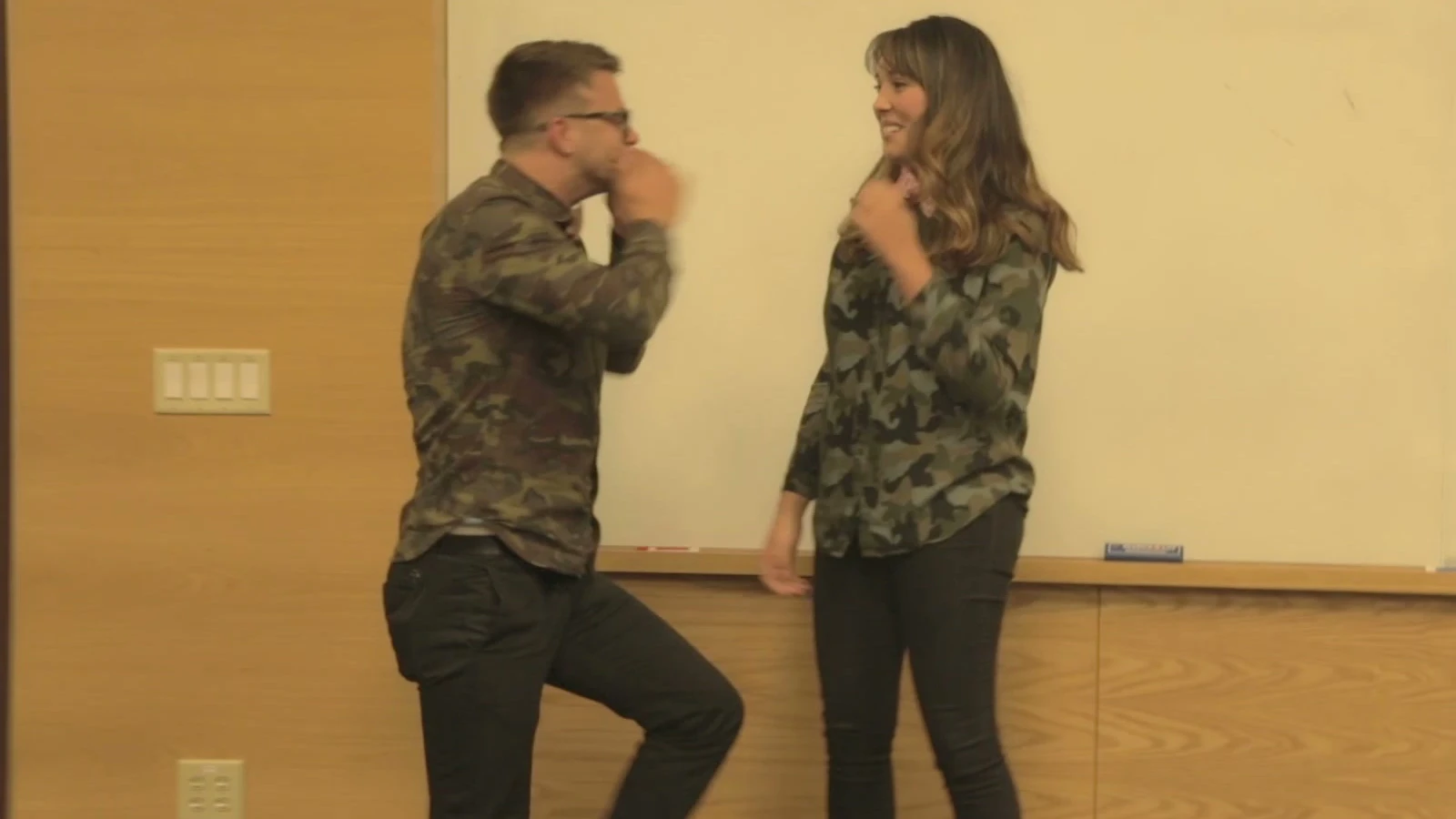
In September 2017, Paul flew to Los Angeles with suitcases of bowties and built the Repurpose booth in the gifting suite of the 69th Emmy Awards. He handed out 400 bowties. Repurpose was voted best booth, and it sold out the week after.
Innovation Challenge Finals 2018
The first Innovation Challenge.
In the 2017–18 season, Repurpose entered the Center's first Innovation Challenge. At the Finals in 2018, Paul and Charlee Riggio, Repurpose's COO, pitched to a full auditorium and a panel of judges.
Repurpose won.
- 2 weeks
- from the Emmys invitation to the Center's backing
- 400
- bowties handed out at the 69th Emmy Awards
- 1st
- place at the first Innovation Challenge Finals, 2018
Paul went on to lead sustainability worldwide at Kin + Carta, then became a product manager at PepsiCo.
Why students run it.
The Center’s model is student-led, and the Challenge is where that’s most true. The people who run it are students.
- They match every team with one to three mentors.
- They give every team a pool of Regis students to choose its Student Team Member from.
- They find real customers for every team to interview.
- They run the season, from the Kick-Off to Finals night.
Running a season teaches what it takes to start something. Then they take it with them.
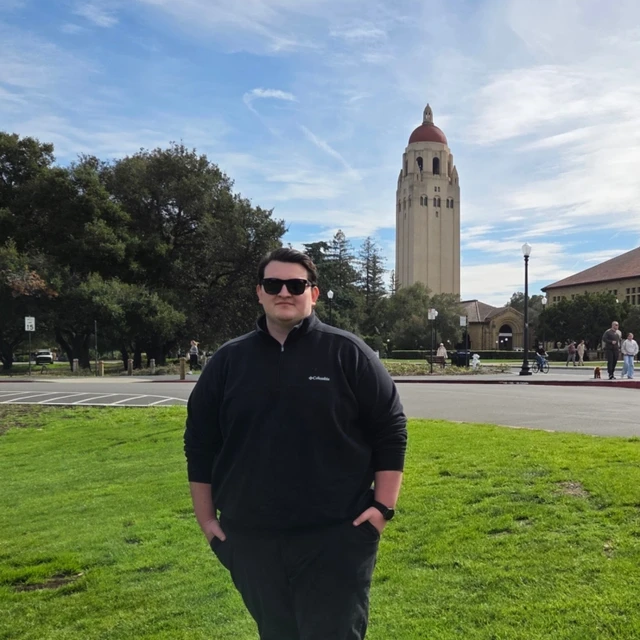 Adin McPhersonCo-Student Director; co-founder, Agera and BrimeoLinkedIn (opens in a new tab)
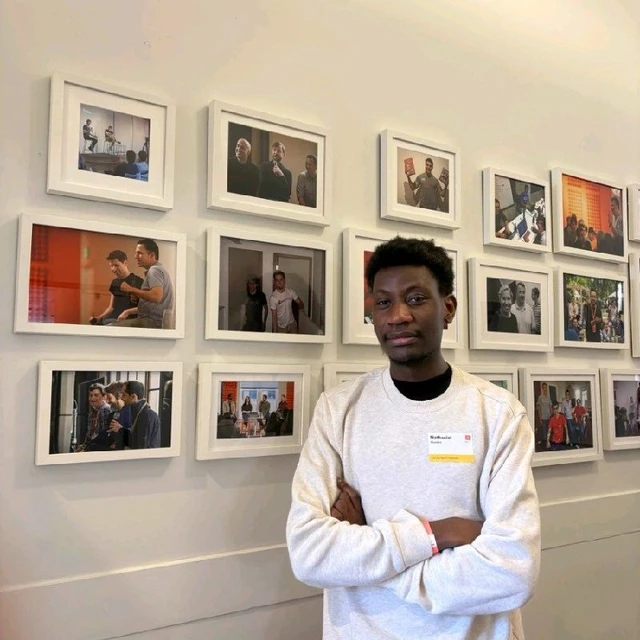 Nathaniel DerylCo-Student Director; co-founder, Agera and BrimeoLinkedIn (opens in a new tab)
Co-Student Directors
Directing the 10th season.
Adin McPherson and Nathaniel Deryl were two of the three Regis freshmen who founded Agera, an AI platform that connects Africa’s agricultural system to cut crop loss. Agera reached the 2024–25 Finals.
In 2025 they became the Challenge’s Co-Student Directors. Now they’re running its 10th season, and building Agera and Brimeo.
Where they’ve gone since.
A look at the students who’ve run the Challenge, and where they work now.
 Ethan LockshinNVIDIALinkedIn (opens in a new tab)
 Bailey GentExecutive Director, Family Promise of JuneauLinkedIn (opens in a new tab)
 Zach PearsonJ.P. Morgan Private Bank; founder, DMM GroupLinkedIn (opens in a new tab)
 Rachel BalsigerFidelity Investments
 Gabby AhlesFreeman Mathis & Gary, LLP; Editor-in-Chief, JurimetricsLinkedIn (opens in a new tab)
 Evelin MojicaDisney; Regis UniversityLinkedIn (opens in a new tab)
 Juan Gonzalez BaronYes! Communities and PrimaveraLinkedIn (opens in a new tab)
 Spencer ZieskeCharles SchwabLinkedIn (opens in a new tab)
 Char WoodsBerkshire HathawayLinkedIn (opens in a new tab)
 Maya BairSpanish Learning NetworkLinkedIn (opens in a new tab)
The Magis Factory
Magis: Latin for “the more.”
What happens after the pitch. The Magis Factory is a startup accelerator for Regis students and alumni, run by the Anderson College of Business and Computing. Founders whose ideas have been tested in class and in the Innovation Challenge get mentoring in consulting, marketing, finance, and culture, plus non-dilutive investment.
- 30 months
- of support, at most. Teams start with 90 to 180 days.
- $0
- cost to founders.
- 0%
- equity taken. The investment is non-dilutive.
A path Ken Sagendorf laid out in 2019.
- An innovation club in high school
- The Innovation Challenge at Regis
- A business in the Magis Factory
Led by
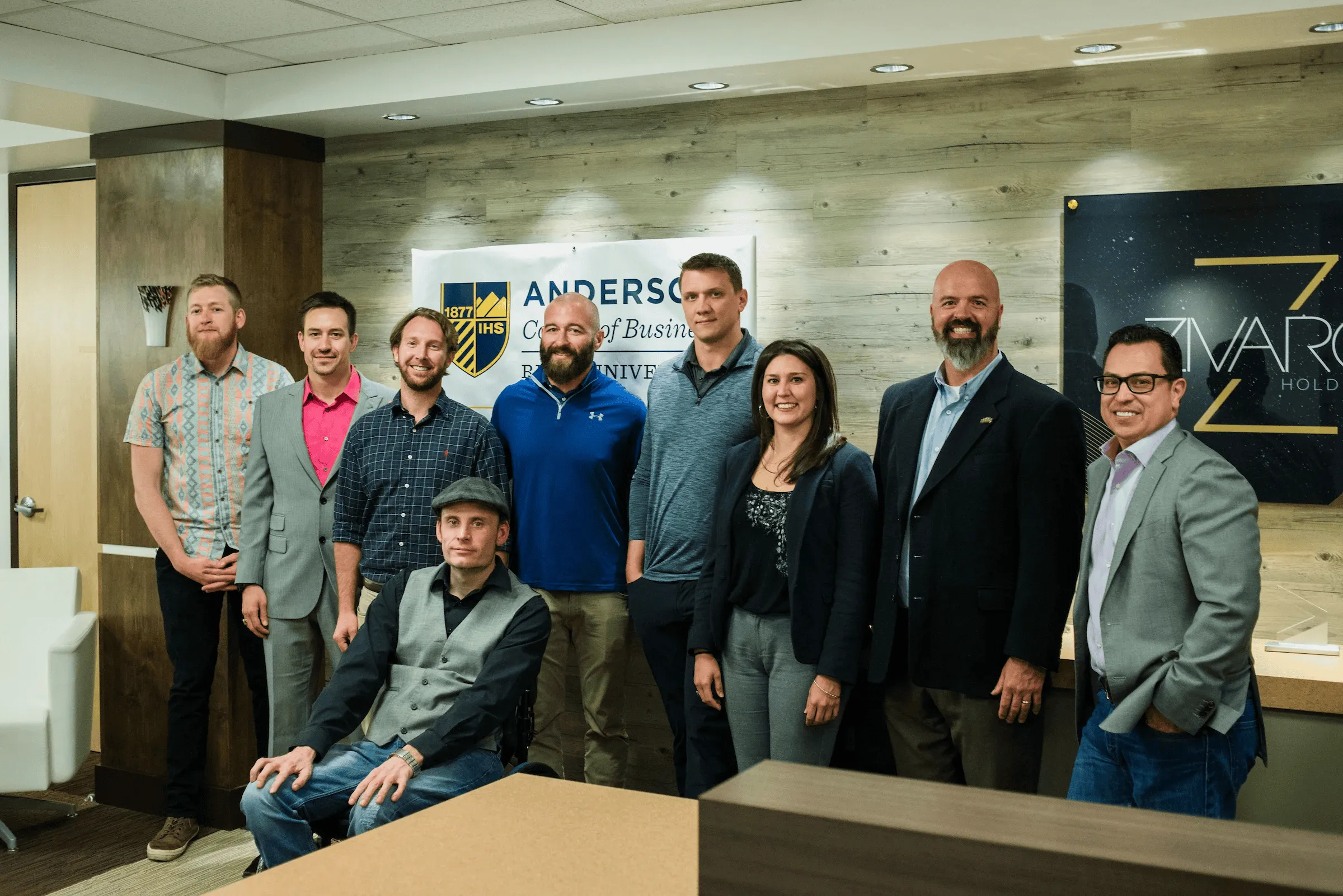
 Joe TartellAnderson Advisory Board member and entrepreneur
 Ken SagendorfInnovation Center Director
Built by Anderson with its founding partners, Zivaro Holdings and Glamping Hub.
The portfolio.
Two rounds of investment, seven companies. Open any company to read more.
One company's story
From a dorm room to a Denver bike shop.
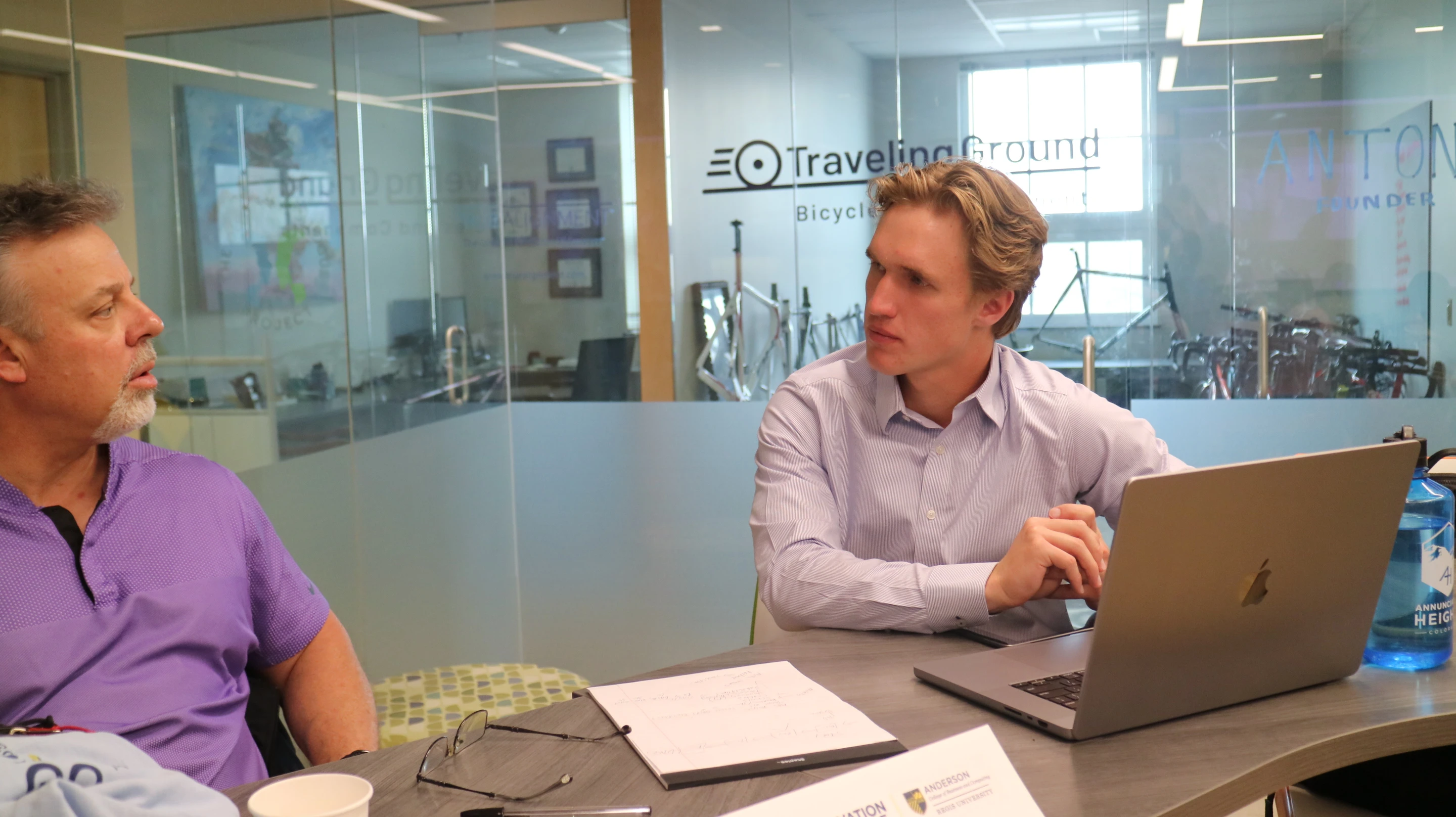
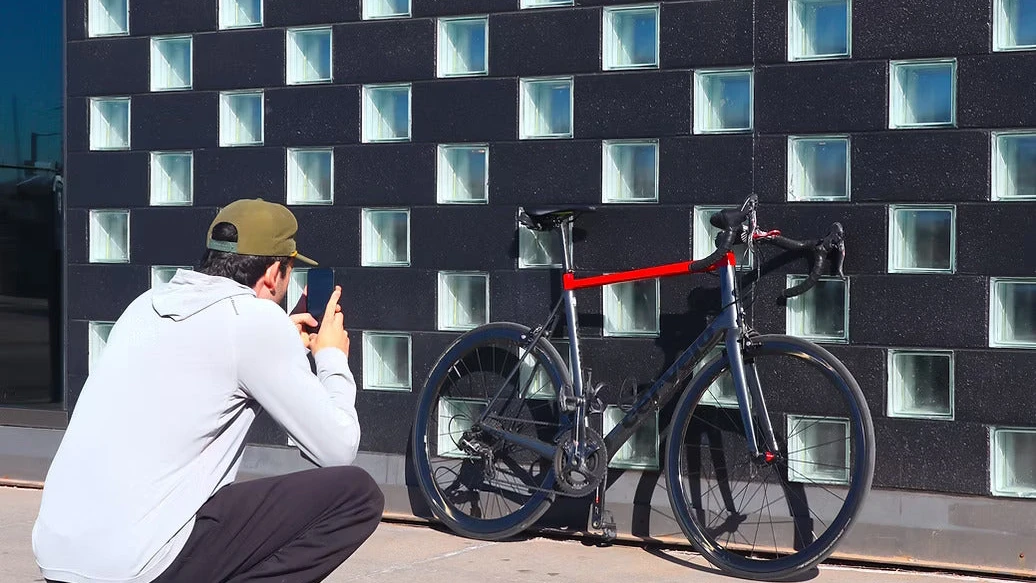
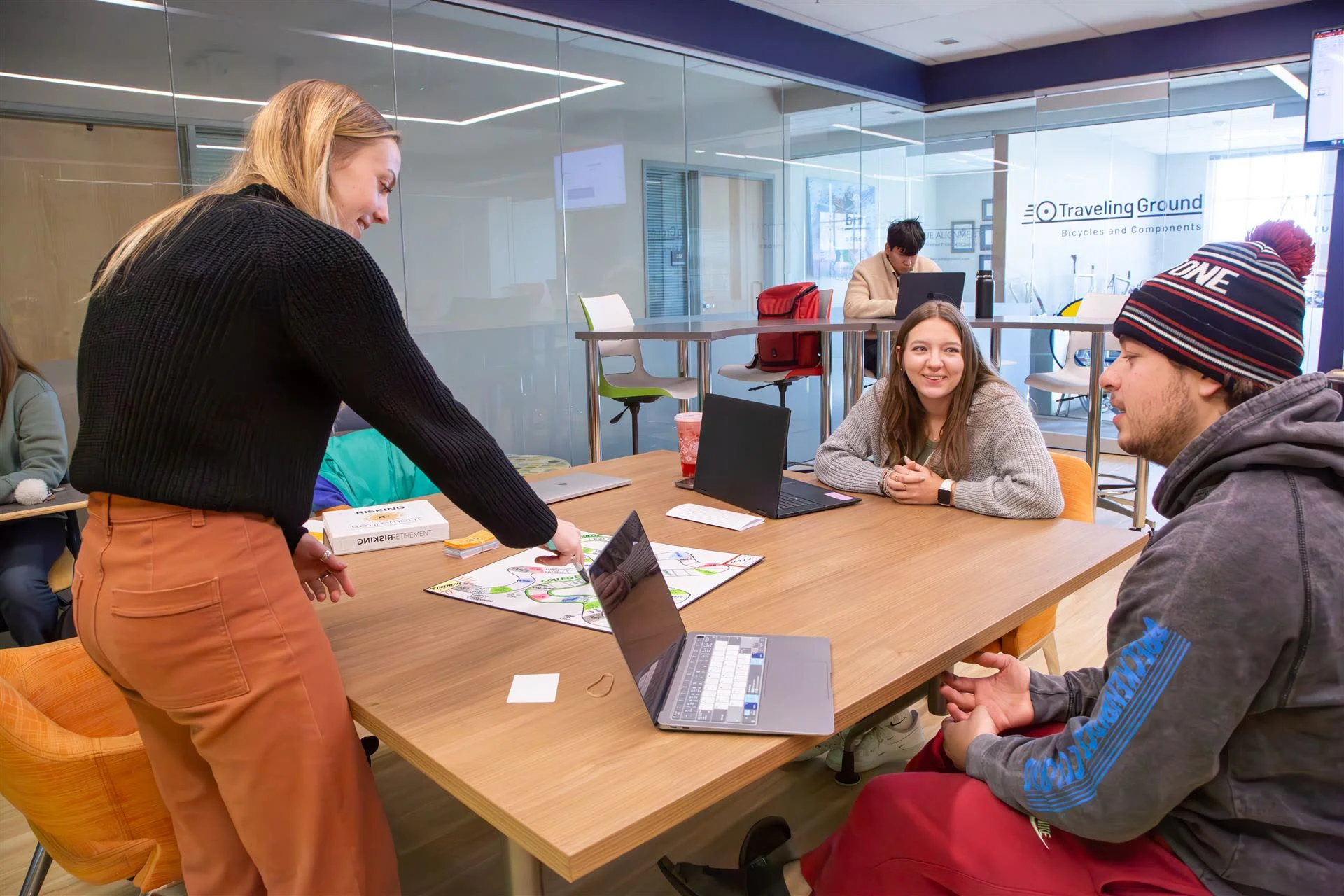
Anton Cariffe started Traveling Ground in his Regis dorm room, fixing up used bikes he found online and reselling them on eBay. Today it buys, refurbishes, and sells high-end bikes from its own shop on Santa Fe Drive.
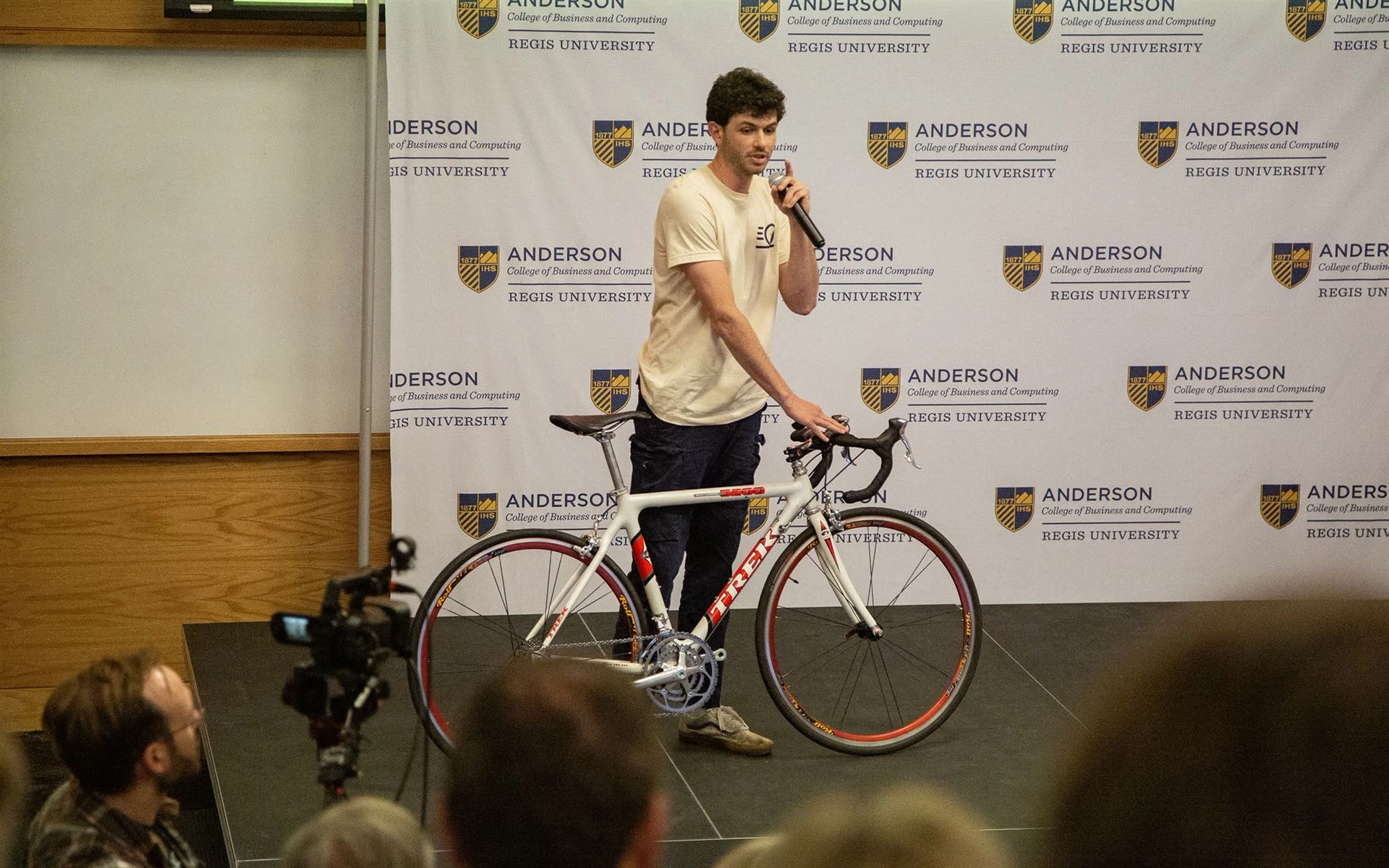
A dorm room at Regis.
Anton studied finance at Regis from 2019 to 2023. Between classes he bought used bikes on online marketplaces, fixed them up in his dorm room, and resold them on eBay.

From side hustle to business.
As a Regis student he entered the Innovation Challenge. It matched him with mentors and stayed with him while the side hustle became a real business. In April 2023, Traveling Ground was one of seven teams in the Finals.
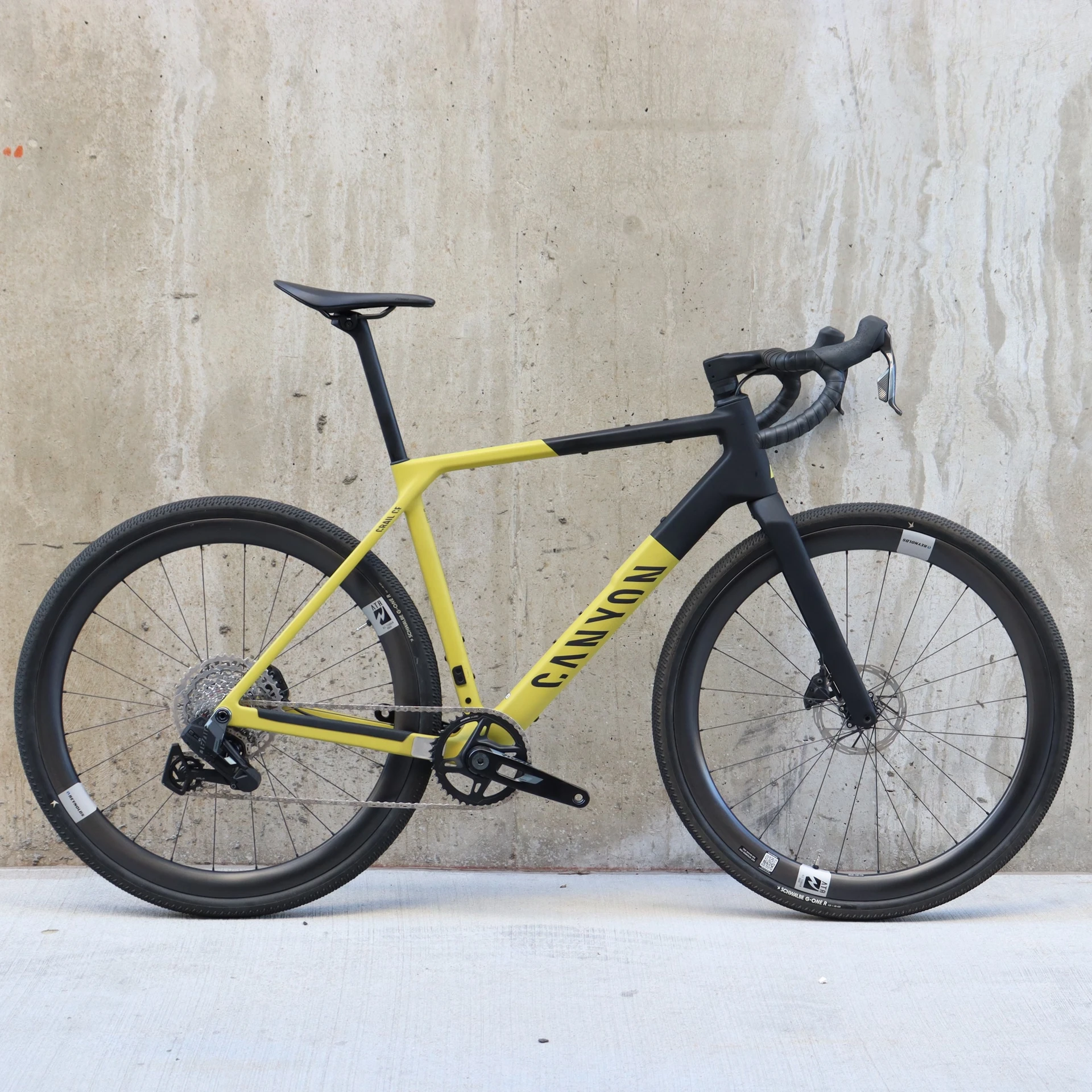
Every bike is cleaned, tuned, safety-checked, and photographed before it's listed.
The first team in.
A few months after the Finals, the Magis Factory took Traveling Ground in as the first company of its 2023 round, with more funding to make the business stable. Within two years, sales were growing more than 10× year over year.
A shop of its own.
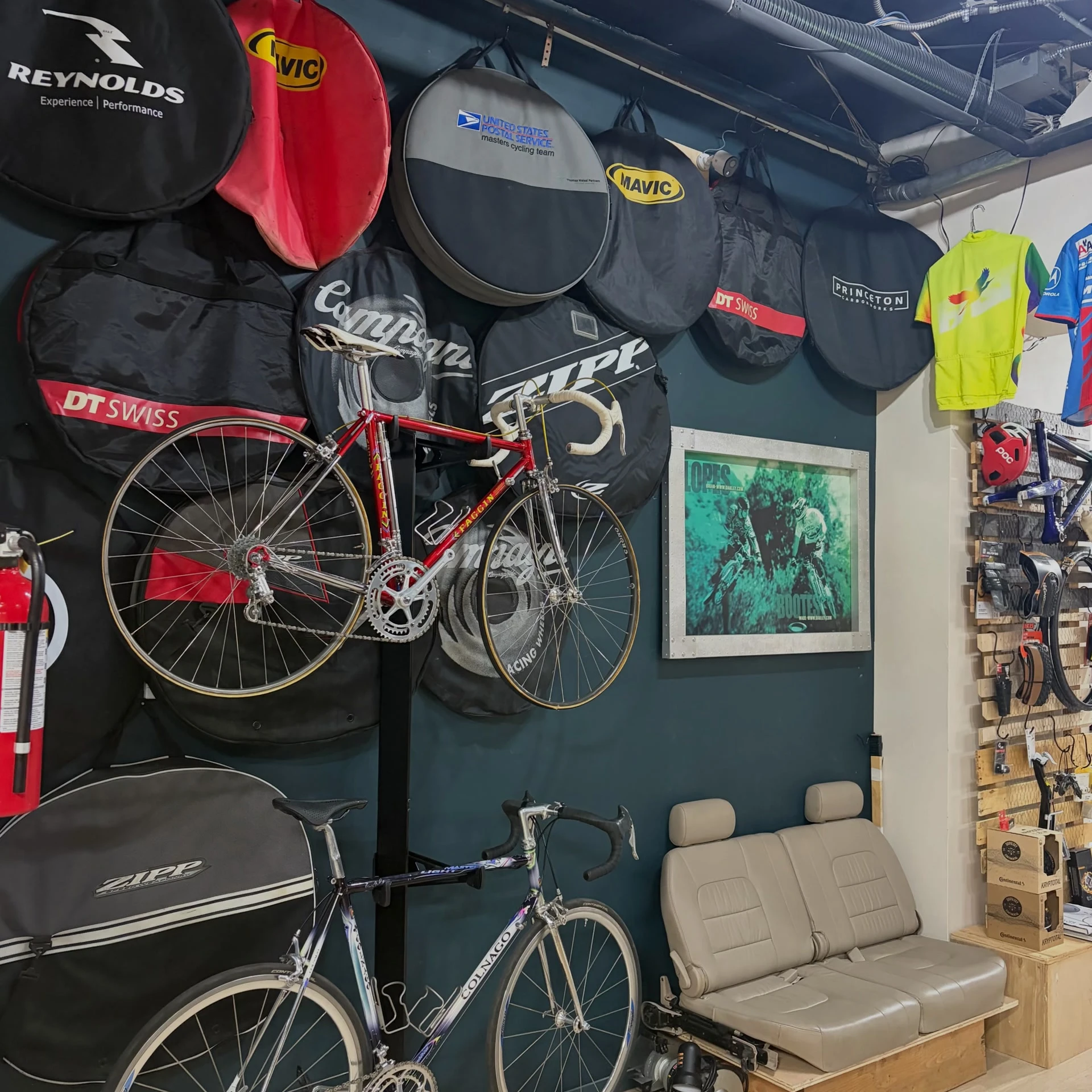
Anton opened his first shop in Denver's RiNo neighborhood. Traveling Ground has since moved into a new building at 1201 Santa Fe Drive, where its mechanics turn most repairs around in one to two days.
A second life in Africa.
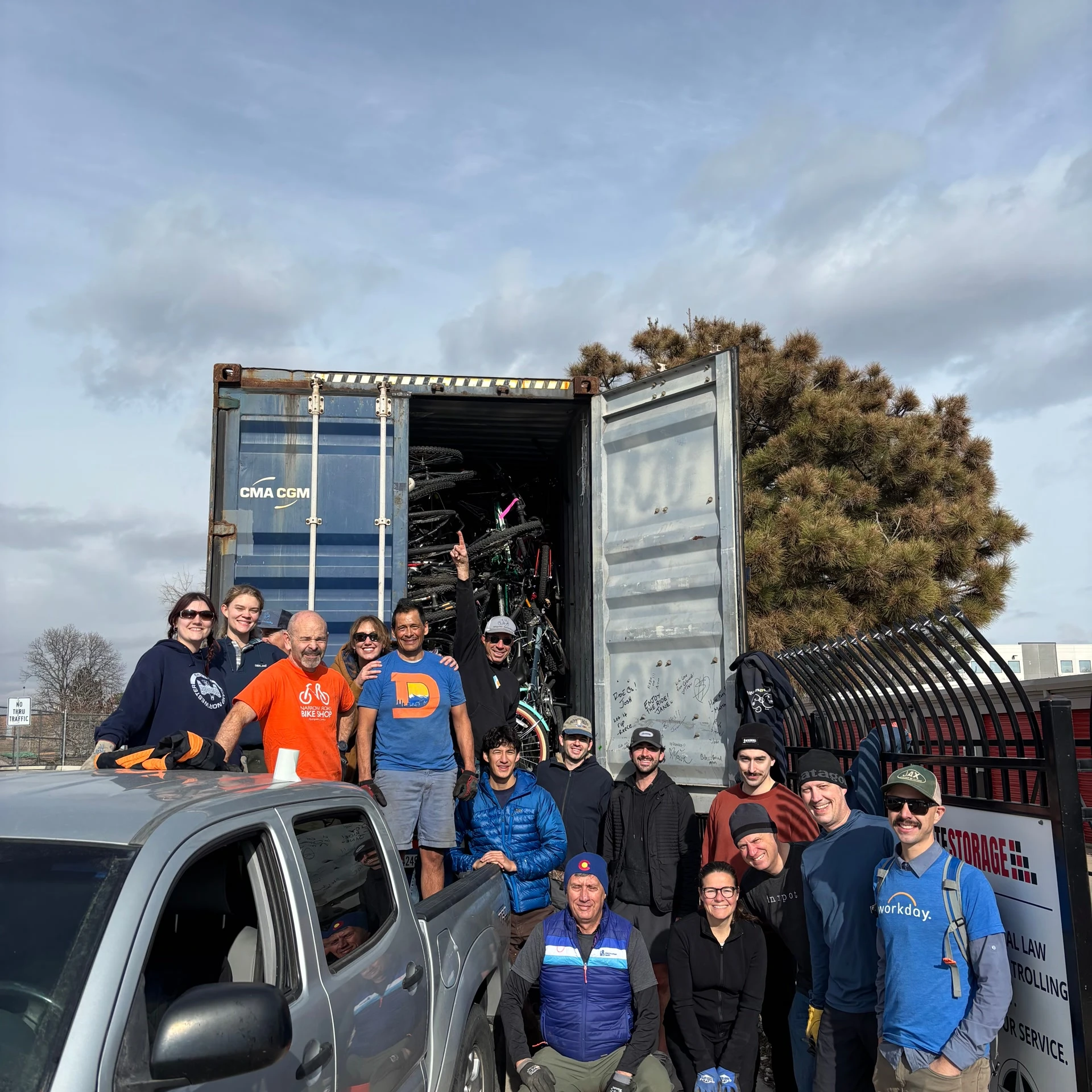
Some high-end road bikes aren't built for rural roads. Traveling Ground refurbishes and sells them, and gives 50% of the proceeds to Bicycles 4 Humanity, a Colorado nonprofit that builds bike shops and delivers bikes to rural communities in Africa. It donates whole bikes, tires, parts, and tools too.
In the shop.
Traveling Ground shares its work on Instagram. Tap a reel to play it. @travelinggroundbikes
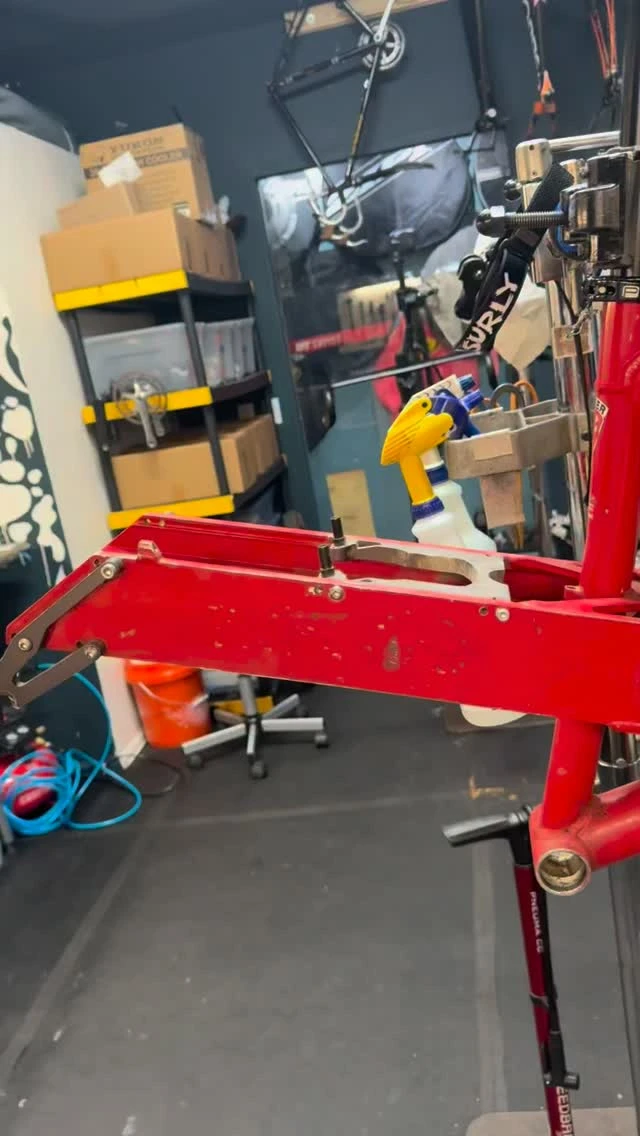
Day one: building up a Santa Cruz Super 8 downhill frame
Day three: the Super 8 comes together
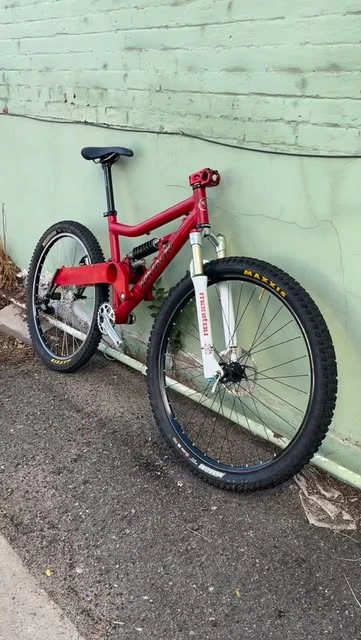
Bikes for sale in the shop

- 10×+
- year-over-year growth within two years of joining the Magis Factory
- 50%
- of proceeds from eligible road bikes go to Bicycles 4 Humanity
Next for Traveling Ground: a second shop in the coming years.
Round 1 · 2019
MyHomeFix
DIY repair
The first cohort, signed in April 2019. Innovation Challenge 2018-19. Colorado, USA.
Round 1 · 2019
CampCrate
Backpacking gear & planning
The first cohort, signed in April 2019. Innovation Challenge 2018-19. Colorado, USA.
Round 1 · 2019
MindSpa
Veteran-owned interventional psychiatry for depression, PTSD & TBI
The first cohort, signed in April 2019. Innovation Challenge 2018-19. Colorado, USA.
Operating in Denver; in-network with Tricare, the VA, Aetna, Cigna, BCBS, and Medicare.
Round 2 · 2023 on
Traveling Ground
Refurbished used bikes & parts
The second round, from 2023 to today. Innovation Challenge 2022-23. Colorado, USA.
More than 10× year-over-year growth within two years of joining the Magis Factory. It opened its first shop in Denver's RiNo neighborhood and has since moved into a new building on Santa Fe Drive.
Read their story (opens in a new tab)Round 2 · 2023 on
10K Academy (10K Athletics)
Student-athlete management platform
The second round, from 2023 to today. Innovation Challenge 2023-24. Denver, CO.
First partnerships.
Read their story (opens in a new tab)Round 2 · 2023 on
Tap Energy LLC
Micro-hydroelectric generator
The second round, from 2023 to today. Innovation Challenge 2022-23. Colorado, USA.
Three patents, the first awarded during the 2023 Innovation Challenge, which it won. Moving toward product development.
Read their story (opens in a new tab)Round 2 · 2023 on
Autumn Meadows Assisted Living
Senior care / Assisted living
The second round, from 2023 to today. Innovation Challenge 2024-25. Colorado, USA.
New facility.
Read their story (opens in a new tab)Partners.
The companies, schools, and organizations the Center has built programs with, from design thinking workshops for faculty to an international business plan competition.
 IDEODesign thinking workshops for faculty and staff, 2018(opens in a new tab)
 JPMorgan ChaseSupports Anderson Reports(opens in a new tab)
 University of Colorado BoulderThe Colorado Sustainability Challenge, 2025 and 2026(opens in a new tab)
 CU Boulder New Venture ChallengeCU Boulder's startup competition(opens in a new tab)
 Arrupe Jesuit High SchoolA team on the Finals stage every year(opens in a new tab)
 SALT LendingCourse design(opens in a new tab)
 Seattle University, Albers School of BusinessThe International Business Plan Competition, won by Regis students in 2024–25(opens in a new tab)
 St. Joseph's Institute of ManagementThe International Business Plan Competition, won by Regis students in 2024–25(opens in a new tab)
 Red Rocks Community College EntrepreneurshipThe Level Up Podcast, 2023(opens in a new tab)
 Colorado Startup WeekTalks by the Center and its founders(opens in a new tab)
 Colorado Impact ChallengeStudent teams from several universities solving real problems(opens in a new tab)
 Golden Startup CoffeeSponsored by the Center; Challenge founders have presented 8+ times(opens in a new tab)
 Anderson College of Business & ComputingThe Center's home at Regis(opens in a new tab)
 Regis SEED InstituteThe Third Wave Solution Series at the Alliance Center, 2018
- International Association for Strategy Professionals, ColoradoInternational Association for Strategy Professionals, ColoradoA monthly host(opens in a new tab)
- SparqUSparqUThe Level Up Podcast, 2023
- Craft:ATICraft:ATIA 2019 design sprint for ICU2, a local business
- Paper AxisPaper AxisDesign thinking
- Denver Kids Immersive GroupDenver Kids Immersive GroupPartner
- MBA AdvisorsMBA AdvisorsPartner
 Become a partner
One partnership
Arrupe Jesuit High School.
It started with a club in 2019. Now Arrupe seniors build businesses for Regis credit, and their best team pitches at the Innovation Challenge Finals every year.
Arrupe Entrepreneurship Program Overview
In 2019, the Center gave Arrupe $7,000 to start an entrepreneurship club. In 2023 it became a dual-enrollment class, Innovation and Entrepreneurship, adapted from a Regis MBA course. Seniors build a business from scratch and earn Regis credit that transfers to most U.S. universities.
Each spring the class pitches at Regis to a panel of business leaders, and the winning team goes on to the Finals: EnvioBag, a biodegradable hemp tote, in 2023, and Yum Dum, a toy for blind and deaf dogs, in 2024. Arrupe is a Cristo Rey school, where students work to help pay for their education.
One path, from middle school up.
- Middle schoolIn 2024, three teams from Compass Academy, a Denver middle school, pitched beside Arrupe's seniors. Middle school pitches of their own are next.
- High schoolArrupe seniors build a business for Regis credit and pitch it at Regis each spring.
- The Innovation ChallengeArrupe's winning team pitches at the Finals, on the same stage as every other business.
- The Magis FactoryThe accelerator where Challenge businesses keep growing.

Ruben Martinez
Regis alum ('07, '10) and University Trustee. Director of Marketing at Arrupe Jesuit High School.
Ruben has worked with the Innovation Center since the beginning. He spoke at its Executive Night Speaker Series in 2018, and Glamping Hub, the company he co-founded, is a founding partner of the Magis Factory.
He taught Arrupe's first Innovation and Entrepreneurship class. He judges Innovation Challenge pitch nights and speaks to teams about their pitches. Now he's helping set up the upcoming middle school pitches, so a student can start at 11 and grow into the Challenge.
“Skills they're learning as entrepreneurs will serve them, whether they become entrepreneurs or not.”
Ruben Martinez, to Regis University, 2024
In Colorado's startup community
- A founding member of CUIC, Colorado Universities Innovation Centers
- A member of CEE, Colorado Entrepreneurship Executives
- The sponsor of Golden Startup Coffee, where Challenge founders have presented 8+ times
- Talks at Denver, Colorado, and Boulder Startup Weeks
Financials.
Every dollar given to the Innovation Center in its first ten years, and where it went.
Where it came from.
$2,635,000Raised so far
- $1,000,000Jamie and Ann Gronowski and familyBuilt the Gronowski Innovation Incubator Lab and the dean's office suite, 2017.See the Lab
- $800,000An estate giftHeld for the Center's next ten years.
- $700,000Gifts to the Innovation Center
- $100,000The Sullivan Chair endowmentThe John J. Sullivan Endowed Chair in Free Enterprise supports the Center and all of its programs. The endowment has grown since.
- $35,000MBA operations and Anderson ReportsIncluding the course where students publish stock reports on Colorado companies.See the reports
Where it went.
The $1,835,000 given outside the estate gift, by share, rounded to whole percents.
 27%The CenterBuilding it, and keeping its technology up to date.
20%Founders' businesses$375K+ invested in student, alumni, faculty, and community businesses through the Innovation Challenge and the Magis Factory.
 18%StudentsStudent directors, events, and student clubs.
17%The communityDesign sprints, conferences like Sanctified @ Work, teaching innovations, community co-teachers, and Executive Education.
 5%AlumniAlumni events, like the Alumni Matrix meetup every April.
3%Software and hostingSoftware and website hosting.
10%Still to spendNot spent yet.
Add to the next ten years.
Give(opens in a new tab)Next, the whole university.
The Innovation Center is moving to the university level, to help ideas across Regis become reality.
What comes next.
Ten years in, the Center's next step is the whole university.
Next up.
Ten years in, the model is proven: student-led, open to the community, and rooted in mission.
Develop a live business lab.
Students run a real business on campus. Not a coffee shop, but a business that seeks customers, and creates and captures value.
Expand the Innovation Challenge.
A fully active program that feeds the Challenge, with student businesses of their own, and students working alongside community and alumni businesses.
Make the Magis Factory sustainable.
Grow the portfolio of businesses it supports, track their revenue better, and build steady donations to support and expand the programs.
Reinvigorate co-learning and co-teaching.
Take the model across the college and the university, to keep teaching at Regis alive and modern. The Center is humbly asking for help.
Improve influence on curricula.
Help shape a curriculum that stays current, and run the Center’s own programs that bring Regis students, alumni, and the community together.
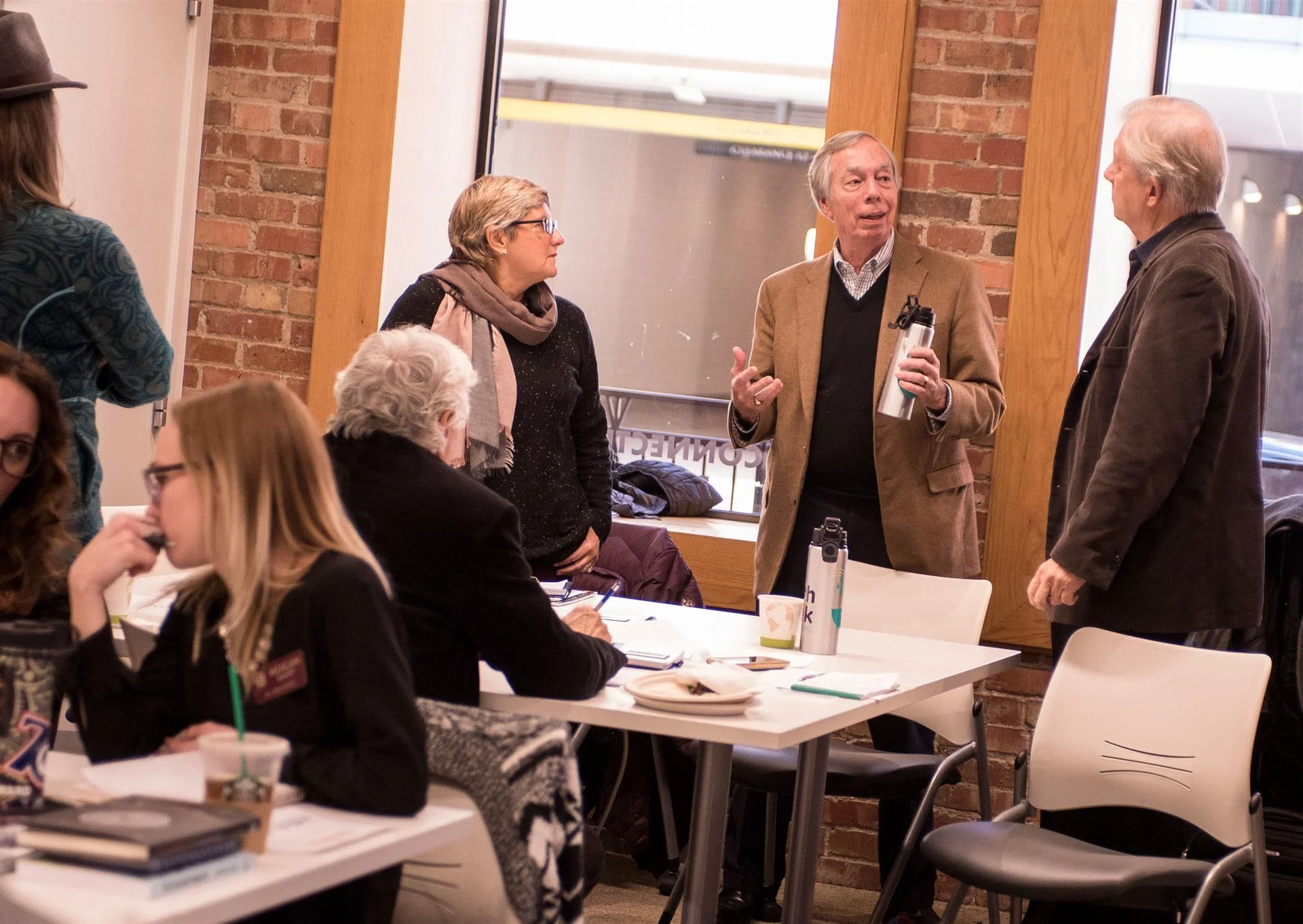
Help local businesses thrive and grow.
Anderson becomes known as the place where students, faculty, and alumni help the local economy thrive: the only university that focuses on small and medium-sized businesses.
One team's story
A team built in one season.
Lana McClure entered the 2025–26 Innovation Challenge with an idea for families who travel. She left with a win and a team: a Regis grad student and a mentor, who both now work with her full time.

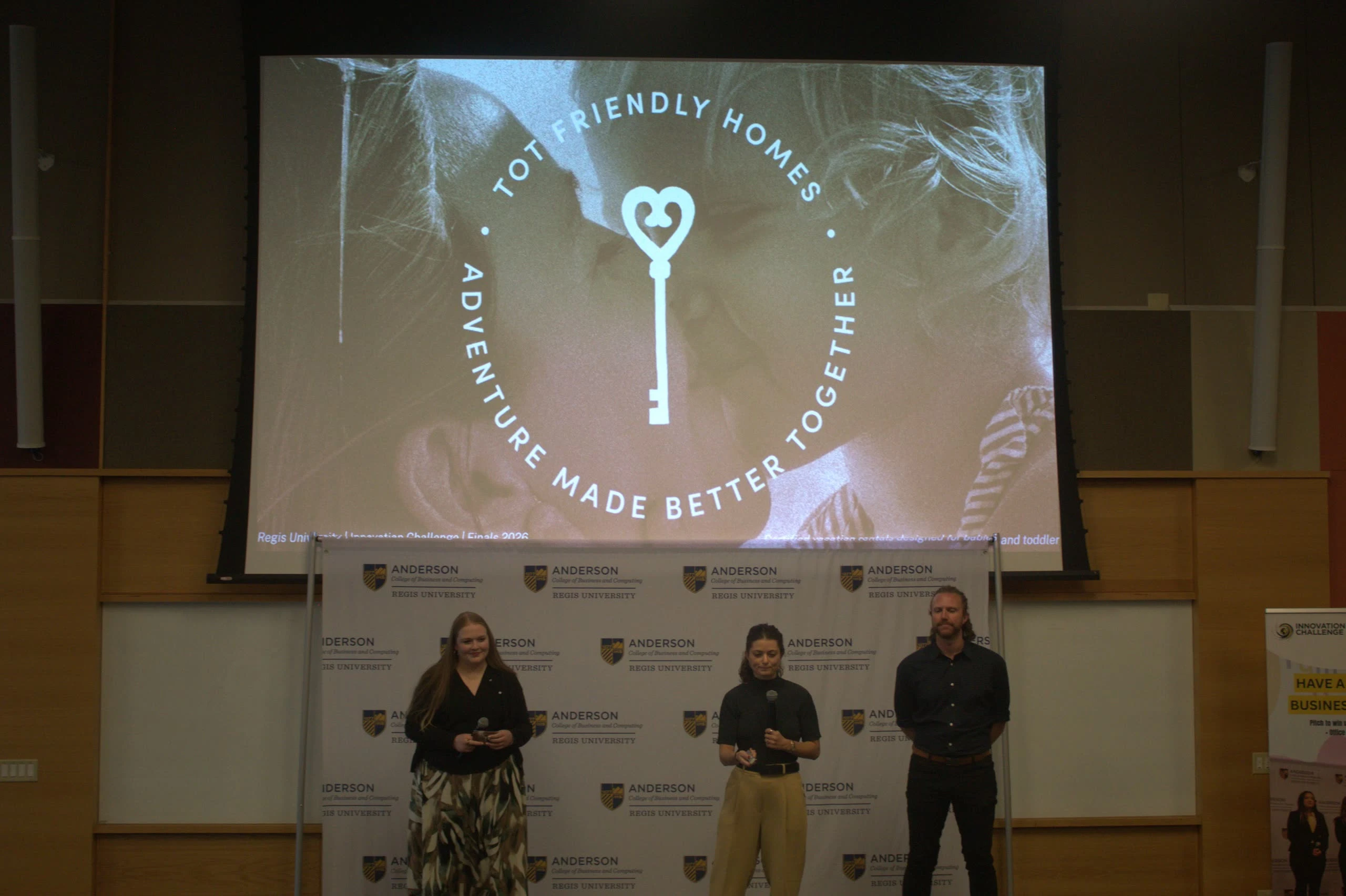

A mom who kept traveling.
When Lana became a mom, she kept traveling with her son. The easy trips were to his grandparents, where the crib, the high chair, and the rest of the baby gear were already waiting.
Tot Friendly Homes brings that to vacation rentals. It certifies homes that are ready for families with babies and toddlers, and equips them with the gear parents would otherwise pack.
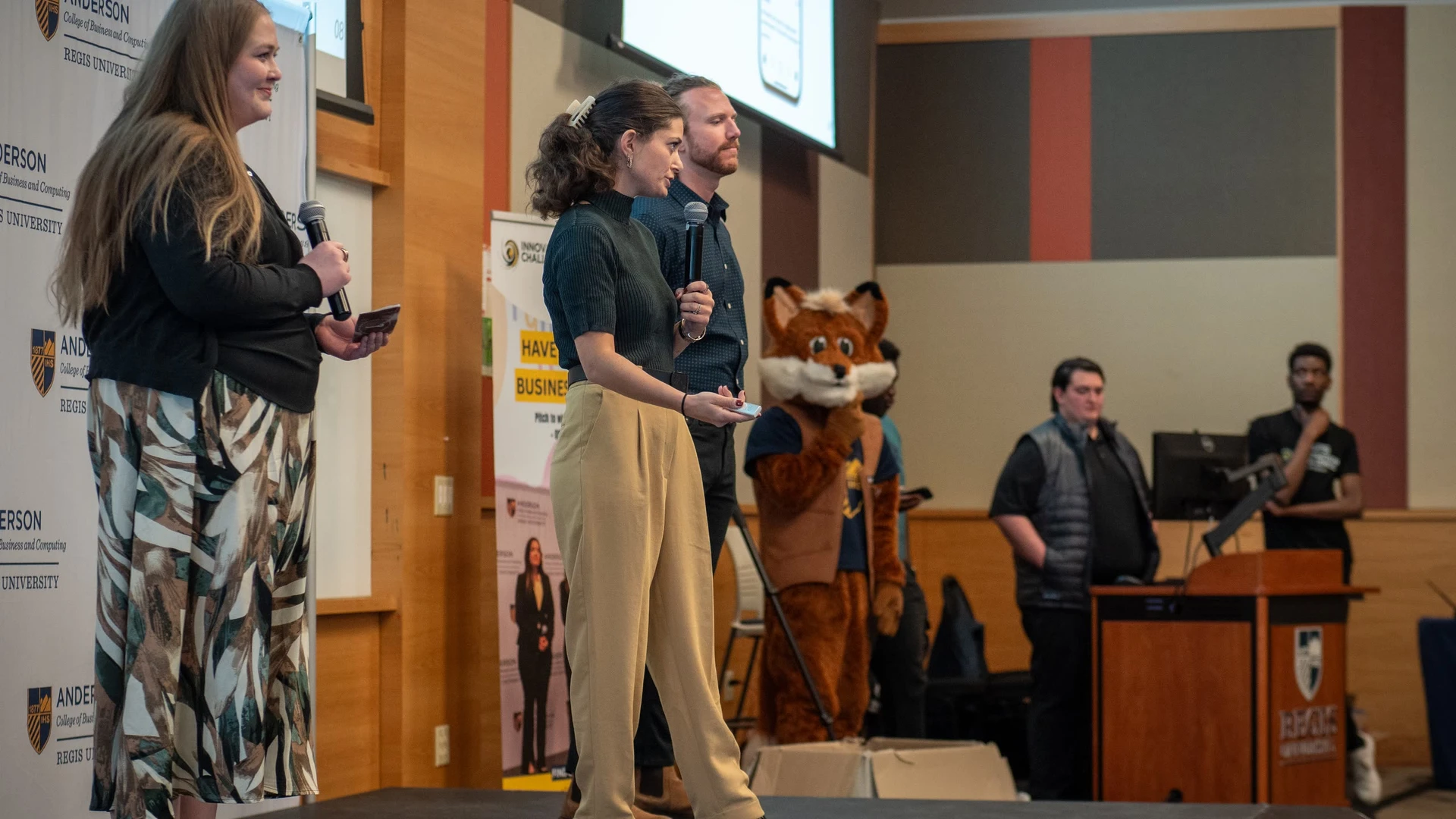
A student fills the gap.
In the 2025–26 Innovation Challenge, Lana’s team needed marketing, so she came to the Center looking for a student team member.
The Challenge connected her with Emmie Heiserman, a Regis grad student, who took on the team’s marketing.
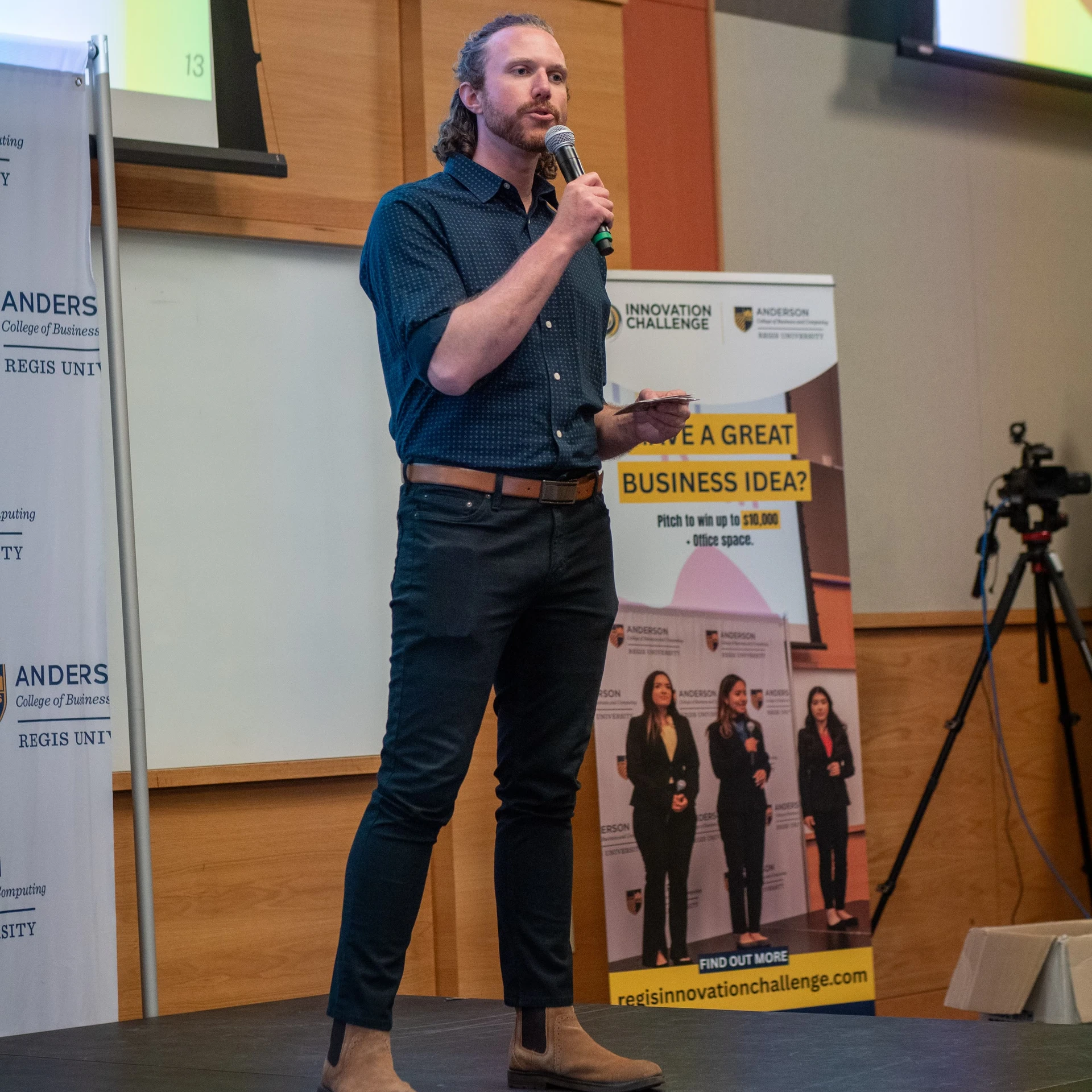
A mentor becomes the CTO.
Chapin Griffith was one of the team’s mentors. With his long background in business, he joined Tot Friendly Homes as its CTO.
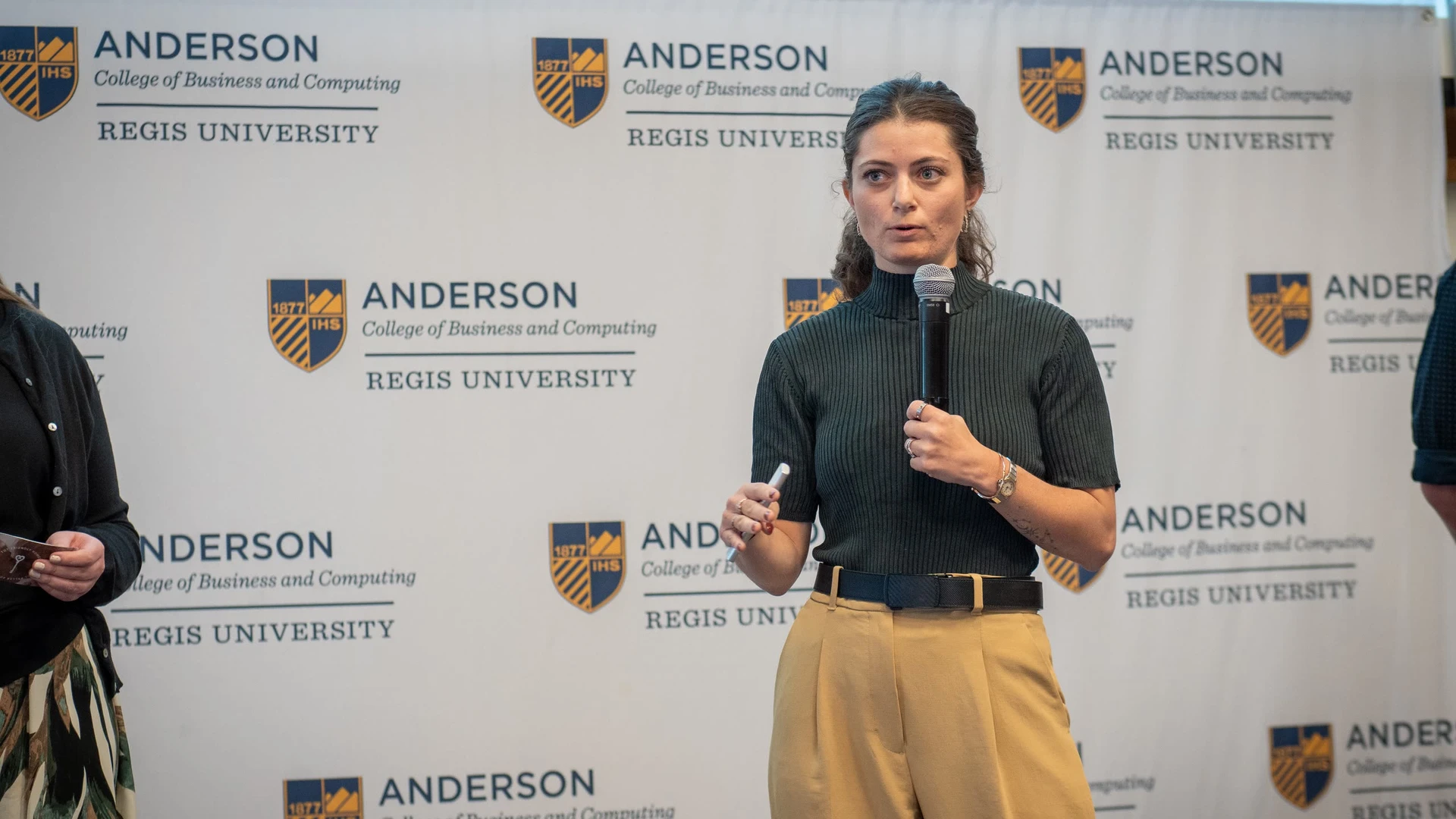
Winning the Challenge.
Tot Friendly Homes won the 2025–26 Innovation Challenge. Lana shared part of the Finals prize money with Emmie, and after the Challenge she offered her a full-time role.
- 1st
- place in the 2025–26 Innovation Challenge
- 2 of 3
- people on the full-time team met Lana through the Challenge
Today Lana, Emmie, and Chapin work full time on Tot Friendly Homes, taking it national.
The asks.
Ten years of proof.Six ways to build the next ten.
In the Center’s order of priority. Each one funds something you have already seen in this report.
Endow the Innovation Center
$3M–$5M
A permanent endowment for the Center and every program in this report.
What it funds
- The Gronowski Lab, where ideas at Regis take shape.
- The Innovation Challenge and the Magis Factory.
- Anderson Reports and learning across Denver.
Already proven
5 months
In 2017, the Gronowski family gave $1M. Five months later the Lab opened, and Regis credits it with the birth of the Innovation Challenge.
See the LabSustain the Regis Innovation Challenge
$1.5M
The Center’s signature program, every year from October to April.
What it funds
- Cash prizes of $10K, $5K, $1K, and $1K, plus $1K from the audience vote. All for 0% equity.
- 1–3 mentors matched with every team for Mentor Saturdays.
- Finals night, open to the whole community.
Already proven
10th season
The 2026–27 season is the Challenge’s tenth. The first, in 2017–18, grew out of the Gronowski Lab.
See the Challenge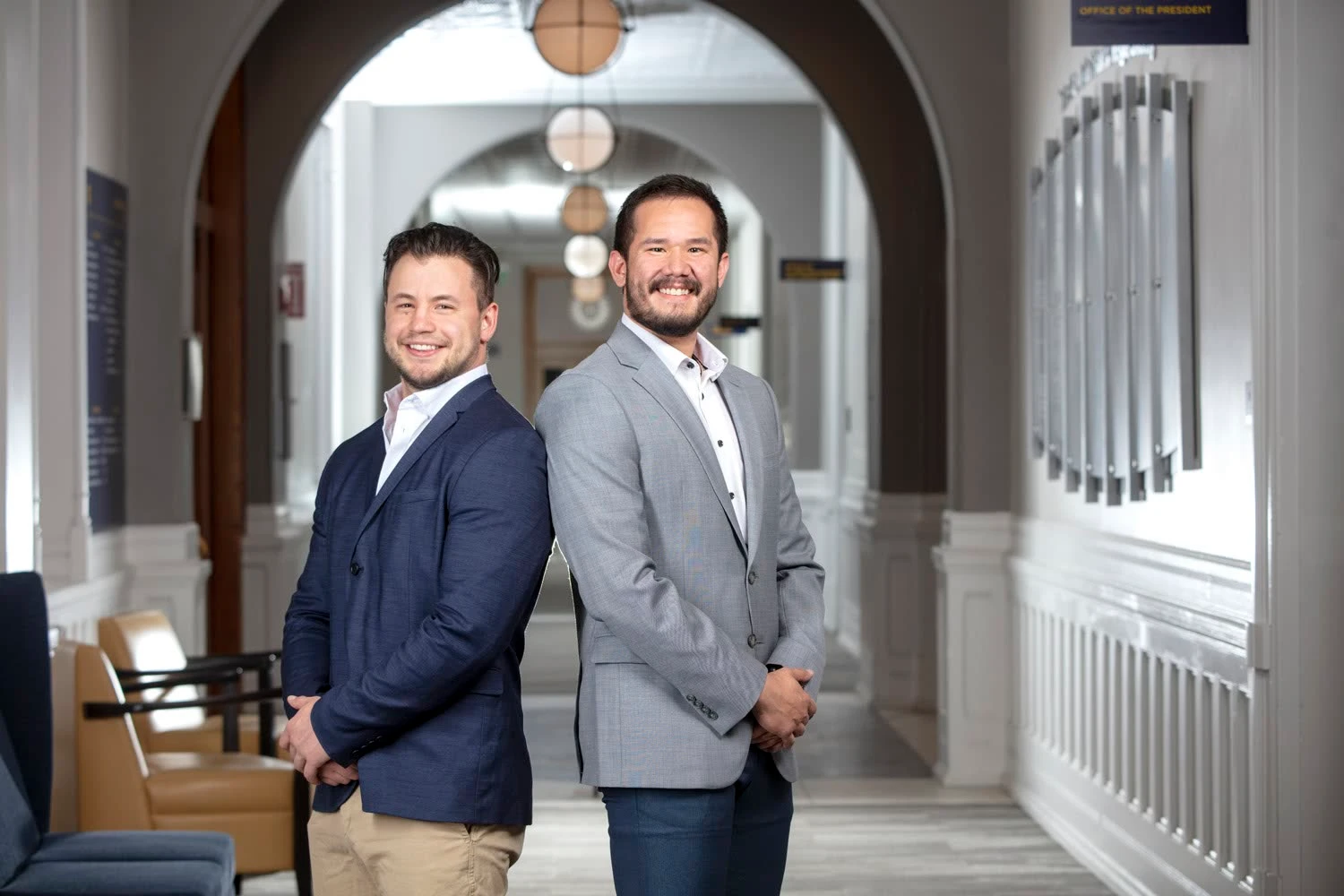
Invest in the Magis Factory and Sanctified @ Work
$500K–$1M
The accelerator where Challenge businesses keep growing, and the summit on faith and business leadership.
What it funds
- Up to 30 months of mentoring and non-dilutive investment, at $0 cost and 0% equity.
- Sanctified @ Work, first held on February 10, 2024, in Claver Hall.
Already proven
7 companies
Two rounds of investment have backed seven companies, among them Tap Energy and Traveling Ground.
See the Magis FactoryFill out the Sullivan Chair endowment
$1.75M–$2M
The John J. Sullivan Endowed Chair in Free Enterprise supports the Center and all of its programs.
What it funds
- The Innovation Center and all of its programs, every year.
- An endowment, so the support never runs out.
Already proven
$100K
A $100,000 gift to the Chair’s endowment has already come in, and the endowment has grown since.
See Financials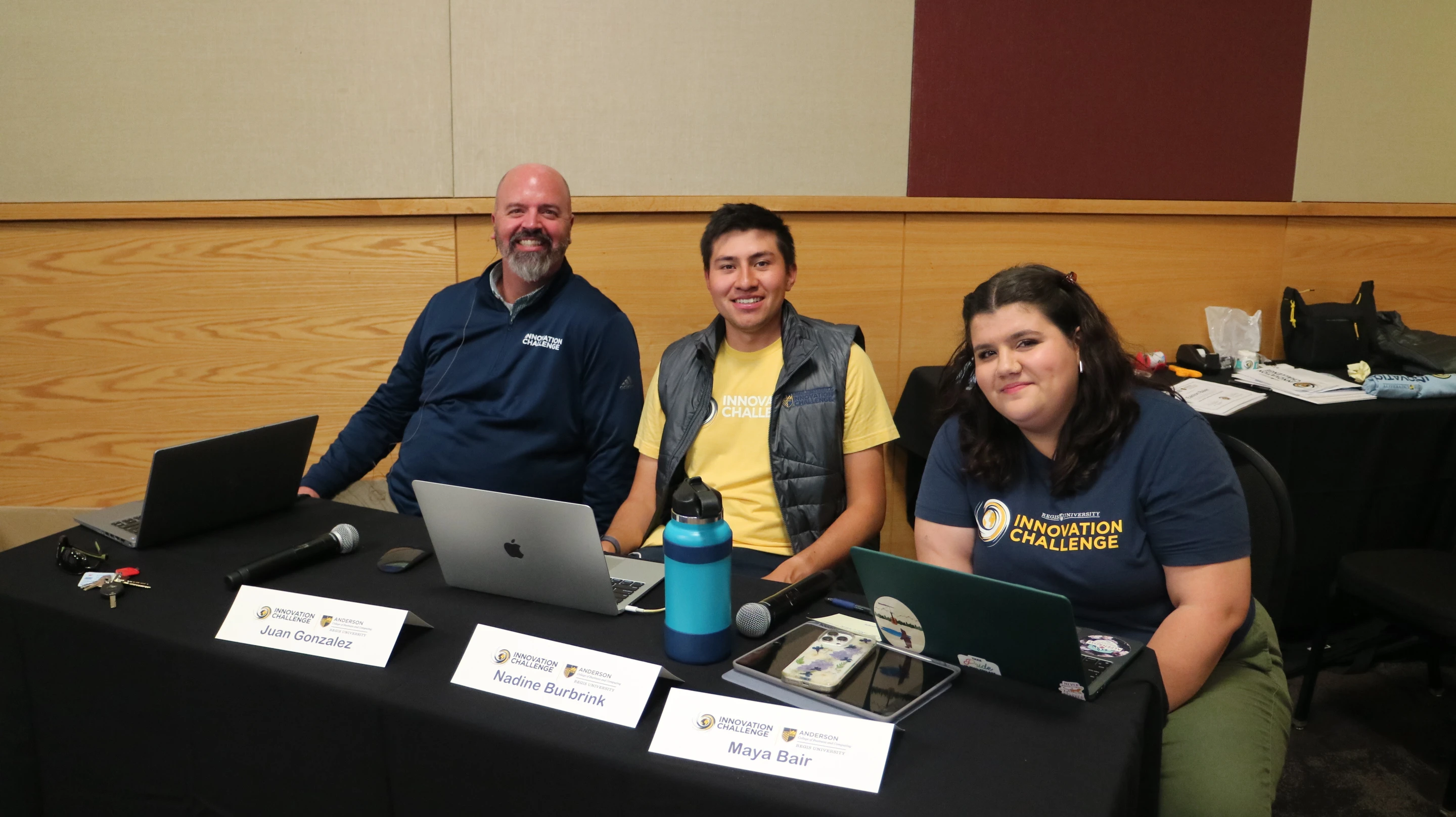
Fund the Challenge’s student directors
$30K a year
Funded roles for the students who direct the Innovation Challenge.
What it funds
- Paid roles for the students who direct the Innovation Challenge, every year.
Already proven
18%
Over ten years, 18% of what the Center spent went to student directors, events, and student clubs.
See Financials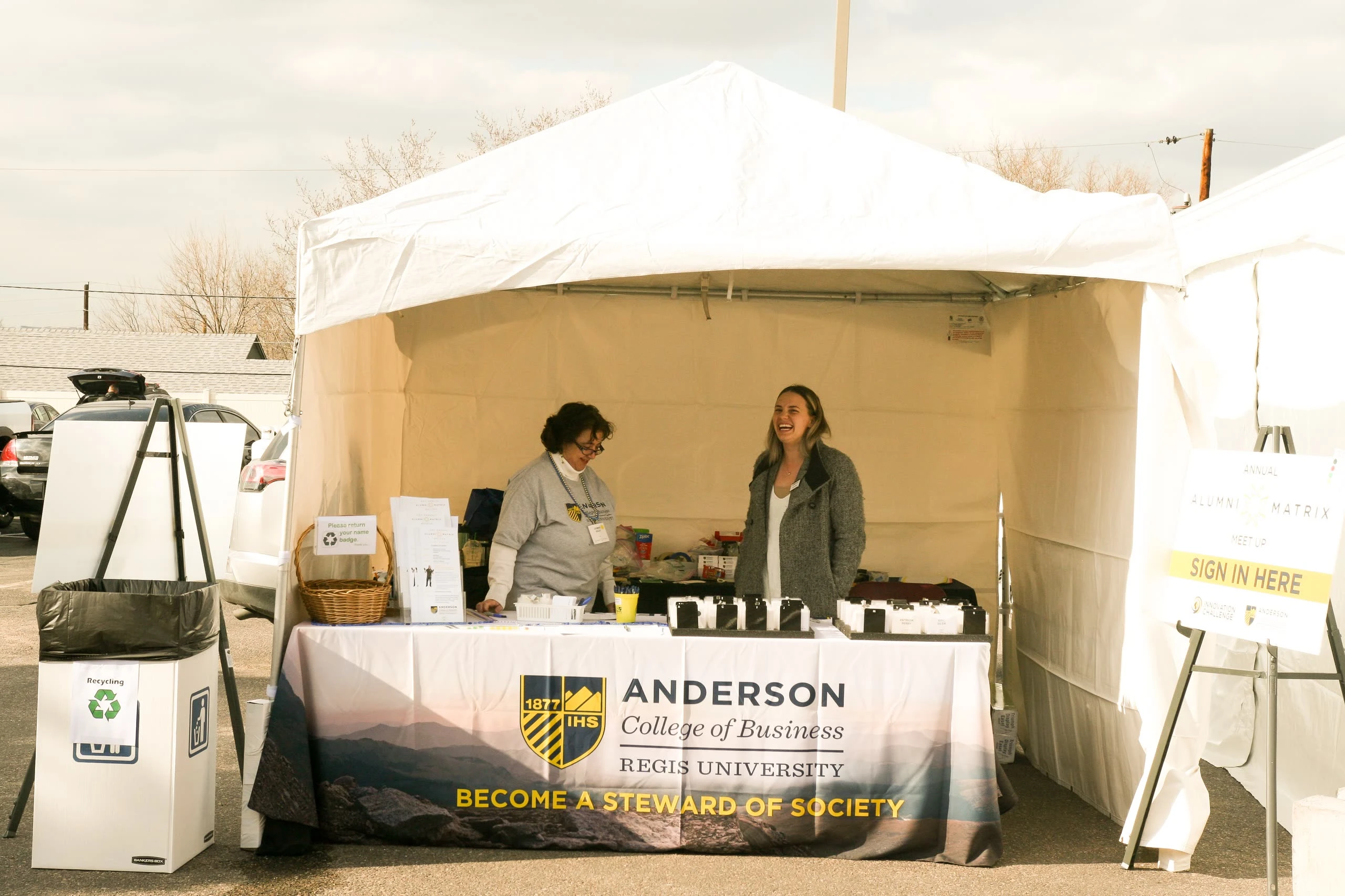
Build the Alumni Matrix
$100K a year
Job placements, internships, travel programming, and courses.
What it funds
- Job placements and internships.
- Travel programming and courses.
Already proven
~400 people
Nearly 400 alumni, students, faculty, and business connections came to the April meetup, more in each of the past three years.

From one room to the world.
- It starts in one room, built for the community, by the community.
- In Denver, 90+ mentors give 2,000 hours a year.
- Across Colorado, 231 businesses launched or supported.
- Across the country, a bow tie made in Denver reached the Emmys.
- And around the world, anyone can help build what comes next.
Thank you.
 Data SIO, NOAA, U.S. Navy, NGA, GEBCO, Landsat / Copernicus, IBCAO, U.S. Geological Survey, PGC/NASA, Data LDEO-Columbia, NSF, Airbus
Letter from the Director.
Innovation in the Anderson College of Business is about intentionally driving critical, creative, and systems thinking.
It is about intentionally helping students — and community entrepreneurs — become more self-aware, more ingenious, more loving, and more heroic so that they might help solve the pressing problems of our time. At the Regis University Innovation Center, we have never believed that entrepreneurship is a solitary pursuit. It is, at its heart, a community endeavor — for the community and supported by the community.
The purpose of this report is to share some of the most important highlights of our work over these past years — to celebrate the growth of our programs, the depth of our partnerships, and the real impact our entrepreneurs are making in the lives of people across Colorado and beyond.
Since our founding, the Innovation Center has supported 231+ businesses, welcomed more than 2,000 hours of volunteer mentoring every year, and invested more than $375,000 directly into the entrepreneurs who are shaping our region's future. We remain the only university-based business competition in Colorado to openly welcome and support community businesses alongside our students — because great ideas deserve investment regardless of where they originate.
Our ecosystem has grown through extraordinary people who bring this mission to life. Ruben Martinez — proud Regis alumnus, University Board member, and accomplished entrepreneur — has extended our reach far beyond campus, engaging young leaders as early as middle school in the entrepreneurial journey. His work is not just building businesses; it is building futures.
Joe Tartell, through the Magis Factory accelerator, walks alongside founders long after the competition ends — connecting them to resources, strategy, and sustained growth. The results speak for themselves: successful launches, growing revenues, and entrepreneurs giving back to the next generation.
There have been moments of awe, challenge, and deep gratitude along the way. I am grateful for the support of our generous donors and partners — Rick Parker and the RH Parker United Foundation, Joe Tartell and his family, James and Mary Camire, Charles and Mary Lou Murphy, Dean and Yuriko McPhail, Frank Stapleton, Tom Van De Bogart, and our steadfast angels, Cody and Dan Teets, Jamie Gronowski, and the Gronowski Family. And I am endlessly grateful to the student directors, mentors, judges, presenters, and Regis University colleagues whose dedication makes this work possible year after year.
We are in the midst of an abundance of goodness.
My greatest hope as you read this report is that you will see the overwhelming potential of the Innovation Center as a difference maker in the Anderson College of Business, Regis University, and the greater community. The best chapters of this story are still being written — and we are so glad you are part of it.
With Gratitude and Optimism,
Ken Sagendorf, Ph.D.
Director, Innovation Center
Anderson College of Business and Computing | Regis University